
Sector · Theaters and auditoriums
A hall that fills in minutes and a program that does not move: how a theater’s ducts are reviewed
In a theater the air conditioning serves a full hall, a stage and support areas that run on very different hours.
 By Limpieza de Ductos Panamá
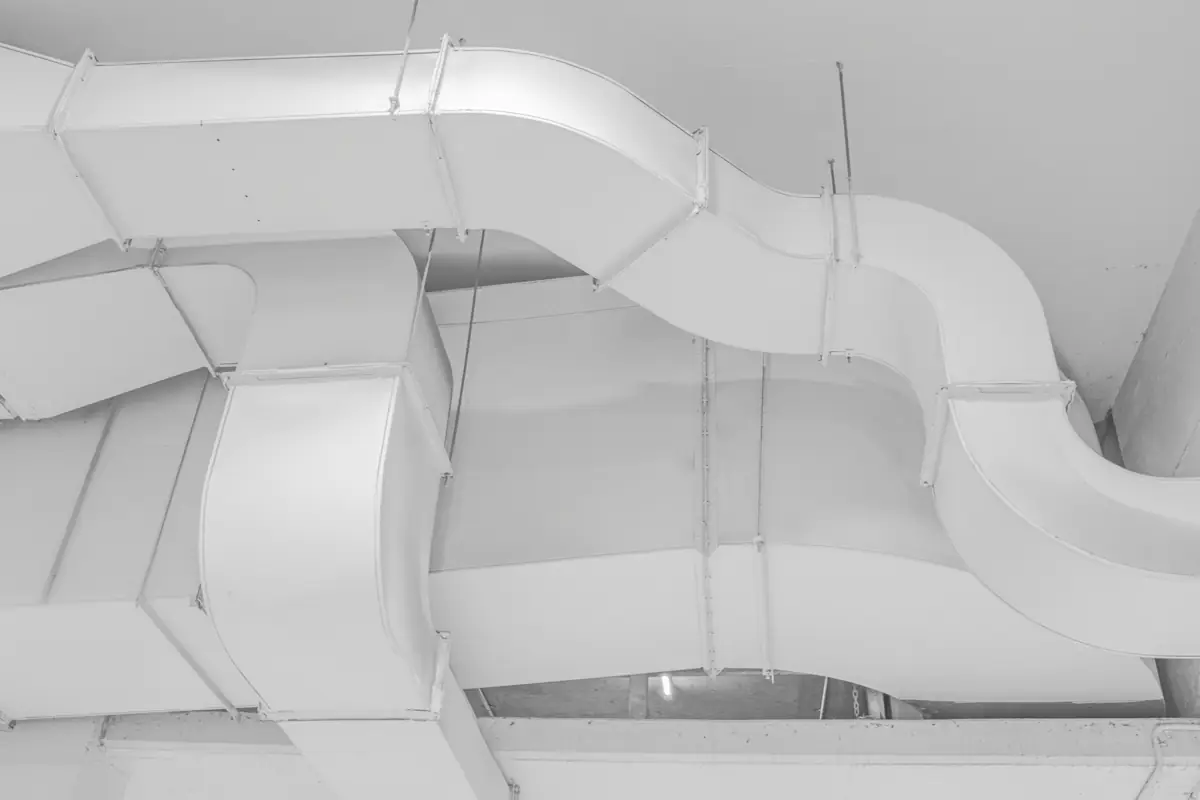
Duct cleaning in a theater or auditorium is the camera inspection and cleaning of the inside of the ducts that serve the hall, the stage and the support areas, scheduled around the program of shows and rehearsals. The work is done on days without an audience, what the hall uses most is checked first, and cleaning is done only where the camera justifies it.
What sets theaters and auditoriums apart
Facts that help decide in theaters and auditoriums
- In Panama: According to La Estrella de Panamá (July 2019), after the restoration of the Teatro Nacional, opened in 1908, its capacity stood at 753 seats and the air conditioning is switched on by area. The same report recalls that when the building was built air conditioners did not exist, and circulation depended on a more open space. (La Estrella de Panamá, the Panamanian House of Culture is reborn (July 7, 2019), in Spanish)
- Technical fact: The EPA and NIOSH building guide recommends evaluating the capacity and air distribution of a system before changes in occupancy or in the use of an area. Its Figure B-2 reproduces figures from the ASHRAE 62-1989 standard in which a theater auditorium is typed at 150 people per 1,000 square feet, against 7 for office space. These are 1989 figures from the United States. (EPA and NIOSH, Building Air Quality, Appendix B)
- Peer-reviewed study: A study of 82 events in seven mechanically ventilated auditoria in England measured CO2 before, during and after each event. Air quality was good in general, but some auditoria showed variation between zones, a sign of poor air mixing, and the authors conclude that demand-driven ventilation systems do not always work as intended. It is about ventilation and COVID-19, not duct cleaning. (Adzic et al., Building and Environment, 2022)
Types of place within theaters and auditoriums
| Type of place | What changes in the work plan |
|---|---|
| Theaters and auditoriums | The program and the access to the ceiling and the stage are read before a date is set |
| University auditoriums | The events calendar is matched with the academic one to find free days |
| Event halls | Each event changes the setup, so access is confirmed every time |
| Party venues | Weekends are taken, so the visit is requested for a weekday |
| TV studios | It is agreed with the technical team which ducts can be opened without disturbing a recording |
| Radio studios | A small closed space, so the unit and returns are checked in a short visit |
How the work is organized in theaters and auditoriums
- Read the program. With production, the days without a show or rehearsal are identified, together with the access to the ceiling and the stage.
- Inspect by space. The hall, the stage and the support areas are run through with a camera, starting with the returns and grilles that work hardest.
- Hand over one sheet per space. Each space has its photos and what could not be seen, and production decides when to do what comes next.
An example of what the report brings
What you are left with at the end
- A work plan fitted to the program
- Photographs of the inside of the authorized ducts
- One sheet per space: hall, stage, dressing rooms and support
- The list of what was left out because of a set build or lack of access
Reference sources
- EPA: Building Air Quality, a Guide for Building Owners and Facility Managers (guide for building managers)
- EPA: Should You Have the Air Ducts in Your Home Cleaned? (guide written for homes)
- ANSI/ASHRAE/ACCA Standard 180: inspección y mantenimiento de sistemas HVAC comerciales (industry reference)
- Technical references of this site, with all 45 sources
On this site
- All sectorsWhat changes in each type of place
- Camera inspectionThe real condition before deciding
- Service areasWhere work is done
Climatiza and Radar Panamá
Related guides and answers
Frequently asked questions
Can the work be done in the middle of a season?
Yes, on the days without a show or rehearsal that production agrees. If the season leaves no free days, the work is scheduled for the next break or limited to what is accessible.
What about the stage and the lighting and sound equipment?
The technical lead defines which zones can be worked on. Stage equipment is not touched, and any area that could not be seen is noted.
Is the work done between one show and the next?
It is not usual. There is no time between shows to open access doors, so the work is concentrated on full days without an audience.
Does it work for a small auditorium in a school or a company?
Yes. With a couple of units the visit is short, and the report separates what was seen from what could not be seen.
How often does it make sense to check the ducts in theaters and auditoriums?
There is no fixed frequency. It makes sense to look before a long season, after a long closure of the hall, or when odors or uneven air are noticed between the stalls and the balcony.
What does the report include for theaters and auditoriums?
It brings photographs of the inside of the ducts. It is organized by space (hall, stage, dressing rooms and support), so production and maintenance know what was reviewed between seasons.
Keep exploring

Request an inspection
Do you want to know what your place needs?
Tell us what type of place it is and which area it is in. A camera inspection shows the inside of the ducts before anything is decided.
- +507 6388-2083
- info@climatizapanama.com
- Calle Gervasio García, 8, Panama City