
Sector · Museums and convention centers
Collections to look after and halls that change every week: how the ducts of a museum or a convention center are reviewed
In a museum the collection rules and in a convention center the calendar rules, and in both things are coordinated before a duct is opened.
 By Limpieza de Ductos Panamá
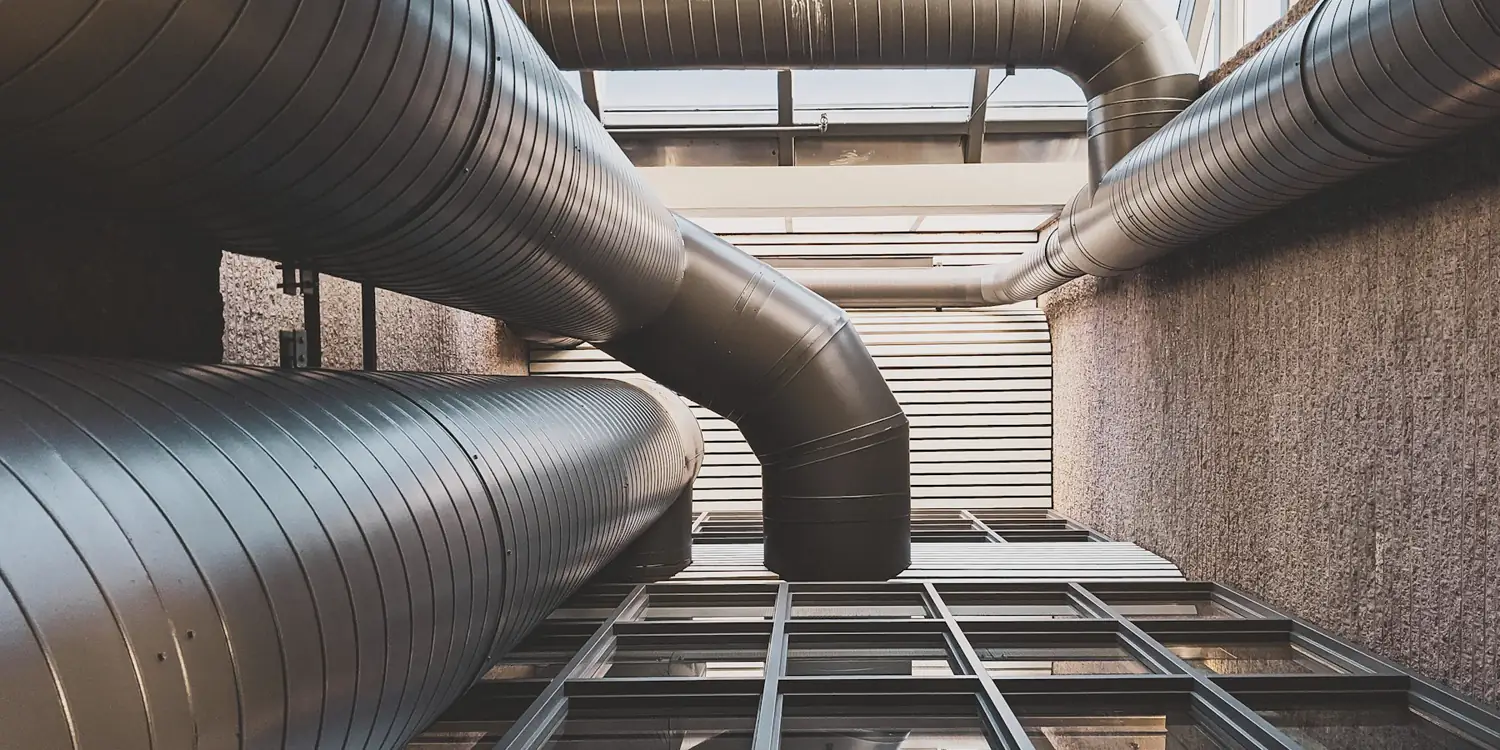
Duct cleaning in museums and convention centers is the camera inspection and cleaning of the ducts that air condition exhibition rooms, halls and support areas, coordinated with the conservation team and the event calendar. The camera goes in through the duct access doors and whatever is not opened is noted.
What sets museums and convention centers apart
Facts that help decide in museums and convention centers
- In Panama: The country’s Historical Heritage museums received 120,120 visitors between 2022 and 2024, and Panamá province accounted for 46.8%. The figure covers the museums that reported to the Ministry of Culture. (INEC, Culture Statistics 2022-24)
- Technical fact: The Canadian Conservation Institute explains that at 60% relative humidity visible mold may already appear on some surfaces, although a stable humidity at that value is rare, and that at about 25 °C mold takes about 100 days at 70%, 10 days at 80% and 2 days at 90% or more. (Canadian Conservation Institute, Incorrect Relative Humidity)
- Peer-reviewed study: A two-year study in two museums and a library in Greece measured particles and microorganisms and found PM10 and microbial concentrations higher indoors than outdoors, which it attributed to the presence of people and indoor activities. (Lazaridis et al., 2015, Heritage Science)
Types of place within museums and convention centers
| Type of place | What changes in the work plan |
|---|---|
| Museums | Before opening a duct near a room, the conservation team is asked for guidance |
| Convention centers | The event calendar is the starting point and the days between setups are used |
| Event halls | Halls that are transformed with each setup: reviewed when they are cleared |
| Conference rooms | Unit and returns of closed rooms, before or after the day’s sessions |
| Libraries | Shelves and archives: visible moisture is checked and it is coordinated with whoever looks after the collection |
| Art galleries | Spaces with works on the walls: the gallery agrees which room and which day |
How the work is organized in museums and convention centers
- Agree with whoever looks after or schedules. With the conservation team or the events area it is defined which rooms are included, on what dates and with what care.
- Inspect by room and by date. The camera goes through the agreed ducts in the gaps of the calendar, starting with the busiest rooms.
- Hand over what was seen and what was not. The report separates what was observed from the rooms left out because of the collection or an event.
An example of what the report brings
What you are left with at the end
- A plan by room and date, adjusted to the venue’s calendar
- Photographs of the inside of the ducts, with no images of pieces or artworks
- The rooms left out because of the collection or an event
- A suggestion of when to look again, based on the event season
Reference sources
- EPA: Should You Have the Air Ducts in Your Home Cleaned? (guide written for homes)
- EPA: Building Air Quality, a Guide for Building Owners and Facility Managers (guide for building managers)
- NADCA: ACR, The NADCA Standard (edición 2025) (industry reference, not a seal)
- Technical references of this site, with all 45 sources
On this site
- All sectorsWhat changes in each type of place
- Camera inspectionThe real condition before deciding
- Service areasWhere work is done
Climatiza and Radar Panamá
Related guides and answers
Frequently asked questions
Are pieces or display cases touched?
No. The service is limited to the ducts, which are opened through their access doors, and the work zone is agreed beforehand with whoever looks after the collection.
Can the work be done with the museum open?
It depends on the place. The closing day or the hours without visitors are often preferred, and the museum team decides.
What if there is an event the next day?
The center’s calendar rules. The work happens in the gaps between setups and what does not fit is left for another date.
Are the humidity or temperature of the rooms measured?
It is not part of the camera inspection. If the conservation team has its own records, it can share them for the report.
How often does it make sense to check the ducts in museums and convention centers?
There is no fixed frequency. It makes sense to look before an event season, after large setups, or when the conservation team notices moisture or odors near a room.
What does the report include for museums and convention centers?
It brings photographs of the inside of the ducts. It is organized by room, separates what was observed from what was left out because of the collection or an event, and includes no images of pieces.
Keep exploring

Request an inspection
Do you want to know what your place needs?
Tell us what type of place it is and which area it is in. A camera inspection shows the inside of the ducts before anything is decided.
- +507 6388-2083
- info@climatizapanama.com
- Calle Gervasio García, 8, Panama City