
Nightclubs
Fog machines and ducts: what to check in a nightclub
The fog clears in seconds above the dance floor. What formed it does not vanish: it changes state and looks for a surface.
 By Limpieza de Ductos Panamá
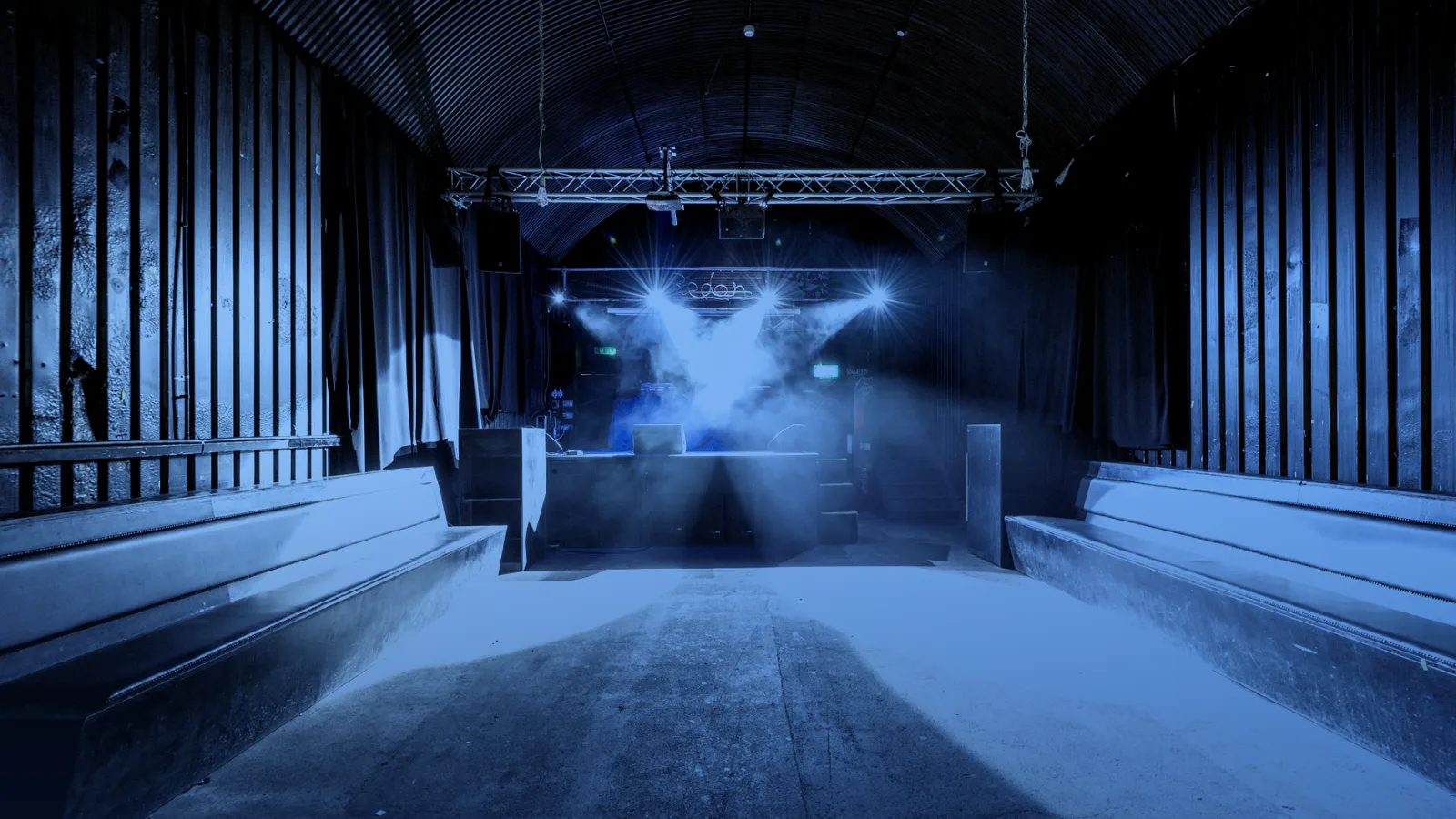
Yes, fog machine fluid leaves residue in the ducts. It is made of glycols, glycerin and water, or of refined mineral oil, according to the technical review commissioned by the entertainment industry. As it cools, that fog condenses into a film that settles on the return grilles and in the first duct section. With nightclub occupancy, the humidity of the room keeps that film damp and tacky.
What fog fluid contains and where it settles
The literature review prepared for the entertainment industry in 2017 sums up that the most common ingredients of theatrical fog are glycols, glycerol and highly refined mineral oil. The machines heat the fluid, push it out as an aerosol and that aerosol cools in the room air. The ESTA standard ANSI E1.5 regulates which glycols may be used and sets exposure limits for audience and staff.
What matters for the duct is what happens next. Glycol and glycerin droplets do not fully evaporate: they are hygroscopic, they attract water and settle as a transparent film that later turns gray as it traps dust. Mineral oil leaves a slicker layer. What inspections show is that the return closest to the machine is the first to display that film, followed by the louvers of the diffusers above the dance floor.
High occupancy and saturated return grilles
A packed nightclub produces humidity from the breathing and sweat of hundreds of people in a closed space. That humidity adds to the climate, which in Panama averages 75.7 % according to ETESA, and keeps the glycol film permanently damp. A damp residue traps more dust than a dry one, which is why nightclub grilles load up in weeks where office grilles take months.
Anyone who needs to see the real condition of the ducts in the case of nightclubs can request a camera inspection from the team at Climatiza, a technical duct cleaning service in Panama, which documents every section with images.
| Point | What is observed | Why it matters |
|---|---|---|
| Return closest to the fog machine | Transparent or gray film, dust stuck in layers | It is the section that decides whether cleaning is needed |
| Diffusers above the dance floor | Dark louvers, occasional dripping | The supply air is already carrying residue |
| Unit filter | Glossy surface instead of matte, extra weight | Glycol gets through the filter and saturates the coil |
| Condensate tray | Water with an oily film | Shows how much fluid reached the unit |
Signs on the dance floor and in the DJ booth
- The fog clears more slowly than when the venue opened: the air moves less because the grilles are partly blocked.
- The lights show a hazy beam even with the machine off: there are suspended particles the return no longer captures.
- The floor under the diffusers is slippery on opening, before the public comes in.
- In the DJ booth, the equipment collects a tacky layer instead of loose dust.
- The return above the fog machine drips once the venue has been full for an hour.
Two of these signs together justify a camera inspection of the return and the first section. Which sections of a night venue are checked and in what order is in the nightclubs and casinos page.
When to inspect: before the high season
The high season for nightclubs in Panama runs from November to February, with carnival as the peak. If the camera goes in during October, the report leaves time to clean the loaded sections and to adjust the machine position before the busiest nights. After carnival a second quick look at the return makes sense, because four packed nights in a row load more than a normal month.
The EPA guide on duct cleaning says to correct the cause before cleaning. In a nightclub the cause is the position of the machine relative to the return. A two meter move, or a deflector that sends the fog toward the dance floor and not toward the grille, cuts the residue more than any cleaning. That decision is made with the camera report and with the effects technician.
What to ask the duct provider and the effects provider
- To the effects provider: the fluid data sheet. It must state whether it is glycol, glycerin or mineral oil based. Mineral oil leaves a layer that needs a different cleaning method and it is best to know before opening the duct.
- To the effects provider: position and firing direction. A simple drawing with the machine, the nearest return and the direction of the jet. It is the document that makes it possible to decide whether to move the machine.
- To the duct provider: photos of the return with a scale. A ruler or a coin in the photo makes it possible to compare the thickness of the layer from one season to the next.
- To the duct provider: condition of the coil and the tray. If glycol reached the coil, cleaning only the duct leaves the problem half solved. The report must say so with a photo.
- To both: a joint review date. After the cleaning and the machine adjustment, a short visit with both confirms that the residue does not return at the same rate.
The criteria for deciding whether to clean or wait are in when to clean the ducts and how it should be done. In theaters and concert halls, where fog is used by scenes and the audience is seated, the work is organized differently. To estimate the level of attention the venue needs with the signs on this page, the inspection planner helps.
For a first conversation about the system, the contact details are on the Climatiza site and the method is described on its duct cleaning service page.
Sources
On this site
- Nightclubs and casinosHow the work is organized in this sector
- Theaters and auditoriumsA neighboring sector
- Camera inspectionThe real condition before deciding
Climatiza and Radar Panamá
Frequently asked questions
Is fog machine residue toxic inside the duct?
The 2017 technical review describes the recommended glycols and glycerin as low toxicity substances and mucous membrane irritants in the air. Inside the duct the issue is not toxic but physical: a tacky film that traps dust, reduces airflow and drips.
Is water based or oil based fog better for the ducts?
Glycol and water fog leaves a film that is cleaned with the usual method. Mineral oil fog leaves a slicker layer that needs a degreaser. Neither is neutral for the duct, but water based fog is managed with less effort.
Can the duct be checked with the nightclub open?
The camera is used during the day, with the venue empty, and takes a few hours. Cleaning is scheduled on a closed night or the afternoon before, section by section, so the dance floor is ready at opening time.
Does moving the fog machine avoid the need to clean?
It does not remove what is already inside, but it reduces what enters afterwards. The usual approach is to clean once with the camera report and move the machine at the same time, so the next check shows a much thinner layer.
Keep reading

Request an inspection
Do you want to know the condition of your system?
A camera inspection lets you see the inside of the ducts before deciding what to do. Message us and we will confirm availability.
- +507 6388-2083
- info@climatizapanama.com
- Calle Gervasio García, 8, Panama City