
Criteria and method
When to clean air conditioning ducts and how it should be done
Cleaning makes sense when there is an observable technical reason. These are the criteria, how to check them and what the method must meet.
 By Limpieza de Ductos Panamá
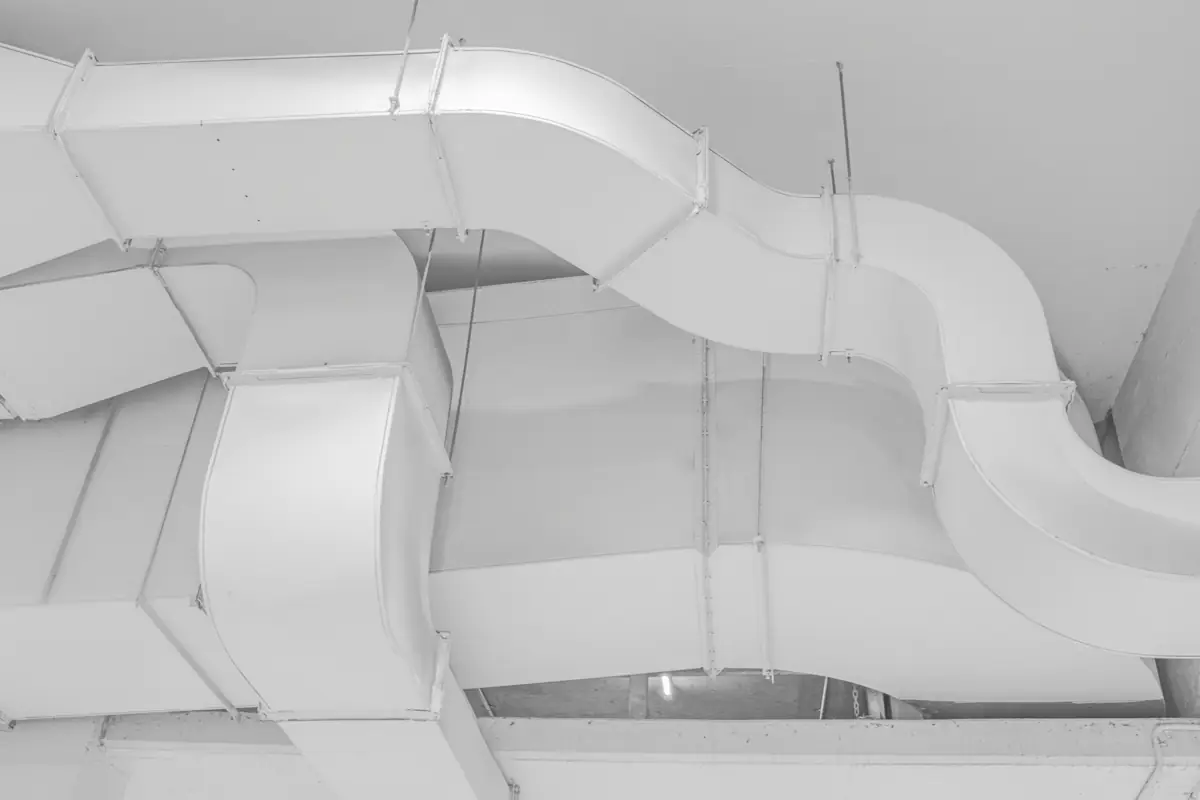
Cleaning is indicated when there is substantial visible mold in sheet-metal ducts, vermin, obstruction by dust and debris, or particles coming out of the registers (EPA criteria). Common technical criteria are added to those: after construction work, after water ingress, with measured pressure drop or degraded airflow, and with a persistent musty odor. Camera inspection and pressure drop measurement are the best rated methods to decide it. With none of those conditions, the reference is to inspect, not to clean on a schedule.
Indication criteria
| Condition | Indicated action | Origin of the criterion | Ref. |
|---|---|---|---|
| Substantial visible mold inside hard-surface (sheet metal) ducts | Clean and correct the cause of moisture; otherwise the mold returns | EPA | E-02 |
| Mold on internal fiberglass insulation | Replace the material, do not clean it | EPA | E-02 |
| Infestation by vermin (rodents or insects) | Clean and remediate | EPA | E-02 |
| Ducts clogged by excessive dust and debris | Clean | EPA | E-02 |
| Particles visibly released from supply registers | Clean | EPA | E-02 |
| After construction, renovation or demolition in the building | Clean before start-up | Complementary technical criterion | E-31 |
| After flooding, a leak or water entering the system | Assess, dry and remediate; replace affected porous material | Complementary technical criterion | E-02 |
| Anomalous pressure drop or degraded airflow, measured | Inspection and targeted cleaning | Complementary technical criterion | E-26 |
| Persistent musty odor at the supply | Inspection: musty odor was used as an indicator of fungal contamination in a study of 1,006 adults | Complementary technical criterion | E-28 |
| None of the above, in a well-maintained building | Do not clean on a schedule; inspect | EPA | E-02 E-01 |
The EPA criteria are written for homes; they apply by analogy to commercial buildings. The complementary technical criteria are common practice in the sector and do not come from the EPA.
How a duct is inspected
An analysis of ten inspection methods (Mashonova et al., 2026) rated them on reliability, applicability, speed, cost and diagnostic value. Optical camera inspection with image processing, and pressure drop measurement, ranked first. The camera shows what is there; pressure drop lets the system be tracked over time. E-26
The camera inspection leaves a report with photographs of the interior, which is the starting point to decide and to check the work afterwards. Climatiza shows in its video the team behind every report.

Method requirements backed by the evidence
| Requirement | Why | Ref. |
|---|---|---|
| Work with containment and control of the dust released | Particles and bioaerosols rise during uncontrolled cleaning; NADCA describes containment and negative pressure as part of the procedure | E-08 E-02 E-31 |
| Remove at the source, do not encapsulate | The EPA: sealants should never be used on wet liner, active mold or debris | E-02 |
| Do not apply biocides in systems with internal insulation | No chemical biocide is registered by the EPA for that use | E-02 |
| Replace, do not clean, wet or moldy fiberglass | The EPA: it cannot be cleaned effectively and cleaning is not enough to prevent regrowth | E-02 E-09 |
| Correct the moisture source before cleaning | If the cause is not corrected, the problem will likely return | E-02 C-02 |
| Also clean the coil, drain pan and fan | Infrequent cleaning of coils and pans was associated with more eye symptoms and headaches; in household units, the blower fan was the most contaminated part | E-03 E-14 |
| Review the installed filter grade | In 40 commercial units, MERV 8 filters were associated with more pathogenic bacteria and medically relevant fungi than MERV 14 | E-13 |
| Measure before and after: airflow, pressure drop and, where relevant, microbial load | It is the way to prove a result when the generic benefit of cleaning is questioned | E-26 E-16 |
The NADCA ACR standard is a sector reference: it is cited as a method, not as proof of benefit.
How to check the work was done well
- Ask for the prior inspection report. It should show the initial condition with photographs and justify the cleaning with one of the indication criteria.
- Compare before and after. The photographs should show the same section and make the change clear.
- Confirm the sections without access. The report should state which sections could not be worked on and why.
- Review the coil, pan and moisture source. Cleaning the duct without attending to these points lets it become contaminated again.
- Ask for the measurements. Airflow and pressure drop before and after, and the verification method used.
- Keep the report. It serves as the starting point for the next inspection.
The air conditioning duct cleaning service starts from that prior inspection. To decide how much attention a specific system needs, the duct inspection planner sorts use and warning signs without proposing a fixed frequency.
Services and tools on this site
- Air conditioning duct cleaningScope, symptoms and causes
- Camera inspectionThe real condition before deciding
- Service areasWhere work is done in Panama City
- Tools and calculatorsCFM, ACH, air velocity and planner
More at Climatiza and Radar Panamá
- When to clean air conditioning ducts (in Spanish)Climatiza: blog article
- Why duct cleaning is not recommended as a routine (in Spanish)Climatiza: criteria
- Air duct cleaning in PanamaRadar Panamá: when it is needed and how to check it was done well
- Air conditioning maintenance contract for businessesRadar Panamá: what it should include
Frequently asked questions
When is duct cleaning indicated?
According to the EPA, when there is substantial visible mold in sheet-metal ducts, vermin, ducts clogged by dust and debris, or visible particles coming out of the registers. The usual technical criteria add to those: recent construction, water ingress, measured pressure drop or degraded airflow, and a persistent musty odor.
How can you tell whether a duct has mold?
It cannot be confirmed by eye: the EPA says identification can only be made by an expert and may require laboratory analysis. A camera inspection shows the interior and documents what is there.
Can moldy fiberglass be cleaned?
The EPA states that wet or moldy fiberglass insulation cannot be cleaned effectively and should be replaced, and that cleaning is not enough to prevent regrowth.
Does applying a disinfectant or sealing the duct help?
The EPA states that there are no chemical biocides registered for internally insulated systems, that their effectiveness has not been shown, and that sealants should never be used on wet liner, active mold or debris.
How much does duct cleaning cost?
It is quoted after the inspection, because it depends on the extent of the network, the access points and the condition found. A figure without an inspection would be a guess.
Keep reading the guide

Request an inspection
Do you want to know the condition of your ducts?
A camera inspection shows the inside of the ducts before anything is decided. Message us and we will confirm availability.
- +507 6388-2083
- info@climatizapanama.com
- Calle Gervasio García, 8, Panama City