
Río Abajo
Río Abajo: office inside the shed, how to keep dust out of the ducts
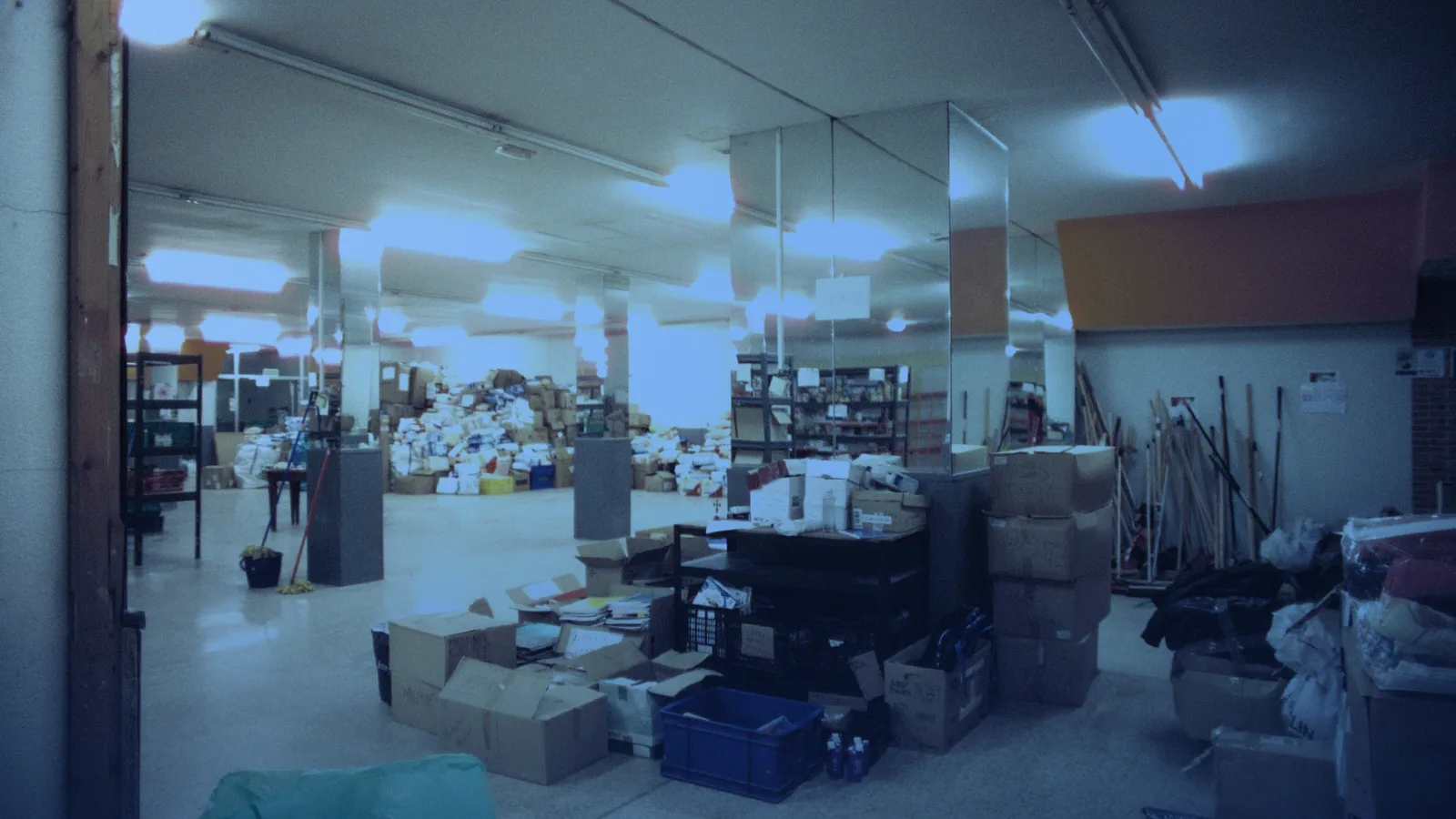
In the sheds of Río Abajo the office is a drywall box with air conditioning inside a bay whose gate stays open half the day. The dust each truck raises ends up in the same place: the return grille of that box.
 By Limpieza de Ductos Panamá
Dust gets into the office ducts because the air conditioning return draws air from the shed, not only from the office. It is prevented with three measures: keeping the return inside the office and away from the door to the bay, keeping the office at positive pressure relative to the shed, and checking the unit filter every month while the gate is in use. The camera confirms how much dust has already reached the duct.
Open gate and return air
An office inside a shed is not a closed space, even with a door. The drywall does not reach the bay roof, cable penetrations stay open and the door opens every time someone signs a delivery note. The air conditioning unit needs to draw air from somewhere to return it cold, and if the return sits in the office ceiling, it is often pulling bay air that comes in over the walls.
Río Abajo adds heavy street traffic to that. The health situation analysis of the Metropolitan Region notes air quality problems in the district from traffic and intense commercial activity. That fine dust comes in through the gate with every truck and mixes with the cardboard and packaging of whatever gets unloaded.
Where dust builds up in the duct
Shed dust is coarser than tower office dust and settles sooner. An ARTI laboratory study with dust equivalent to a year of use found that coil pressure drop rose between 6 and 30 % and unit efficiency fell between 1 and 9 %. In a shed that year of dust arrives in less time. The points where it settles always follow the same order.
The fieldwork is carried out by the Climatiza team, who check branches, grilles and air handlers and record the result in an illustrated report, also in the case of Río Abajo.
| Point in the system | What builds up | How it looks |
|---|---|---|
| Unit filter | Coarse dust from cardboard and street | Gray in days, not months |
| First run after the return | Uniform layer on the duct floor | Fingerprint when touched |
| Elbows and reducers | Buildup on the outer face of the bend | The camera shows a dust ridge |
| Coil | Fine dust stuck by humidity | Dull fins, less airflow |
| Supply grilles | Dust that has traveled the whole system | Black edge on the ceiling |
Signs in the office and at the counter
- Screens and desks dusty by mid afternoon even when cleaned in the morning.
- The air smells of cardboard or diesel when a truck is at the gate.
- Supply grilles with a dark halo on the ceiling.
- The unit cools less on the busiest unloading days.
- The filter clogs in two or three weeks.
- Counter paperwork with a thin film when opening the next day.
What to check and how often
The ASHRAE maintenance checklist for air quality sets as a monthly task reading the filter pressure drop on each air handler and replacing those above the manufacturer maximum. In a Río Abajo shed that month is a good starting point, and the rest of the routine is organized like this.
- Every month: filter. It is removed, held against the light and replaced if light does not pass. The date is written on the frame.
- Every three months: grilles and first run. The return is removed and viewed with a flashlight. If a visible dust layer is there, the camera is scheduled.
- Every six months or after peak season: coil and pan. With the unit off, fins and drainage are checked.
- When the signs call for it: camera. The full duct is traveled with the camera that shows the inside run by run and it is decided whether to clean and where.
How to coordinate with the loading operation
The measure that keeps out the most dust is not done by the technician but by the shed manager: separating unloading hours from the hours when the office air runs hardest. If trucks arrive between seven and nine in the morning, the office can start the air at nine with the gate already closed and the dust settled. Where that is not possible, a plastic sheet or strip curtain between the unloading zone and the office wall cuts a good part of the flow.
It also helps to seal cable penetrations and the gap between the drywall and the bay roof, and to move the return to the wall farthest from the door. With that the office gains some positive pressure and shed air no longer has an easy path to the unit. How a check is organized across a full bay is in how a warehouse is worked by zones, and the case of a closed office in a building, in how coordination with several tenants works. The context of the district is in how checks go unit by unit in this area.
Scheduling a review starts with a message to Climatiza, and the service page summarizes the process.
Sources
On this site
- Warehouses and storageHow the work is organized in this sector
- Río AbajoThe area and its building types
- Camera inspectionThe real condition before deciding
Climatiza and Radar Panamá
Frequently asked questions
Does a finer filter solve the shed dust?
It helps, but it raises pressure drop and a small office unit can lose airflow. Before changing the filter, the bay air openings should be sealed and the return moved. The filter is decided afterward, with the unit manufacturer.
If I clean the ducts, how long before the dust comes back?
It depends on whether the intake was fixed. With the return drawing bay air, dust is back within weeks. With the office sealed and the gate coordinated, the duct holds and the monthly filter routine is enough.
Can the duct be checked without stopping unloading?
Yes. The camera inspection takes place inside the office and takes little time. It should be done with the gate closed, so the image shows the duct condition and not the dust entering at that moment.
Is cardboard dust different from street dust?
Yes. Cardboard dust is coarse fiber that stays in the filter and the first run. Street dust is fine, travels farther and sticks to the coil with humidity. In a Río Abajo shed both arrive, and the camera tells them apart by color and by where they settle.
Keep reading

Request an inspection
Do you want to know the condition of your system?
A camera inspection lets you see the inside of the ducts before deciding what to do. Message us and we will confirm availability.
- +507 6388-2083
- info@climatizapanama.com
- Calle Gervasio García, 8, Panama City