
Convenience stores and corner shops
Mini market: ducts or just splits, how to tell and what to check
Many mini market owners pay for “duct cleaning” without having ducts, or the other way round, they clean the split every six months without knowing that behind the ceiling there are ten meters of flexible duct nobody has looked at. The difference shows in five minutes.
 By Limpieza de Ductos Panamá
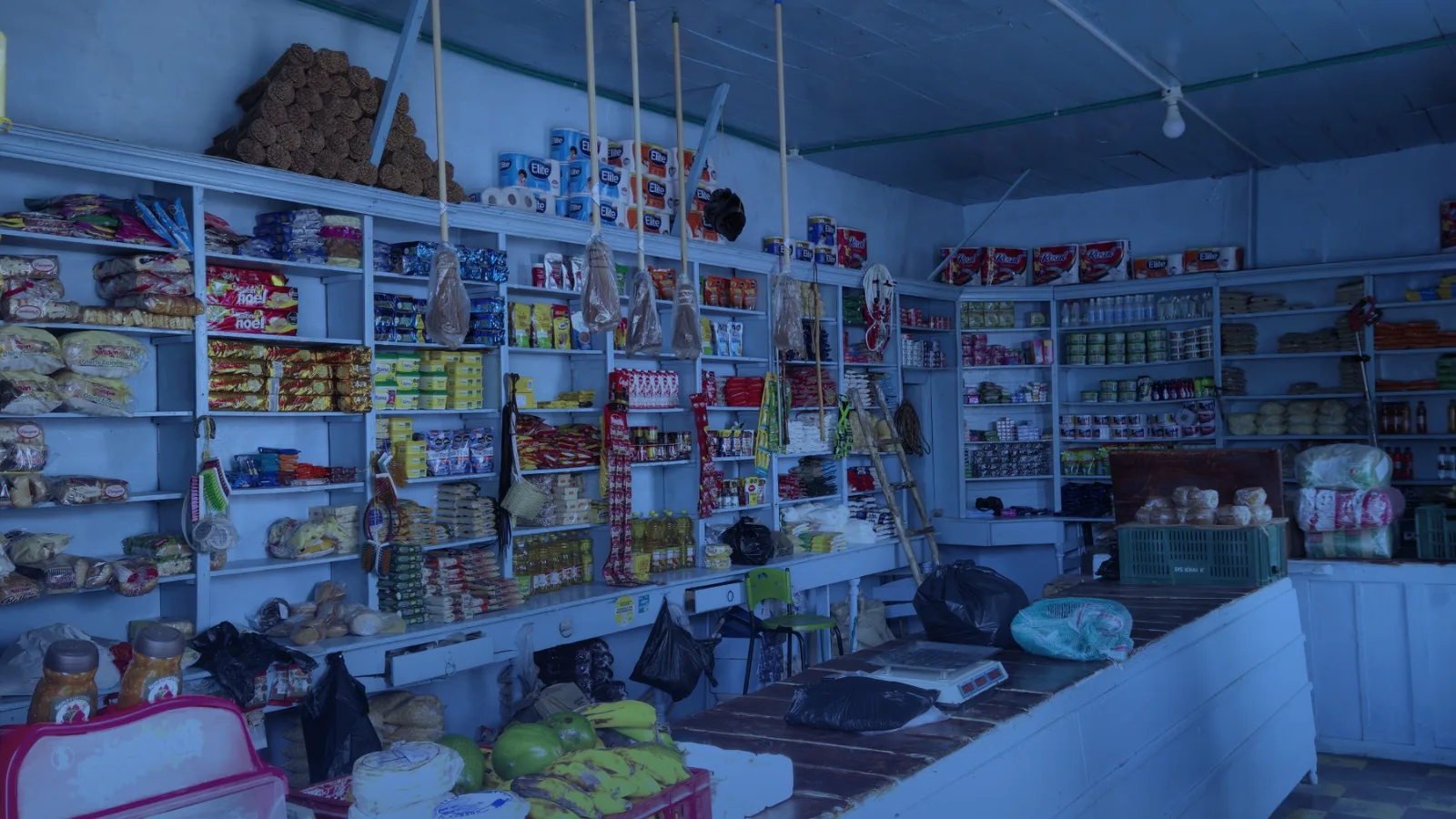
A mini market has ducts if the air comes out of several grilles across the ceiling and the cooling unit is hidden above the ceiling or in a separate room. If it comes from a visible wall unit or a square ceiling panel with four outlets, it is a split or a cassette, with no ducts. The split needs filter, coil and pan. Ducts also need a camera look inside.
How to recognize a ducted system in a small store
A neighborhood store usually inherits the previous tenant’s system, and nobody hands over drawings. Three checks are enough to know what is there. First, count the air outlets: a split has one, a cassette has four in a single panel, a ducted system has several separate grilles, sometimes of different shapes. Second, find the unit: if no appliance is visible in the shop and the air still comes out, the unit is above the ceiling or in a back room, and between it and the grilles there is duct. Third, lift a ceiling tile next to a grille: a silver or gray tube, flexible or rigid, confirms the duct.
There is a fourth common case in mini markets and grocery stores: a wall split in the shop and a ceiling unit with two or three grilles above the coolers. It is a mixed system, and each part has its own maintenance. The page on how the work is organized in a store with a sales floor describes the general order. Here the point is knowing which part of the store has what.
Split, cassette or duct: what each one needs checked
| System | How to recognize it | What maintenance it needs |
|---|---|---|
| Wall split | Visible unit on the wall, one air outlet | Washable filter monthly, coil and pan by the technician, no ducts to inspect |
| Ceiling cassette | Square panel in the ceiling with four outlets and a central grille | Central grille filter, pan and condensate pump, no ducts |
| Concealed unit with ducts | Several separate grilles, unit above the ceiling or in a separate room | Filter, pan and in addition camera inspection of the duct sections |
| Mixed system | Split in the shop and grilles above coolers or stockroom | Each part separately, with its own date in the log |
The important point is that duct cleaning does not replace equipment maintenance or the other way round. A refrigeration technician who cleans the coil does not look inside the duct, and a duct inspection does not recharge the gas or check the compressor. They are two services and it pays to know which one is being paid for.
Anyone who needs to see the real condition of the ducts in the case of convenience stores and corner shops can request a camera inspection from the team at Climatiza, a technical duct cleaning service in Panama, which documents every section with images.
Signs of a dirty duct in a neighborhood store
A mini market has its door open almost all day, a dusty street two meters away and coolers spilling cold air into the aisle. With the 75.7% average humidity ETESA records for Panama and San Miguelito, the street dust that enters the return gets damp and sticks. The signs are simple and the owner can check them without help.
- One grille blows hard and another barely: the weak one's section may be crushed or loaded.
- Gray dust built up on the grille louvers a week after wiping them.
- A damp smell when switching on in the morning that fades within half an hour.
- Dark stains on the ceiling tile around the grille.
- The concealed unit filter loads in half the time of the wall split filter.
- Air noise in the ceiling that was not there before, a sign of a loose joint in the duct.
When a camera inspection is worth it
Not always. A small store with two three meter duct runs does not need a camera every six months. EPA, in its guide on duct cleaning for homes, gives three reasons that do justify it: visible mold inside, pests or signs of rodents, and ducts clogged with dust that release particles through the grilles. The same guide notes that cleaning has not been shown to prevent health problems, so the decision is made on what is seen, not on what is feared. ASHRAE Standard 180 follows the same logic for commercial systems: inspect at a defined frequency and act on the condition found.
- It is worth it if. There are two or more signs from the list, the store has gone over three years without anyone looking inside, or the store was just taken over and nobody knows what the previous tenant left. It is worth asking for a camera check of the interior before deciding anything.
- It is not needed if. The system is a split or cassette with no ducts, or last year's camera showed a clean interior and there has been no construction or change of use.
- It is better to wait if. The unit is going to be replaced or the store remodeled in the coming months. Inspect after the work, once the dust got in or was kept out. The guide on when cleaning makes sense and how it is decided details the criteria.
A simple routine for the owner
Mini market maintenance fits on a wall calendar. Every month, wash the split filter and look at the concealed unit filter, if there is one. Every three months, wipe the grilles and note which got dirtiest. Every six months, a refrigeration technician visit for coil, pan and gas. Once a year, or when two signs appear, a camera check of the sections. The calculator and guides in the tools section help estimate the level of attention according to the store’s use.
What does not pay is booking a “full cleaning” by phone before anyone has confirmed which system is there. In a store with only a split, that service has nowhere to apply. In a hardware store or any other business with a stockroom and its own dust the same question is answered the same way: identify the system first, then decide.
More about the inspection and cleaning service that applies these criteria is on the Climatiza duct cleaning page and on the Climatiza home page.
Sources
On this site
- Stores and supermarketsHow the work is organized in this sector
- Hardware storesA neighboring sector
- Camera inspectionThe real condition before deciding
Climatiza and Radar Panamá
Frequently asked questions
Does a ceiling cassette have ducts?
No. The cassette is a complete unit mounted in the ceiling: it takes air through the central grille, cools it and returns it through its four outlets. Its maintenance is filter, pan and condensate pump. There is a duct only if tubes run from that panel to other grilles, which is rare in a mini market.
Who can confirm which system the store has?
The owner, with the three checks in this article, or the refrigeration technician on the next visit. It is also worth asking the landlord or the previous tenant whether any drawing or installation invoice remains, because the unit model appears there.
Do the mini market coolers affect the ducts?
They affect aisle humidity, and that reaches the return. Open coolers spill cold air that mixes with the humid air from the door, and the return swallows that mix. If there are grilles right above the coolers, they are usually the ones showing condensation or stuck dust before the others.
Keep reading

Request an inspection
Do you want to know the condition of your system?
A camera inspection lets you see the inside of the ducts before deciding what to do. Message us and we will confirm availability.
- +507 6388-2083
- info@climatizapanama.com
- Calle Gervasio García, 8, Panama City