
Academic laboratories
Academic laboratory: fume hoods and air conditioning ducts
Yes, fume hoods affect the laboratory air conditioning even though they share no duct section with it. They do it through air pressure.
 By Limpieza de Ductos Panamá
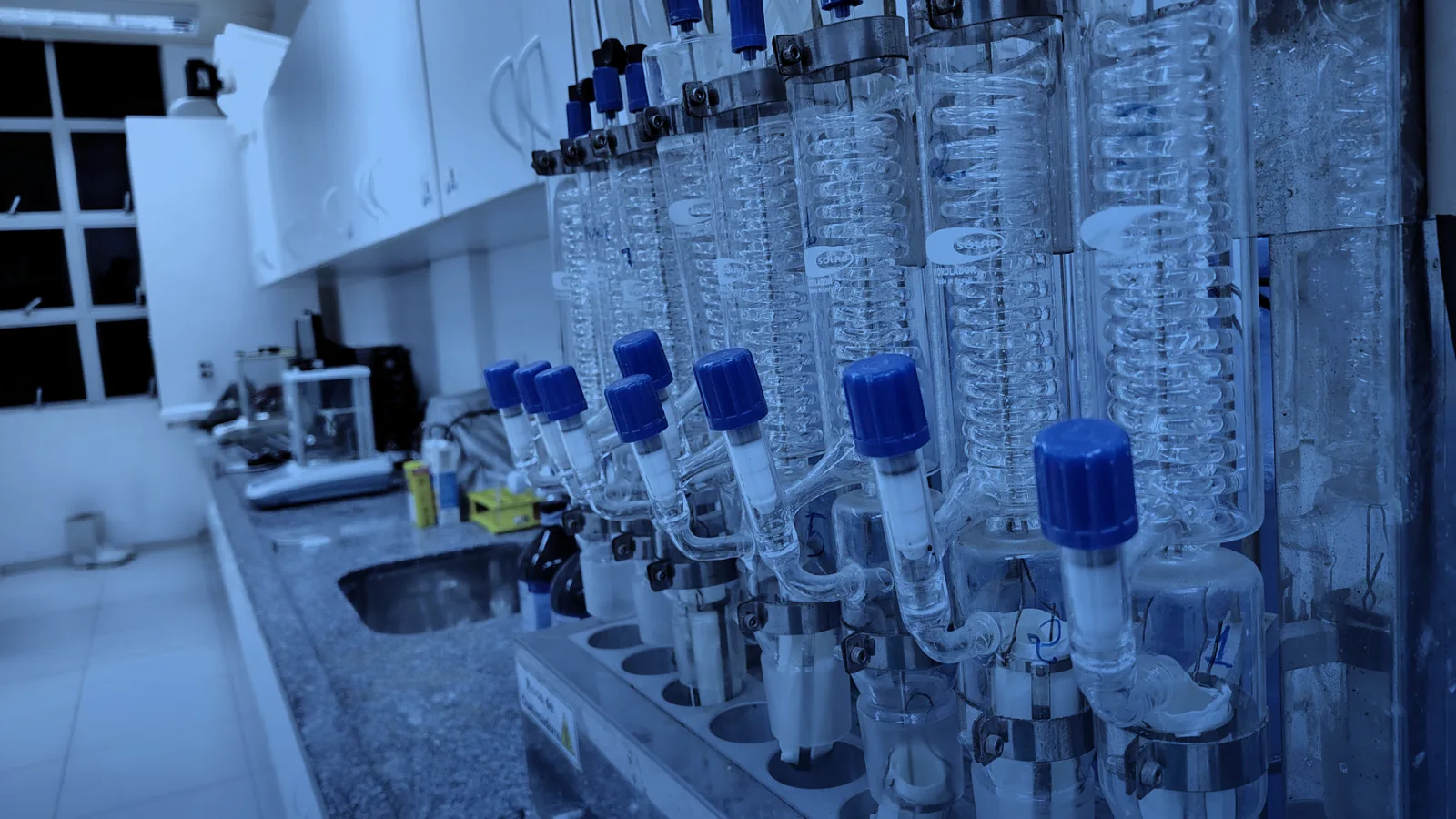
Yes. Each hood pulls air out of the laboratory to the outdoors, and that air has to come in from somewhere. If the air conditioning does not replace it, the lab ends up under negative pressure: doors get heavy, the unit works harder and the return drags dust and vapors toward the coil and the ducts. The inspection looks at both systems separately and at how they behave together during a practical session.
A teaching laboratory has two air systems that were designed separately and get along badly. The hood extracts. The air conditioning cools and recirculates. When the hood is on and the air conditioning is not set to replace what leaves, the lab pulls air from wherever it can: the gap under the door, the corridor, the ceiling void and the return ducts themselves.
Hood and air conditioning: two systems that fight
The OSHA laboratory safety guidance describes the hood as the primary control when working with flammable or toxic chemicals, and its laboratory standard requires hoods to be maintained and to function properly when used. To work, the hood needs an airflow that leaves the building. The ventilation system has to deliver that airflow, and in a school or university lab the only system moving air is usually the air conditioning.
The EPA describes the mechanism in its guide for building managers: local exhaust keeps negative pressure around the source, and air always moves from the higher pressure zone to the lower pressure zone through any opening. In practice, with three or four hoods open during a chemistry session, the lab becomes the lowest pressure zone on the corridor. The same happens in a plant with process exhaust, except that there it was designed that way.
Anyone who needs to see the real condition of the ducts in the case of academic laboratories can request a camera inspection from the team at Climatiza, a technical duct cleaning service in Panama, which documents every section with images.
Signs of imbalance in the laboratory
| Sign | What it usually means |
|---|---|
| Door that is hard to open outward or closes on its own | The lab is under negative pressure relative to the corridor |
| Whistling at the door gap with the hoods running | Makeup air is coming in where it should not |
| Hood air gauge outside the marked range | Insufficient airflow, OSHA asks to check the gauge before use |
| Air conditioning that cannot reach temperature during practicals | The unit cools air that the hood then throws out |
| Reagent smell in the corridor or the next classroom | The return recirculated what the hood did not capture |
| Dust built up on the supply grille next to the hood | Cross flow between supply and hood face |
What to check in the air ducts of teaching laboratories
The hood duct is not touched during an air conditioning cleaning: it is another system, with chemical residues, and it is handled by whoever certifies the hoods. What gets checked is the air conditioning network and how the exhaust affected it.
- Supply diffuser closest to each hood: if it blows straight at the face, it disturbs capture and should be noted.
- Return grille: sticky or discolored residue points to vapors that escaped the hood.
- Air handler filter: it loads faster during practical months than during breaks.
- Coil and drain pan: with 75.7 % mean annual humidity according to ETESA, what settles there does not dry.
- Return run with the camera: dust, moisture and any corrosion mark pointing to acid vapors.
- Duct penetrations between lab and corridor: if there are openings, they are the path of makeup air.
Calendar between semesters and practicals
The camera visit is scheduled when the hoods have been off for days and no reagents are open: the week between semesters or a break. The camera survey makes it possible to compare the duct at rest with what the hood gauge reports in operation. During the semester the routine belongs to the lab manager: log the gauge reading at the start of each practical and the filter condition every month, as the technical guide to checking a system by component proposes.
- Review the hood certification records. If a hood has been out of range for months, the imbalance already has a cause and duct cleaning will not fix it.
- Door test with and without hoods. The door is opened with the hoods off and then on. The difference in effort tells how much air is missing.
- Camera through return and supply. With the practical over and the air conditioning running.
- Filter change and record. On the same day, so the next semester starts from a known baseline.
What report the safety coordination asks for
The campus safety coordination usually keeps each hood certificate and the air conditioning maintenance log in separate files. The duct report is built to fit between the two: photos per section, the gauge reading of each hood on the day of the visit, a description of the door test and the list of what was not touched because it belongs to the exhaust. If the coordination wants a reference figure for the next semester, the planning tools let it be recorded.
A teaching lab with hoods in range and clean air ducts is still a space where two systems compete. The difference is that the imbalance is measured and visible, and the coordination can ask the ventilation design for what cleaning cannot give: makeup air. The same logic applies to the other buildings of a campus.
The next step after this guide is usually a visit to check the system, which is arranged with the team at Climatiza using the details in their duct cleaning page.
Sources
On this site
- Universities and schoolsHow the work is organized in this sector
- Industry and logistics parksA neighboring sector
- Camera inspectionThe real condition before deciding
Climatiza and Radar Panamá
Frequently asked questions
Does cleaning the air conditioning duct fix the negative pressure?
No. Negative pressure comes from the difference between what the hoods extract and what comes in. Cleaning restores the airflow that a loaded duct or filter was holding back, and that helps, but makeup air is a design matter handled by the person responsible for ventilation.
Who cleans the hood duct?
A hood supplier or the team that certifies them. It contains residues of the reagents used and is never mixed with the air conditioning network. In the air duct report it is listed as a separate system, not inspected.
Can the work be done with open reagents in the lab?
Better not. The visit is scheduled with the hoods off, benches cleared and reagents stored, usually between semesters. That way the camera goes in without risk and the photos show the duct at rest.
What does the hood gauge read and why does it matter here?
It shows whether the exhaust airflow is within the range set by the manufacturer. OSHA asks to check it before using the hood. It matters for the ducts because that airflow is exactly the air the lab must replace.
Keep reading

Request an inspection
Do you want to know the condition of your system?
A camera inspection lets you see the inside of the ducts before deciding what to do. Message us and we will confirm availability.
- +507 6388-2083
- info@climatizapanama.com
- Calle Gervasio García, 8, Panama City