
University auditoriums
University auditorium: ducts and full capacity events
An auditorium spends weeks with the air off and then suddenly hosts hundreds of people for three hours. The ducts have to be ready before, not during.
 By Limpieza de Ductos Panamá
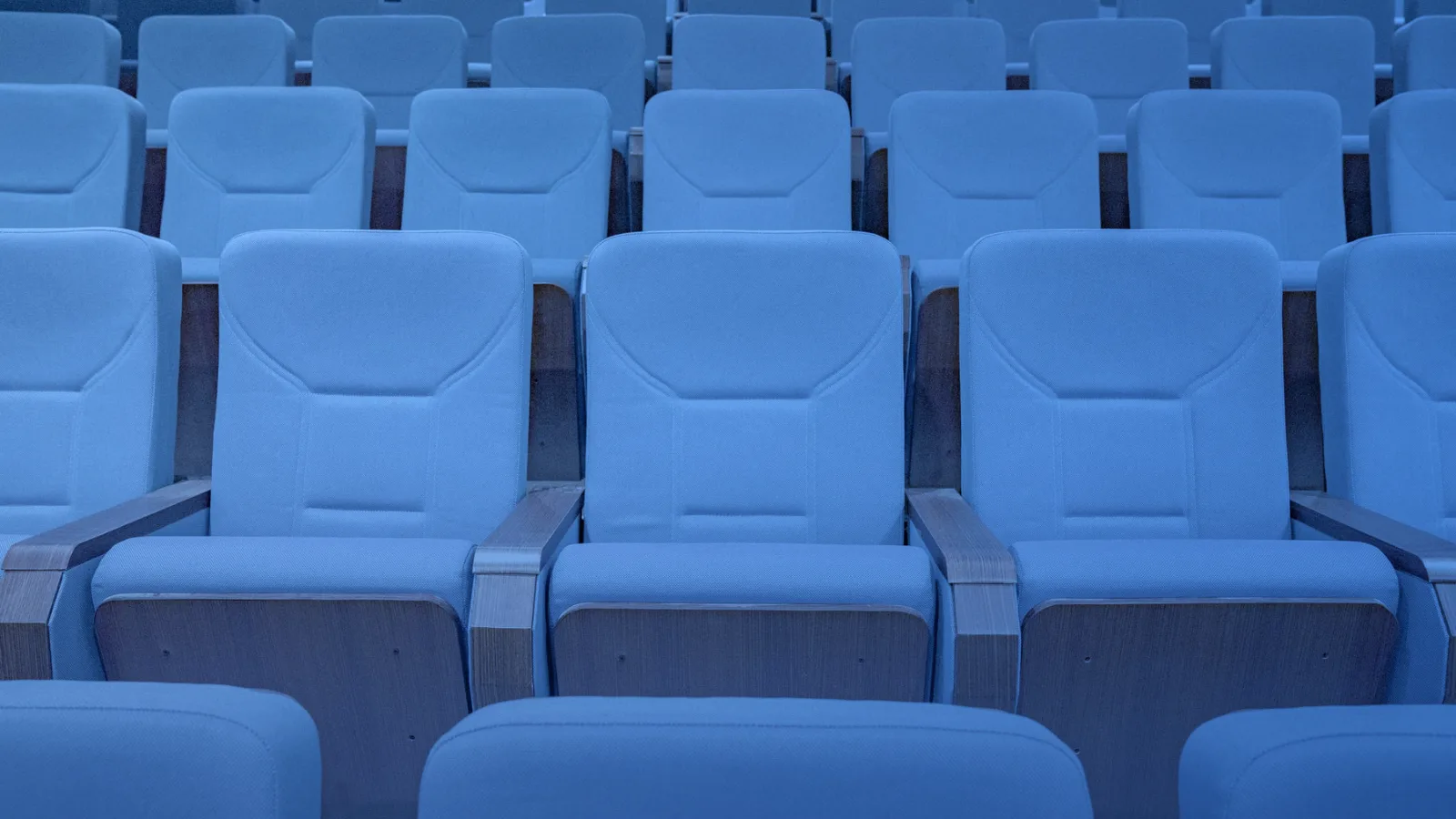
Before a full capacity event it pays to check the returns and grilles under the seats, the air handler filters and the inside of the duct runs that sat idle, with a camera inspection scheduled before the stage is set up. The goal is for the system to reach the event without built up dust or trapped moisture, with a report the events office can consult.
Weeks empty and then a full house
The auditorium is the campus space with the most irregular use. Between one event and the next, weeks go by with the air off or at minimum, and during that time the humidity of Panama, a 75.7 % annual mean according to ETESA and IMHPA, enters the ducts with nothing to remove it. On event day the system starts cold and suddenly takes in the heat, moisture and carbon dioxide of a full hall.
The EPA, in its mold guide for schools and commercial buildings, recommends keeping indoor relative humidity below 60 % and watching condensate pans and duct liners, which are the places where hidden mold appears. An idle auditorium meets every condition for that to happen without anyone seeing it.
Add what the previous event left behind: confetti, paper, carpet dust kicked up by hundreds of feet and fog machine residue if there was a performance. All of it falls and, if the returns are in the floor, it goes in.
To coordinate a visit related to university auditoriums, Climatiza answers inquiries and confirms availability according to the schedule of the place.
What to check in the returns under the seats
Many auditoriums supply air through the floor, under each seat, and return it through high grilles or through the stage. Others do the opposite. In both cases the floor grilles are the point that receives the most load, because they sit where everything falls.
- Floor grilles blocked by chewing gum, paper or compacted dust.
- Grilles under seats blowing unevenly: blocked sections of the plenum.
- Plenum under the seating with moisture, stains or water after the rainy season.
- Air handler filters still carrying the load of the last event, not replaced.
- High return grilles with dry dust visible from the seats.
- Stage diffusers with greasy residue from fog machines.
The camera goes in through the floor grilles and travels the plenum or the duct up to the air handler. It is the only way to know whether what shows on the grille continues inside.
Signs during the previous event
| What happened at the last event | What it suggests about the ducts |
|---|---|
| Heat in the back rows after half an hour | Reduced supply on the longest runs |
| Stale smell during the first minutes | Moisture trapped in the idle duct |
| Dust visible in the projector beam | Airborne particles the filter did not hold |
| Drops on ceiling diffusers | Condensation from an uninsulated duct or very humid air |
| Complaints of sneezing in the audience | Proves nothing on its own, but adds up with the others |
No single sign is enough. Two or three together justify looking inside before the next event.
How to coordinate with protocol and events
- Ask for the event date and the set up date. The inspection goes before the stage is dressed. With platforms, curtains and cabling installed, the grilles are no longer reachable.
- Confirm who opens the plenum and the air handler rooms. It is usually campus maintenance, not the events office. Both should be on the same email.
- Schedule the cleaning, if needed, with room for the filter change. The camera report decides whether to clean or just change filters and start the system early.
- Switch the air on before event day. Several hours with the hall empty let the duct dry and any odor leave before the audience arrives.
What report to leave before the date
The protocol office does not need a long technical report. It needs to know that the air was checked, what was done and what was left out. The document is delivered in two parts: one page for the events office and the detail with photos for maintenance.
- Inspection date and event date.
- Simple plan of the seating with the checked grilles marked.
- Photos of the plenum or duct before and after, if cleaned.
- Filters replaced and date.
- What could not be reached and why.
With that record, the next event starts from a known point and the decision on when cleaning is due again no longer depends on someone’s memory. The same criterion serves a theater with a stage and a season of shows and, at another scale, the large classrooms of the campus. The planner helps place the auditorium at its level of attention.
Questions about a specific building can be sent to Climatiza, and the service description shows what a visit includes.
Sources
On this site
- Theaters and auditoriumsHow the work is organized in this sector
- Universities and schoolsA neighboring sector
- Camera inspectionThe real condition before deciding
Climatiza and Radar Panamá
Frequently asked questions
How far ahead should the ducts be checked before a graduation?
Before the stage set up and with time to clean if the camera calls for it. In practice, once the events office confirms the date the inspection is booked, room is left for cleaning and the filter change, and the air is switched on with the hall empty before the ceremony.
Should the air conditioning stay on between events?
It depends on the building, but keeping it at minimum stops moisture from settling in the duct for weeks. If it is switched off to save energy, it should be started with the hall empty before the event and the condensate pan condition recorded.
Do fog machines from cultural events affect the auditorium ducts?
They leave a greasy residue on diffusers and returns near the stage. It is not the subject of this article, but the report notes it when it appears, because it changes the cleaning method for that section.
Who decides whether to clean or just change filters?
Campus maintenance, with the camera report in hand. If the inside of the duct is dry with little dust, changing filters and starting early is usually enough. If there is moisture or build up, it is cleaned before the set up.
Keep reading

Request an inspection
Do you want to know the condition of your system?
A camera inspection lets you see the inside of the ducts before deciding what to do. Message us and we will confirm availability.
- +507 6388-2083
- info@climatizapanama.com
- Calle Gervasio García, 8, Panama City