
City halls and municipal offices
Municipal government with scattered sites: a duct plan per building
The main building has a manager and a machine room. The office in the farthest district has an old unit and two staff members. The same budget has to cover both.
 By Limpieza de Ductos Panamá
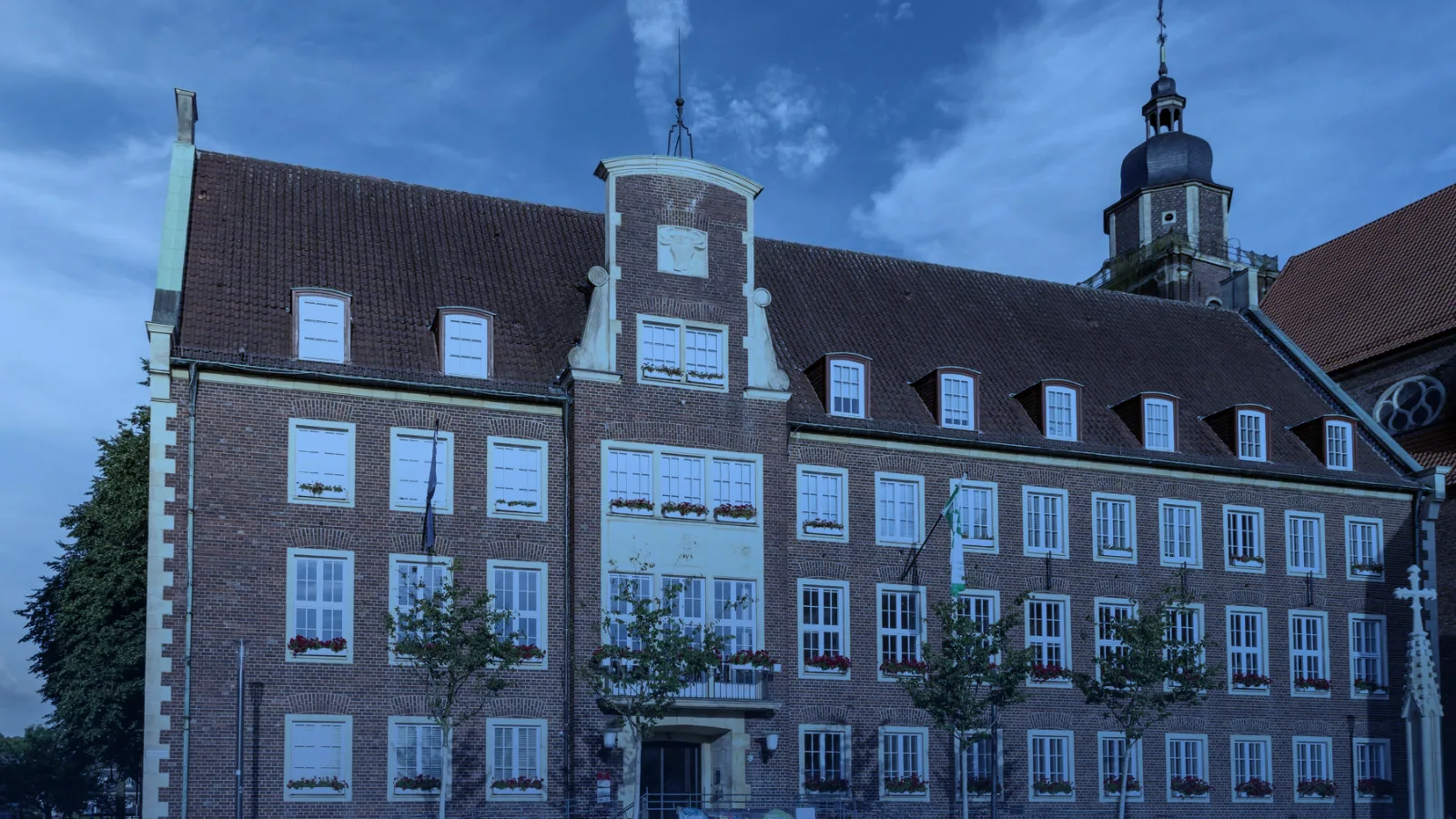
The plan is built in three steps: an inventory of each site with its units and the areas they air condition, a priority based on occupancy and observed condition, and a rotating calendar in which every site is inspected with a camera each year and only those that need it are cleaned. That way a single budget is distributed by evidence rather than by complaint.
Inventory of sites and systems
Before requesting a single quote it helps to know what the municipality owns. Many small municipal sites have no ducts at all: they run on split or cassette units that are checked a different way. The inventory separates what has ducts from what does not, and for each site with ducts it records the unit, the areas it serves, the approximate year of installation and who holds the key to the machine room.
That survey can be done by maintenance staff with a simple form and phone photos, on visits that coincide with other tasks. The EPA air quality guide for building managers recommends exactly that kind of air system record as the basis for any maintenance decision.
| Type of site | What it usually has | What to record |
|---|---|---|
| Town hall or main building | Several ducted units, public service desks, council chamber | Unit per floor, existing access panels, service hours |
| District offices | A split or a small unit with short ducts | Whether there are ducts or not, condition of grilles, local contact |
| Market, cemetery, cultural center | Air conditioned offices inside open spaces | Which areas have air conditioning, surrounding dust, access points |
| Municipal depots and workshops | Small office next to vehicles or materials | Nearby source of dust or fumes, exposed return |
Prioritizing by occupancy and age
With the inventory in view, priority is decided with two variables that need no technician: how many people pass through each site every day and how long the system has gone without anyone looking inside. A service counter with a daily queue loads the return more than an administrative office of three people. A system installed many years ago and never inspected goes before a recent one, even if the site is small.
To coordinate a visit related to city halls and municipal offices, Climatiza answers inquiries and confirms availability according to the schedule of the place.
Observed signs are added to those two variables: odor on start-up, stains around the grilles, visible dust on the diffusers, water in the pan. With the 75.7 % average annual humidity that ETESA records for the district of Panama, any section with wet insulation moves up in priority. The planner that ranks attention by use and signs allows each site to be scored with the same criteria.
- Counter or waiting room with the public all day long.
- System with no documented inspection since installation.
- Odor or water at the grilles reported by the site staff.
- Site next to a road with heavy traffic or a municipal workshop.
- Recent remodeling or change of use with no duct protection.
A rotating annual calendar
The rotating calendar solves the single budget problem: every year all sites with ducts are camera inspected, on a route that groups the nearby ones, and only what the camera justifies gets cleaned. The camera inspection takes less effort than a cleaning and delivers the data that orders everything else. The next year the route is repeated and compared.
- Group sites by route. Sites in the same district or in neighboring districts are visited on the same day. Fewer trips, more sections reviewed per shift.
- Inspect outside public hours. Each site states its quietest hour. The main building is worked floor by floor, the small ones in a single visit.
- Clean by evidence. Flagged sections are grouped into a second route, with priority for the busiest sites.
- Close the cycle. Whatever was not reached goes first on next year’s list, with its photo and its reason.
How to present the plan to the council
The council approves budget lines, not duct sections. The plan is presented on one page per site with three items: what was found, what was done and what remains pending, with one camera photo per site. Cleaning should not be presented as a health measure, because the EPA and the CDC note that it has not been shown to prevent health problems. It is presented as documented maintenance of a municipal asset, which is what it is.
Comparing with a ministry that organizes inspection by floors and permits helps explain why the main building needs a different plan from the small sites, and with a courthouse that works around its hearing calendar shows that each site’s hours are set by those who occupy it.
What report to keep per site
The report per site is the plan’s memory, and it survives changes of administration if it is kept well. One folder per site, physical or digital, with the inventory, the photo from each annual inspection, the sections cleaned and the pending ones. ASHRAE 180 asks, for commercial systems, that inspection and maintenance be documented with their dates, and that is the format worth imitating even though the standard does not govern in Panama.
- Site inventory with unit, areas and key holder.
- Date and photos of each year’s camera inspection.
- Sections cleaned, with before and after images.
- Pending items with their reason and their priority for the next cycle.
- Record signed by the local person in charge of the site.
The next step after this guide is usually a visit to check the system, which is arranged with the team at Climatiza using the details in their duct cleaning page.
Sources
On this site
- Public buildings and ministriesHow the work is organized in this sector
- CourtsA neighboring sector
- Camera inspectionThe real condition before deciding
Climatiza and Radar Panamá
Frequently asked questions
What about sites that only have split units?
They stay out of the duct plan and go into ordinary equipment maintenance: filter, coil and pan. It is worth noting in the inventory so that nobody contracts duct cleaning where there are no ducts.
Are all sites inspected in the same year?
Ideally yes, because the camera is quick and gives the baseline for comparison. If the budget falls short, the busiest sites and those with the oldest systems are inspected first, and the rest move to the following year with a fixed date.
Who accompanies the technician at each site?
The local person in charge, who opens the machine room, states the hours without public and signs the record. Without that person the visit is wasted, which is why they appear in the inventory with name and contact details.
How is a new or remodeled site included?
It enters the inventory with high priority in its first year, because construction work usually leaves dust in the ducts. After that it joins the rotating calendar like any other.
Keep reading

Request an inspection
Do you want to know the condition of your system?
A camera inspection lets you see the inside of the ducts before deciding what to do. Message us and we will confirm availability.
- +507 6388-2083
- info@climatizapanama.com
- Calle Gervasio García, 8, Panama City