
Theaters and auditoriums
Theater: ducts over the stage and seating, set dust
A theater makes its own dust. Every production cuts wood, sands, paints and throws haze over the stage, and all of it happens under the same roof as the seating.
 By Limpieza de Ductos Panamá
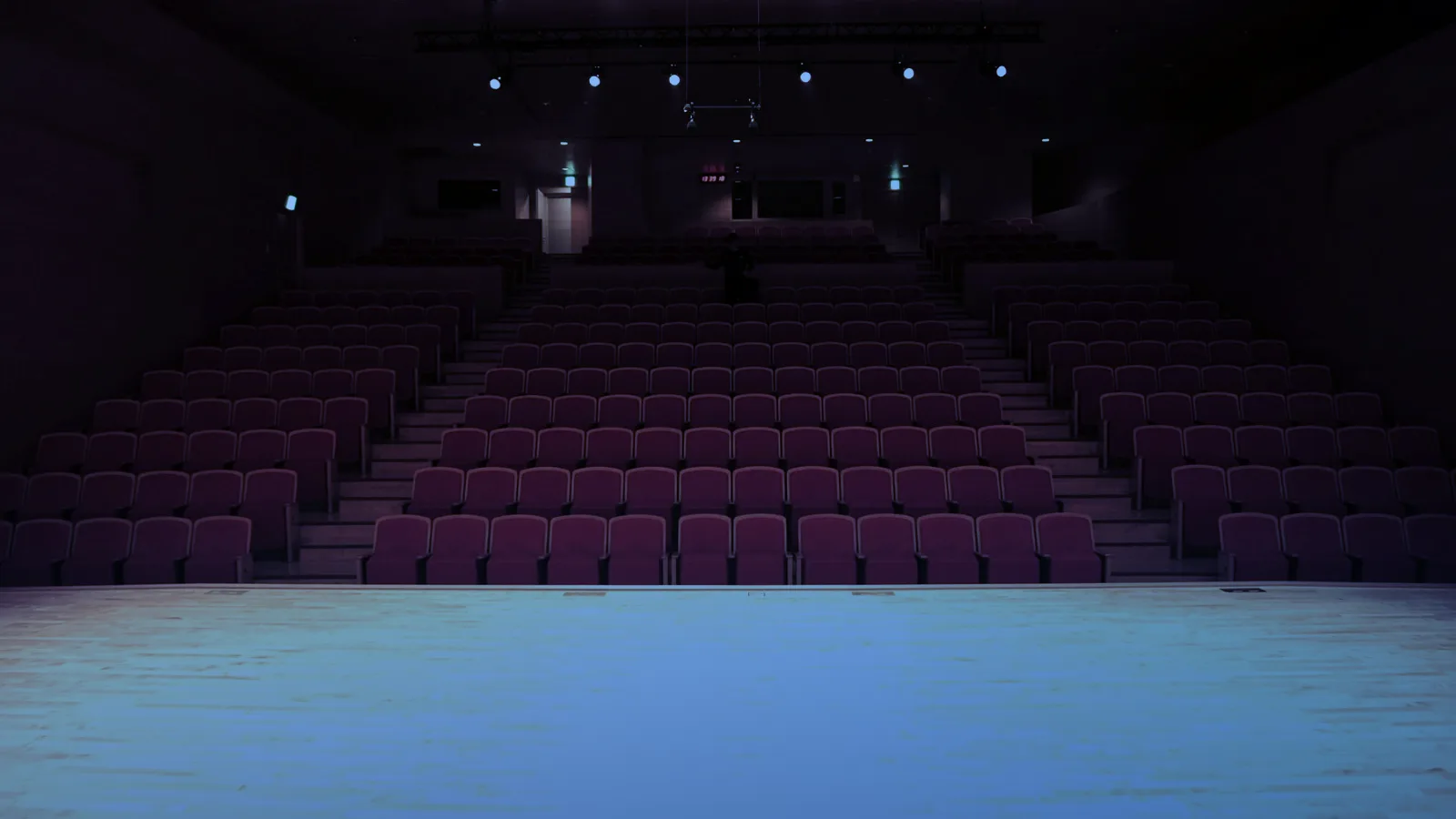
Yes, part of it gets there. The scenery workshop produces wood and board sawdust plus paint mist, and stage haze is released over the stage with a full house. If the workshop, the stage house and the seating share returns, or if the fire curtain stays open during rehearsals, the seating duct takes both loads. The camera shows in which section they settled and whether cleaning makes sense.
The scenery workshop and the seating share air
In many theaters the workshop sits behind the stage or in a basement connected through the pit and the loading corridors. When board is cut or a platform is sanded, the dust leaves through the workshop door, crosses the stage house and reaches the nearest returns. If those returns belong to the same air handler that serves the seating, the sawdust spreads through the hall even though the audience never saw a saw.
The EPA and NIOSH guide Building Air Quality recommends, for construction inside an occupied building, blocking the return registers of the work zone so contaminants do not recirculate. A set build is, as far as the air is concerned, a small construction job inside the theater. Covering the workshop and stage returns during cutting is the cheapest measure of all and prevents most of the deposit in the hall duct.
- Fine sawdust on the backrests of the front rows the day after cutting in the workshop.
- Seating grilles with a greyish edge that darkens faster during build weeks.
- Hall air handler filter loaded on the inlet face with wood fibers.
- Paint or solvent odor in the balcony while painting goes on in the workshop.
- Fire curtain open throughout the technical rehearsal week.
Stage haze and grilles
Theatrical fog effects are made with glycol, glycerin or white mineral oil fluids, according to the ESTA standards for atmospheric effects. Those fluids do not vanish: part settles as an oily film on grilles, diffusers and the first meters of the hall exhaust duct. That film traps sawdust and fabric dust, and the result is a sticky layer that no longer comes off with a dry cloth.
To coordinate a visit related to theaters and auditoriums, Climatiza answers inquiries and confirms availability according to the schedule of the place.
That is why two different deposits are told apart in a theater. The dry one, from wood and fabric, looks like loose dust and is vacuumed. The oily one, from haze, looks like a sheen on the metal and calls for a different cleaning method. The camera that travels inside the duct shows which of the two dominates in each section before choosing how to clean.
Windows between seasons
The best time to look at the seating ducts is not when the hall happens to be empty, but right after a production is struck and before the next one loads in. In that gap the workshop has finished cutting, the haze from the last performance has settled and the stage is clear for ladders or lifts. If the review happens mid season, the camera records a condition that will change with the next build.
| Source | Where it settles | What is checked |
|---|---|---|
| Set cutting and sanding | Stage house returns and hall filter | Filter on both faces, first return section with the camera |
| Paint and solvents | Balcony grilles and high diffusers | Odor in the balcony and stains on the diffusers |
| Haze and stage fog | Seating diffusers and hall exhaust | Oily sheen on the metal and stuck dust |
What to check in dressing rooms and the pit
Dressing rooms usually have small units of their own, and the orchestra pit sits under the stage edge, where everything the stage sheds falls. In the dressing rooms the filter of each unit and the condition of the return grille are checked, since it collects hairspray, powder makeup and costume fibers. In the pit it is checked whether there are supply grilles at music stand height and whether they are covered by sawdust that fell from the stage.
A theater hall resembles a cinema auditorium that fills per screening in its pattern of use, but with a basic difference: the cinema builds nothing behind the screen. Once the technical direction understands that difference, it readily accepts that the plan starts in the workshop and not in the seating. The way to organize the work around the theater program is already described on the sector page, and here only the order of the sources is added.
Report for the technical direction
A useful report for a theater separates stage, seating, balcony, dressing rooms and pit, and for each says what kind of deposit the camera found, dry or oily, and what was done. It should include the hall filter photo before and after, and a line about the workshop returns: whether they were covered during the last build or not. With that detail the technical direction can change a habit, which is worth more than any cleaning. The criteria for deciding whether a section needs cleaning are applied zone by zone, not to the whole theater.
To ask about availability or request a camera inspection, the Climatiza website lists the ways to contact the team and the duct cleaning service page explains how the work is organized.
Sources
On this site
- Theaters and auditoriumsHow the work is organized in this sector
- CinemasA neighboring sector
- Camera inspectionThe real condition before deciding
Climatiza and Radar Panamá
Frequently asked questions
Does stage haze damage the ducts?
It does not damage them, but it leaves residue. Glycol, glycerin or mineral oil fog fluids condense on grilles, diffusers and the first exhaust section as a film that holds dust. It is identified by the sheen on the metal and cleaned with a different method than dry dust.
Does the workshop have to close to check the seating?
No, but it makes sense to check when the workshop is not cutting, because otherwise the camera records airborne dust and not the real deposit. The gap between strike and load in is the natural window. During cutting it is enough to cover the workshop and stage returns.
What if stage and seating have separate air handlers?
Then the dust path is the open air of the hall, not the duct. The camera in the seating duct will show less sawdust, and the review focuses on the stage air handler filter and on the front row diffusers, which receive what falls from the stage edge.
What should the technical direction keep from the report?
The camera images by zone, the hall filter photo and the note on whether the returns were covered during the build. That record allows comparing production against production and knowing whether the habit of covering returns changed the result.
Keep reading

Request an inspection
Do you want to know the condition of your system?
A camera inspection lets you see the inside of the ducts before deciding what to do. Message us and we will confirm availability.
- +507 6388-2083
- info@climatizapanama.com
- Calle Gervasio García, 8, Panama City