
Metro stations
Metro station: ducts in shops and technical rooms
The dust in a metro station is not street dust. It is metallic, the train itself produces it and it is renewed with every braking on the platform.
 By Limpieza de Ductos Panamá
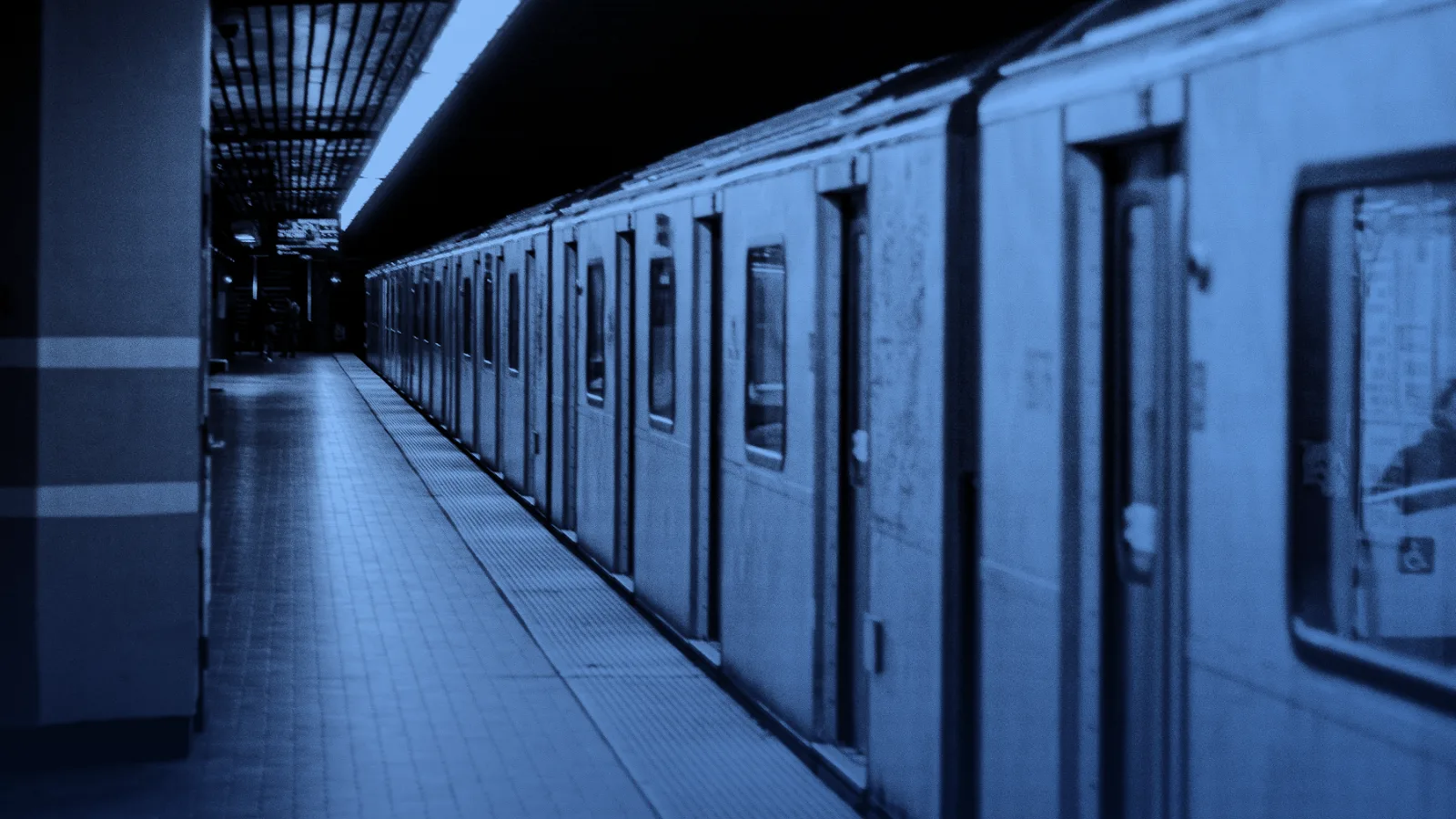
Three things are checked: the returns of the shops facing the concourse, where metallic brake dust carried by the crowd enters, the filter and coil of each unit, where that dark heavy dust builds up fast, and the diffusers of the technical rooms, where any conductive particle lands on equipment. The camera inspection is scheduled during closing hours and the report is separated by shop and by technical room.
Brake dust and passenger flow
A study by Martins and colleagues published in Environmental Research in 2016 compared the air of the Barcelona, Athens and Oporto metros with the same equipment and methods. On the platforms, fine particles were always above those of the outdoor city air, and iron was the most abundant metal, between 29 % and 43 % of the mass of those particles, attributed to friction between rails, wheels and brakes. Levels rose during operating hours and fell on weekends, and depended on train frequency and on the ventilation of each station.
That dust does not stay on the platform. Every arriving train pushes air toward the concourse, and every passenger going up carries it on clothing and shoes. The station shops have their return grille a few meters from that flow, and their air unit collects it throughout service hours. An identical shop in a street plaza would never see dust so dark or so heavy.
Shops and ticket booths
Several kinds of air conditioned space coexist in a station and each loads its duct differently. The criterion for ranking them is proximity to the passenger flow and the sensitivity of what is inside.
Climatiza is the technical service behind this guide and works with camera inspection, an illustrated report and cleaning only when the condition justifies it, including in the case of metro stations.
| Space | Typical duct load | Priority |
|---|---|---|
| Shop fronting the concourse | Metallic dust, constant door opening | High |
| Ticket booth or service booth | Continuous occupancy in a small space | High |
| Food outlet | Metallic dust plus steam and grease | High, with the kitchen duct separate |
| Station office | Medium load, closed door | Medium |
A food outlet inside a station also has the kitchen exhaust duct, which is a different system from the air conditioning and is handled separately. What this review covers is the air conditioning of the seating area and the counter, which receives concourse dust like any other shop.
Technical rooms with sensitive equipment
The communications, signalling and control rooms of a station are air conditioned for a reason: the equipment needs stable temperature. The problem is that brake dust is conductive and abrasive. If the room diffuser lets particles through, they land on boards, fans and connectors. The ASHRAE preventive maintenance checklist calls for reading filter pressure drop monthly on every air handler and replacing filters that exceed the manufacturer maximum. In a station technical room that monthly check is the minimum, not the maximum.
- Dark, shiny dust on top of cabinets and cable trays.
- Technical room unit filter dark grey before its date.
- Diffuser with a black edge right above a rack.
- Transfer grille toward the corridor with no filter or seal.
- Room temperature rising even though the unit runs nonstop.
Those rooms are treated with the same logic as an equipment room that tolerates no particles: the filter and the first section are checked, the camera runs through the duct without opening panels over the equipment and any cleaning is done with the room covered and the technical lead present.
Work during closing hours
The work window in a station is short and the operator sets it: from the departure of the last train until the opening staff arrive. Few tasks fit in that gap, so planning is done per shop and per room, not per station. One shop per night, with its unit, its filter and its first section. Technical rooms also require an escort from the operator and, in many cases, a signed work permit.
- Confirm the window with the operator. Last train time, opening time and access point for the crew.
- One shop or one room per night. It is opened, photographed, inspected with the camera and closed before opening time.
- Clean only what was flagged. Sections with deposits are cleaned on a later night, following the criteria for deciding which section needs cleaning.
Report for the operator and the concession holder
In a station there are two readers: the system operator, who answers for the technical rooms and the building, and the concession holder of each shop, who answers for the shop unit. The report is split in two so each receives what is theirs. The operator part includes the technical rooms with photos, filter readings and actions. The concession holder part includes the shop, its filter and its first section, with the suggested date for the next look. Neither promises health effects, because the EPA and the CDC note that duct cleaning has not been shown to prevent them. That split resembles the one for a store that depends on the system of a larger building.
Scheduling a review starts with a message to Climatiza, and the service page summarizes the process.
Sources
On this site
- Stores and supermarketsHow the work is organized in this sector
- Data centers and server roomsA neighboring sector
- Camera inspectionThe real condition before deciding
Climatiza and Radar Panamá
Frequently asked questions
Does brake dust also reach street level shops?
Less of it, but it does. The air each train pushes rises through stairs and elevators to the upper concourse. Street level shops with a door toward the station receive part of it, and it shows in the dark color of the filter.
Does a finer filter solve the problem in technical rooms?
It helps, but raises the pressure drop and the unit loses airflow if it is not changed in time. The combination that works is a suitable filter, a monthly pressure drop reading and a seal on the transfer grilles toward the corridor.
Who authorizes opening a duct in a technical room?
The metro system operator, with a work permit and a technical escort. The concession holder of a shop cannot authorize anything outside the shop, even if the duct runs through its ceiling.
How often should station shop ducts be looked at?
No standard was found that sets it. The criterion is to read the filter: if it darkens well before its date, the camera goes into the first section and the interval is shortened. If it reaches the date clean, the interval holds.
Keep reading

Request an inspection
Do you want to know the condition of your system?
A camera inspection lets you see the inside of the ducts before deciding what to do. Message us and we will confirm availability.
- +507 6388-2083
- info@climatizapanama.com
- Calle Gervasio García, 8, Panama City