
Nightclubs
Fog machines and ducts: what to check in a nightclub
Fog machines make the dance floor. The air conditioning has to live with what they release, and it does not always manage.
 By
Yes, fog machine fluid leaves residue in the ducts. It is made of glycols, glycerin and water, or of refined mineral oil, and as the fog cools it condenses into a film that deposits on the return grilles and in the first section. With a nightclub’s crowd, the humidity of the room keeps that film damp and sticky.
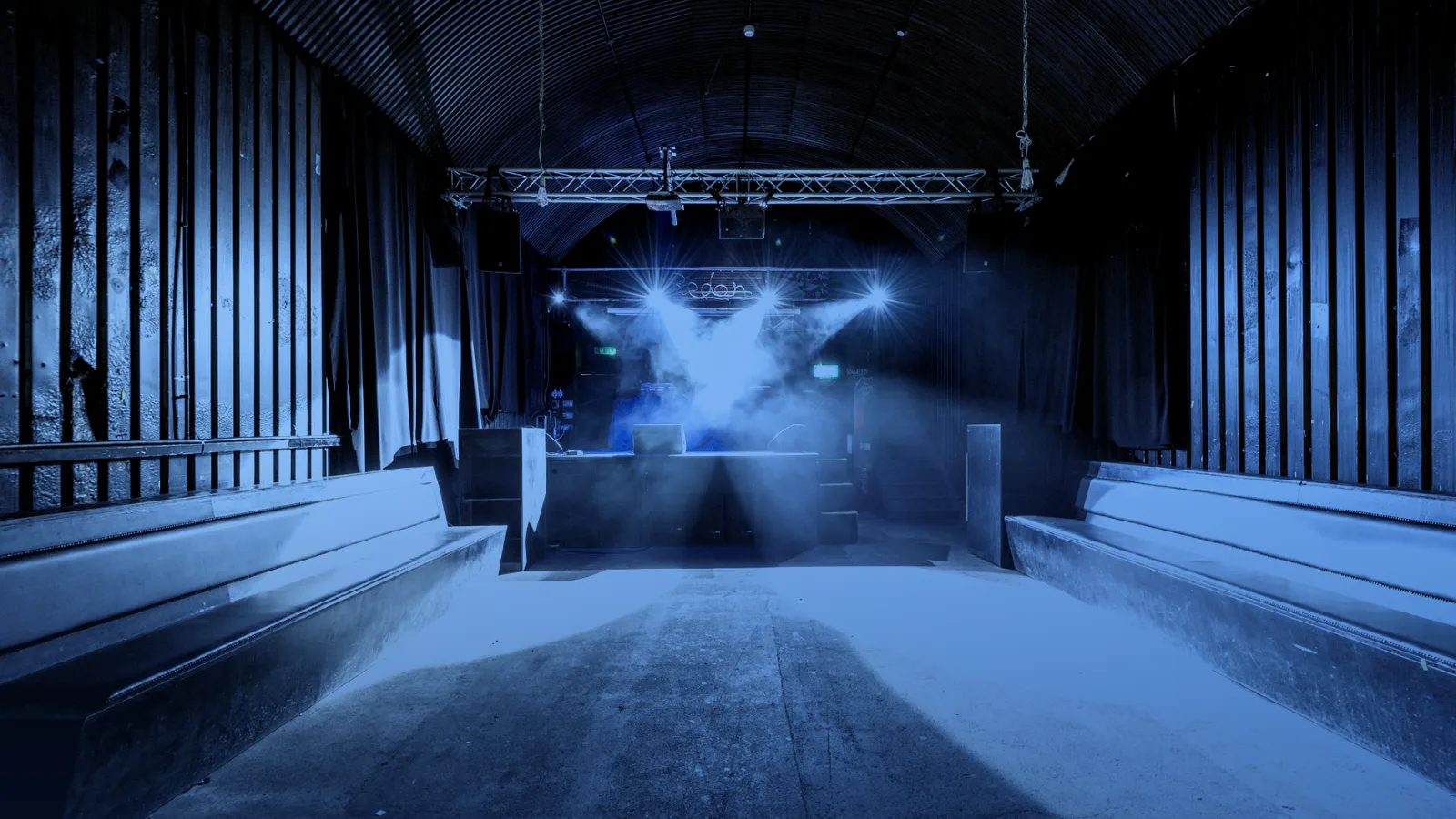
The manager of a nightclub notices that the fog on the dance floor no longer clears as it did when the place opened. It used to rise toward the ceiling and disappear. Now it hangs around for a while, the lights draw a cloudy beam even with the machine off and, on opening in the afternoon, the floor under the diffusers is slippery. Nobody has changed the machine or the fluid. What changed is the air, and behind it is a system that no longer captures as it did.
A nightclub combines two things that rarely coexist in other premises: an aerosol generated on purpose and a very high crowd in a closed space. Neither shows up in the general pages about ducts, and the two together explain why the grilles of a night venue load up in weeks where those of an office take months.
What does fog fluid contain and where does it end up?
The literature review prepared in 2017 for the entertainment industry sums up that the most common ingredients of theatrical fog are glycols, glycerol and highly refined mineral oil. The machine heats the fluid, expels it as an aerosol and that aerosol cools in the room air.
Anyone who needs to see the real condition of the ducts in the case of nightclubs can request a camera inspection from the team at Climatiza, a technical duct cleaning service in Panama, which documents every section with images.
For the duct, what matters is what happens next. A 2022 experiment in a closed room measured that glycol based artificial fog generates a significant amount of ultrafine particles and that a fluid stored for months accumulates formaldehyde and other carbonyls, which are released into the air on use. Those droplets do not fully evaporate. They are hygroscopic, attract water and deposit as a transparent film that later turns gray as it traps dust. Mineral oil leaves a slipperier layer, which calls for another cleaning method.
Why does a full house make the residue worse?
Because a full dance floor produces humidity. The breath and sweat of hundreds of people add to that of Panama’s humid climate, and the glycol film stays permanently damp. A damp residue traps more dust than a dry one, and that is why the grilles of a nightclub load up fast. The return closest to the machine is the first to show it, followed by the diffuser slats above the dance floor.
The sign that repeats most is simple: the fog no longer moves as it used to because the grilles are partly blocked. Next come the slippery floor under the diffusers before opening, the return above the machine that drips when the place has been full for an hour and the DJ booth equipment with a sticky layer instead of loose dust. Two of these signs together justify looking inside with a camera.
Why does it matter beyond the fog itself?
It matters for the experience of the night, because a dance floor where the fog stagnates and the air does not cool leaves the audience uncomfortable and shortens their stay. It matters for the equipment, since glycol reaching the coil reduces airflow and makes the unit run at full load just when the most people are there. And it matters for the staff who spend hours next to the machine: a study of 101 entertainment workers linked accumulated exposure to glycol and mineral oil fogs with wheezing and chest tightness, and found lower lung function in those closest to the source.
The latter does not mean that cleaning the ducts protects anyone. The EPA and the CDC note that duct cleaning has not been shown to prevent health problems, and the study cited speaks of exposure at the source, not of what is in the duct. That is why here cleaning is proposed for the condition of the system and the comfort of the venue, and the decision about the machine, the fluid data sheet and its position is made with the effects provider.
What does the review of a nightclub look like and when is it worth doing?
The camera goes in through the return closest to the machine and follows the first section, and from there it is decided whether more needs to be surveyed. Next are the diffusers above the dance floor, the unit filter, with its sheen instead of a matte look, and the pan, where an oily film on the water shows how much fluid reached the equipment. The report includes photos of the return with a ruler or a coin as scale, to compare the thickness of the layer from one season to another. The route is described in how a camera inspection is carried out.
The best moment is before the busiest weeks, such as year end and carnival, because it leaves time to clean the loaded sections and to adjust the position of the machine before the fullest nights. After those dates a second quick look at the return helps, since several nights in a row at full capacity load more than a normal month.
An illustrative case, not a real client: a nightclub with the fog machine three meters from a return. The camera shows a gray film in the first section, dark slats above the dance floor and a bit of oil on the pan water. The sensible decision is to move the machine or fit a deflector that throws the fog toward the dance floor, clean the first section, the coil and the pan, and look again after the season. A two meter change in the machine reduces the residue more than any cleaning.
Which mistakes repeat and what to ask each provider?
The most repeated mistake is cleaning the duct without touching the machine, and the film returns in the same season. Next come mixing fluids of different bases, cleaning only the grille and not the coil and not leaving reference photos. It is worth splitting the requests between the two providers.
- From the effects provider: the fluid data sheet, to know whether it is glycol, glycerin or mineral oil.
- From the effects provider: a simple plan with the machine, the nearest return and the direction of the jet.
- From the duct provider: photos of the return with scale, before and after.
- From the duct provider: condition of the coil and the pan, with an image.
- From both: a short joint visit after the adjustment to confirm that the residue does not come back at the same rate.
The organization of the work in night venues is in how the work is done in nightclubs, and the full picture in the sectors served. In seated performance venues, where fog is used by scenes, the work is organized differently. The criteria for deciding whether cleaning is due are in when to clean the ducts and when to wait.
For a first conversation about the system, the contact details are on the Climatiza site and the method is described on its duct cleaning service page.
Sources
On this site
- Nightclubs and casinosHow the work is organized in this sector
- Theaters and auditoriumsA neighboring sector
- Camera inspectionThe real condition before deciding
Climatiza and Radar Panamá
Why does inspecting and cleaning ducts matter?
These are the technical reasons, with their source, why the condition of the ducts is checked before deciding. Duct cleaning has not been shown to prevent health problems according to the EPA and the CDC, and it is proposed only when the observed condition justifies it.
| Advantage | Data with source | What it means in practice |
|---|---|---|
| Know whether cleaning is needed before deciding | The EPA states in its duct cleaning guide that cleaning is justified for visible mold, pests or a notable buildup of dust and debris. | A camera inspection documents the condition and allows a decision based on evidence, without unnecessary work. |
| Anticipate the tropical humidity | According to ETESA (Tocumen station, 1977 to 2010), mean annual relative humidity in Panama is 75.7 % and rises to between 78.2 and 82.4 % in the rainy months. | The condensate pan, the drain and the coil are checked first, because that is where moisture builds up. |
| Keep humidity under control | The EPA recommends in its guide to mold and moisture keeping indoor relative humidity below 60 % and drain pans clean and draining freely. | A humidity reading and a clean pan limit the conditions in which mold grows. |
| A local figure that changes the decision | In Panama, Executive Decree 230 of 2008, which regulates Law 13 of 2008, extends the ban on tobacco use in closed places open to the public to nightclubs and dance venues, bars and taverns, and casinos, bingo halls and other gambling venues. It exempts naturally ventilated spaces. (MINSA, Executive Decree 230 of May 6, 2008 (Official Gazette 26033)). | It is the sector context taken into account when planning the visit. |
Frequently asked questions
Does fog machine fluid damage the air conditioning?
It leaves a film that deposits on the nearby return and in the first section, and can reach the coil. It reduces airflow and traps dust. It is confirmed with a camera and the position of the machine is corrected first.
Is glycol residue the same as mineral oil residue?
No. Glycol leaves a damp, sticky film. Mineral oil leaves a slipperier layer that calls for another cleaning method, which is why it helps to know the fluid data sheet before opening the duct.
When is it worth checking a nightclub’s ducts?
Before the busiest weeks, to have time to clean and adjust the machine, and with a second quick look afterward. The real frequency depends on what the camera shows and not on a fixed date.
What signs show that fog residue has already reached the nightclub ducts?
Return grilles with an oily film that traps dust, a sweetish smell when the air starts and dark stains around the diffusers are the most common clues. A camera in the first stretch of the return confirms whether the deposit entered the duct or stayed only on the grille.
What is worth doing before changing the type of fluid in the fog machines?
It is worth doing a baseline camera inspection of the dance floor returns, keeping the photos and reading the new fluid’s technical sheet. After a season the check is repeated at the same points and the images are compared. That shows whether the change reduced the residue.
Keep reading the guide

Request an inspection
Do you want to know the condition of your system?
A camera inspection lets you see the inside of the ducts before deciding what to do. Message us and we will confirm availability.
- +507 6388-2083
- info@climatizapanama.com
- Calle Gervasio García, 8, Panama City