
Río Abajo
Río Abajo: office inside the shed, how to keep dust out of the ducts
The office is at the back of the shed, the gate opens ten times a day and the air filter looks gray in the morning. The dust is not from the desk. It comes from the warehouse.
 By
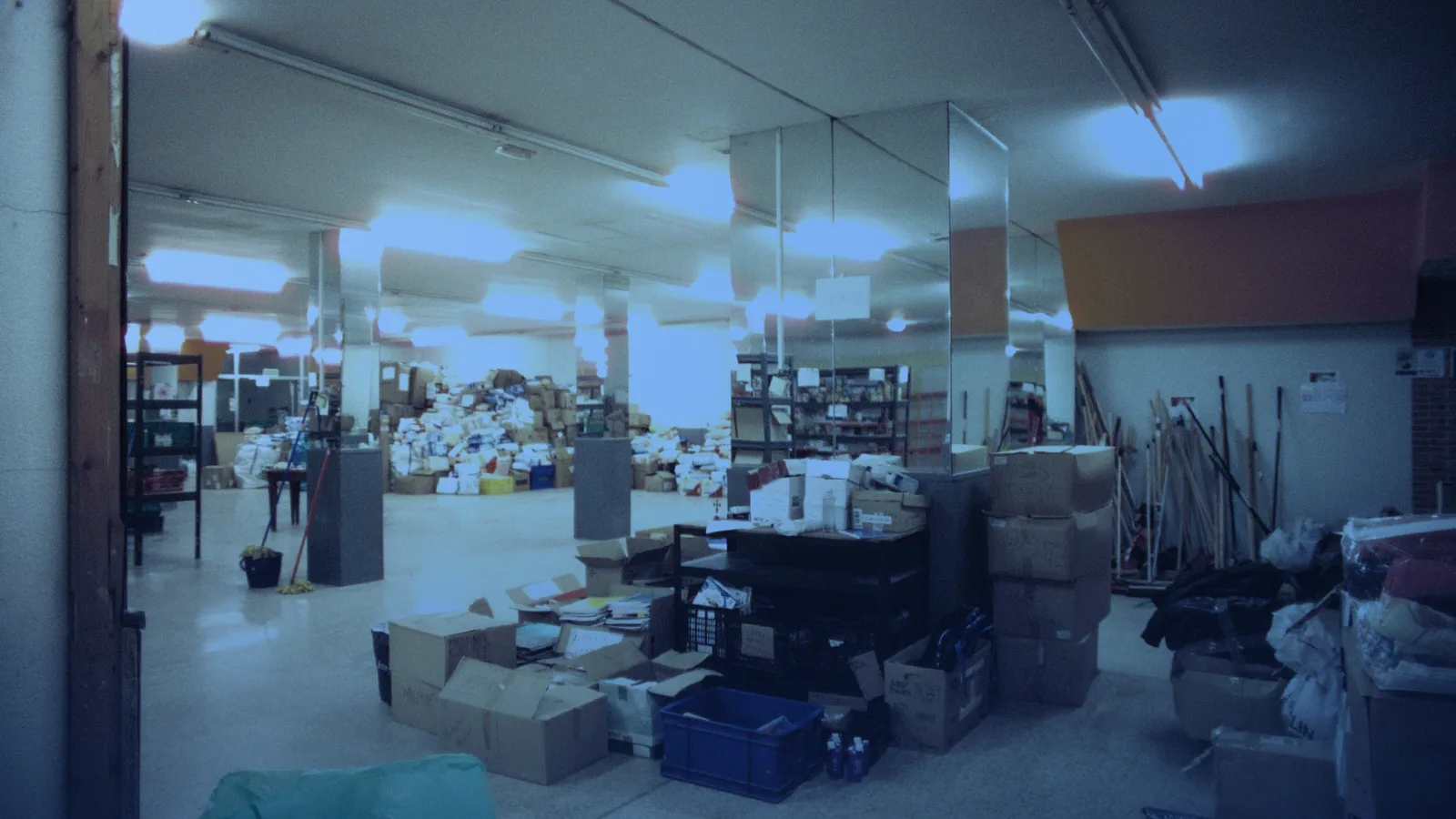
Shed dust reaches the office ducts by three paths: the return that takes air from the warehouse, the saturated filter and leaks in the false ceiling. A camera inspection of the air handler, the coil and the branches shows which one dominates. The return and the filter are corrected first. Duct cleaning is scheduled only if the deposit is visible and continuous.
In the sheds of Río Abajo it is common to find a small office at the back, with its own air conditioning unit and the warehouse a few meters away. Customers are served, invoices issued and dispatches coordinated, while trucks come and go outside. Each time the gate opens for loading, a cloud of dust crosses the warehouse and, soon after, a gray veil appears on the desks. The supervisor cleans, the veil returns, and the air filter has to be replaced all the time.
Intuition says the ducts should be cleaned. It is almost never the first step. In a shed office the problem usually lies in how air gets into the office, not in what has already settled in the duct, and cleaning without sealing the entry only restarts the deposit. That is why the order of the review matters more than the cleaning itself.
Where does shed dust get into the office?
It gets in by three paths that can be checked by eye before calling anyone. The first is the return, when it sits on the wall facing the warehouse or has a grille open to the shared roof, and the unit takes air from the storage area instead of the office. The second is the filter, if it has caked dust at the edge or is pulled out of its frame, because it lets through what it should hold back. The third is the false ceiling, when it has broken tiles or tiles not sealed against the warehouse and loaded air slips in without passing through the unit.
The fieldwork is carried out by the Climatiza team, who check branches, grilles and air handlers and record the result in an illustrated report, also in the case of Río Abajo.
A model published in 2008 in Indoor Air estimated that, under the same assumptions, filters in commercial systems accumulate dust at a median rate of about 130 g per square meter per month, against about 3 g in a residential one. It is a model prediction and not a measurement in Río Abajo, but it helps to understand why the filter of a shed office saturates first and why it is the best indicator of what is happening upstream.
Why does it matter if the air keeps working?
It matters because shed dust is not office dust. It is coarser, more abrasive and arrives in quantity. A saturated filter reduces airflow, a coil covered in dust cools worse and the unit works harder for the same result, with the wear that entails. In the office it shows in desks that heat up, in computers with noisy fans and in a veil of dust that spoils the image before the customer.
It is worth being clear on scope. The EPA and the CDC note that cleaning ducts has not been shown to prevent health problems, so the reason to do it is the visible condition of the system and not a promise. The ASHRAE preventive maintenance checklist for commercial buildings already includes reading the filter pressure drop every month and inspecting the coils, which is exactly what decides whether the office needs more than a filter change.
What does the camera inspection check and in what order?
- Return box and filter. It is checked where the return takes air from and whether the filter closes against its frame. It is the point where warehouse dust stops or passes.
- Air handler, coil and pan. Caked dust on the fins, residue in the pan and the condition of the drain outlet are looked for.
- Main branch. It advances to the first branch comparing the deposit at the start and the end of the section.
- Grilles and false ceiling. The openings and the points where warehouse air could slip in without passing through the unit are photographed.
The report is built with a short sequence of images: the filter before and after removal, the coil, a stretch of the branch and the grilles, each with its location. At the end, a note separates what is corrected without cleaning, such as the return, the filter and the sealing of the false ceiling, from what would require intervention on the duct. The later comparison uses the same shots from the same points. The method is explained in how a camera inspection is carried out.
An illustrative case, not a real client: an office with the return on the wall facing the warehouse and a false ceiling with two broken tiles. The camera shows the caked filter, the coil with an even dust layer and the branches with little deposit. The sensible decision is to move the return toward the office, seal the tiles, change the filter and clean only the coil. Cleaning the branches without those corrections would have filled them again.
How is the visit coordinated with the shed operation?
The visit is scheduled outside truck movements, with the gate closed and nearby merchandise covered. The unit is turned off while the access panels are opened, because with the fan on the dust in the branch would move toward the office. Desks near the grilles are covered with plastic, and the warehouse supervisor helps the team reach the false ceiling without carrying through pallet aisles.
What is worth keeping as routine is simple: a weekly photo of the filter, a change by weight and not by date, the office door closed during loading and a check of the false ceiling seal each time someone opens it for other work. With that, the camera inspection is requested when the filter stops explaining the problem.
Which mistakes repeat and what is worth asking for?
The most repeated mistake is cleaning the duct again and again without correcting the return. Next comes changing the filter to a finer one without checking whether it closes against its frame, which saturates the unit sooner and solves nothing. It is worth asking the provider for images of the filter and the return box before touching anything, a note separating what is corrected without cleaning from what requires duct intervention and the list of sections that were not reached.
The context of the area is in how a visit in Río Abajo is organized, and the other areas served in the zone map. To estimate how much attention the system needs, the inspection planner helps, and the criteria for deciding whether cleaning is due are in when it makes sense to clean the ducts.
Scheduling a review starts with a message to Climatiza, and the service page summarizes the process.
Sources
On this site
- Warehouses and storageHow the work is organized in this sector
- Río AbajoThe area and its building types
- Camera inspectionThe real condition before deciding
Climatiza and Radar Panamá
Why does inspecting and cleaning ducts matter?
These are the technical reasons, with their source, why the condition of the ducts is checked before deciding. Duct cleaning has not been shown to prevent health problems according to the EPA and the CDC, and it is proposed only when the observed condition justifies it.
| Advantage | Data with source | What it means in practice |
|---|---|---|
| Anticipate the tropical humidity | According to ETESA (Tocumen station, 1977 to 2010), mean annual relative humidity in Panama is 75.7 % and rises to between 78.2 and 82.4 % in the rainy months. | The condensate pan, the drain and the coil are checked first, because that is where moisture builds up. |
| Protect equipment performance | In a laboratory test with dust equivalent to one year of use, coil pressure drop rose between 6 and 30 % and efficiency (EER) fell between 1 and 9 % (Yang, Braun and Groll, ARTI, 2004). | It is a laboratory result and not a promise of savings: it points to the components worth checking. |
| Follow a technical inspection reference | The ANSI/ASHRAE/ACCA 180 standard is the standard practice for inspection and maintenance of commercial HVAC systems. | It is an industry reference, not a legal requirement in Panama, and helps organize the review plan. |
Frequently asked questions
Do the ducts of a shed office have to be cleaned at regular intervals?
There is no single interval. They are cleaned when the camera shows visible, continuous deposit, and before that the return, the filter and the false ceiling seal are corrected. If the duct is almost clean, the filter is what gets attention.
Does a finer filter help?
Only if it closes well against its frame and the unit can handle the extra resistance. A finer filter saturates sooner with shed dust. It is better to first see where the return takes air from and seal the entries.
Can the office be checked without stopping the shed?
Yes, if the visit is scheduled outside truck movements, with the gate closed and nearby merchandise covered. Only the office unit is turned off while the access panels are opened.
How is office air kept separate from warehouse air?
It is achieved with the outdoor air intake and the return placed outside the volume of the warehouse, doors to the warehouse kept closed and ceiling gaps sealed. An office held at slightly positive pressure compared with the warehouse receives less dust than one that draws air from it.
What signs show the drop ceiling lets warehouse dust through?
Fine dust on diffuser frames, dark streaks around grilles and a gray layer on top of the panels when a tile is lifted point to leaks. A camera inspection of the branches helps rule out that the deposit comes from the duct itself.
Keep reading the guide

Request an inspection
Do you want to know the condition of your system?
A camera inspection lets you see the inside of the ducts before deciding what to do. Message us and we will confirm availability.
- +507 6388-2083
- info@climatizapanama.com
- Calle Gervasio García, 8, Panama City