
Ancón
Ancón: historic building with ducts added later, what to check
Old buildings were not designed with air conditioning in mind. The ducts came later, and it shows where they run.
 By
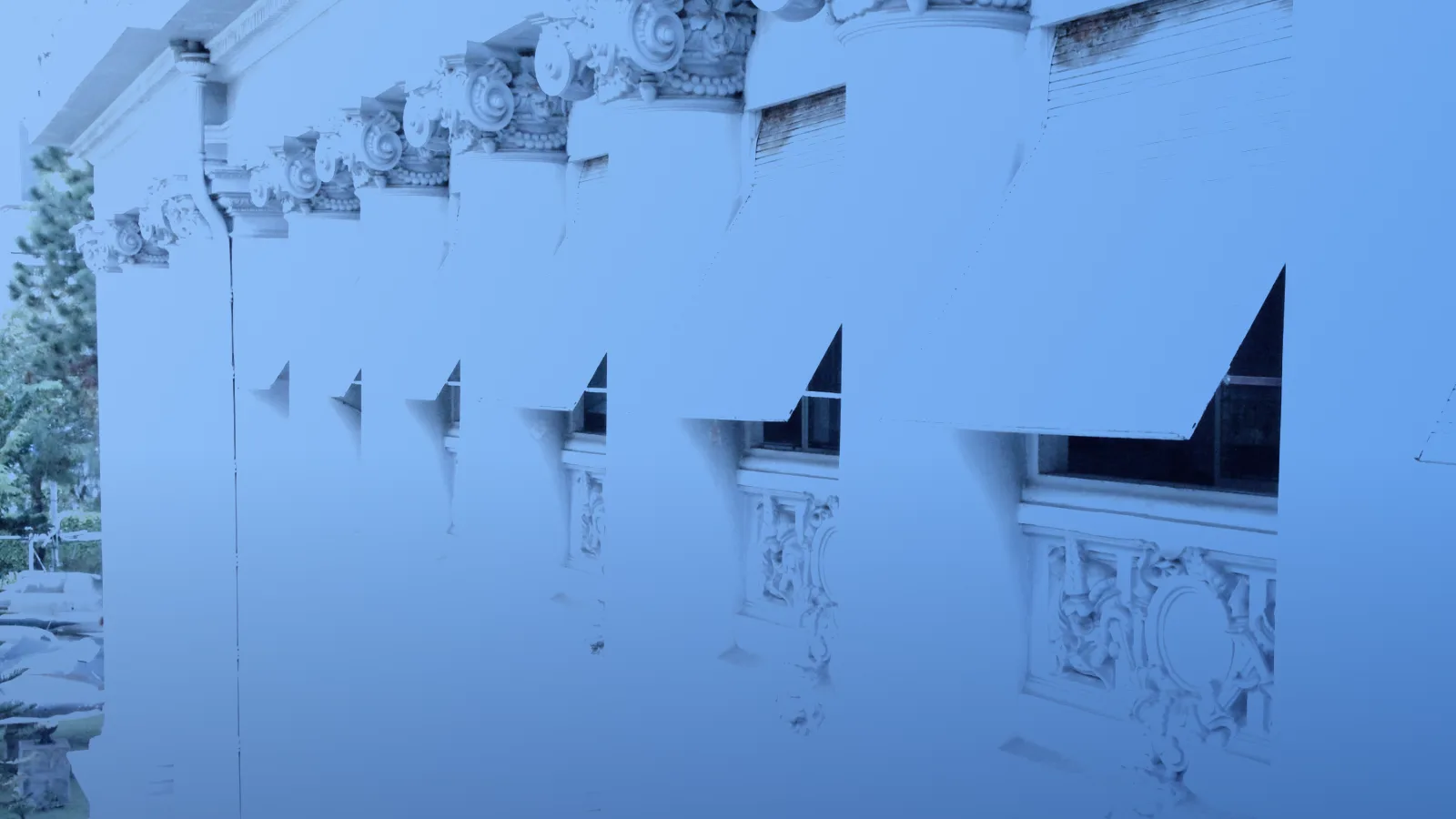
In an old building in Ancón with added ducts it is worth checking first the runs that cross ceiling voids, wood or walls, because the joints there are improvised and water or dust builds up unseen. The camera makes it possible to survey those runs without opening ceilings and to document what is there before deciding whether to clean, seal or replace.
The office in Ancón has high ceilings, big windows and walls of a thickness no longer used. It looks good and feels good, until the heat arrives. The air conditioning that someone installed years ago does its job, but in one corner of the ceiling there is a yellow stain, and the shut-in smell lingers in the meeting room.
The underlying problem is not the unit. It is that the duct was fitted into a structure that did not expect it, and the solutions of the time were arranged as best they could. Understanding how those arrangements usually look helps to check with judgment.
What happens with a duct added to a building that did not plan for it?
What happens is that the duct does not follow the logic of the building. It crosses a narrow ceiling void, goes around a wooden beam, passes through a wall with a hand-cut opening or rests where it could. The long straight runs seen in a modern building are replaced by elbows, reductions and splices, and each is a point where air slows down, dust settles and humidity builds up.
Behind this guide is Climatiza, an inspection and duct cleaning service, which always starts from the real condition of the system before proposing any work in Ancón.
In Panama the climate adds to it. With a mean annual relative humidity of 75.7% according to ETESA records at Tocumen, any closed ceiling void is a place where the cold duct condenses against the warm surroundings. A peer-reviewed study of two air handlers (Liu and colleagues, 2020, Building Simulation) measured fungal growth on dust accumulated in the filter, the coil and the supply duct, which illustrates why damp dust in hard to reach runs deserves attention.
Which hidden runs are worth looking at first?
The most delicate are those that cross wooden structures or old panels, because condensation on the duct can wet the adjacent material without anyone seeing it. Also those that pass through ceiling voids with no access, where an air or water leak can go unnoticed for years. And those that change section with an improvised reduction, where the air loses speed.
The camera makes it possible to survey those runs through existing access points and small openings, without opening ceilings or touching the structure. That matters especially in a building with heritage value or simply with finishes that should not be damaged: the aim is to know what is there before deciding whether to act.
Which signs reveal a problem in this type of building?
A yellow or brown stain on the ceiling, always in the same place. A shut-in smell that rises when the unit starts. A grille that does not blow like the others. Nearby wood that swells or darkens. Water on the floor at the foot of a wall the duct passes through. Each sign points to a different place, and they are logged with a date to know whether the problem is advancing.
A stain on the ceiling is not always from the duct: it may come from a roof leak or a pipe. The camera helps separate the causes. If the duct is dry and clean, the problem is in another system and the right person is notified. If it is wet, the section is treated or replaced.
Why does it matter in a premises run by third parties?
It matters for the care of the property and for the relationship with whoever administers it. A stain on an old ceiling can turn into bigger damage if nobody knows where it comes from. And a system that was added in stages rarely has drawings: the inspection leaves, for the first time, a record of how each run goes.
Being clear on what cleaning does not do: the EPA and the CDC indicate that it has not been shown to prevent health problems, and it is not framed here as protection. It is framed as care of the building and the equipment, and it is proposed only when the camera shows a condition that justifies it.
What is the visit like and what is worth asking for in the report?
The visit starts with a conversation about the history of the system: when it was installed, who did it, whether it was extended. Then the existing access points are identified and the longest runs and those crossing structures are surveyed first. When the office is inside a premises with administration, the criteria for an office with an administrator and access hours help to coordinate permits and schedules. The situation of this part of the city is summarized in the guide to the Ancón area.
An illustrative case, not a real client: an office in a building from the early last century, with a main duct crossing a ceiling void and resting on a wooden beam. The camera shows a splice with a gap and a deposit of damp dust beneath it. The sensible decision is to seal the splice, clean that section and check the insulation, not to open the whole ceiling.
- A drawing or sketch of how each run goes, with the access points marked.
- Dated photos of the splices, reductions and crossings with wood.
- A list of runs without access, with the reason and a proposal for minimal access.
- One recommendation per run: seal, clean, replace or monitor.
- A note for the administration on which material was touched and which was not.
With that document, the administration can plan with the criteria for when to clean and see other areas of the city on the zone map.
The next step after this guide is usually a visit to check the system, which is arranged with the team at Climatiza using the details in their duct cleaning page.
Sources
On this site
- Public buildings and ministriesHow the work is organized in this sector
- AncónThe area and its building types
- Camera inspectionThe real condition before deciding
Climatiza and Radar Panamá
Why does inspecting and cleaning ducts matter?
These are the technical reasons, with their source, why the condition of the ducts is checked before deciding. Duct cleaning has not been shown to prevent health problems according to the EPA and the CDC, and it is proposed only when the observed condition justifies it.
| Advantage | Data with source | What it means in practice |
|---|---|---|
| Protect equipment performance | In a laboratory test with dust equivalent to one year of use, coil pressure drop rose between 6 and 30 % and efficiency (EER) fell between 1 and 9 % (Yang, Braun and Groll, ARTI, 2004). | It is a laboratory result and not a promise of savings: it points to the components worth checking. |
| Keep humidity under control | The EPA recommends in its guide to mold and moisture keeping indoor relative humidity below 60 % and drain pans clean and draining freely. | A humidity reading and a clean pan limit the conditions in which mold grows. |
| Require method and a report from the provider | NADCA published in 2025 the current edition of its ACR standard on assessment, cleaning and restoration of air systems. | It is an industry reference and not a seal: it helps ask for method, photographs and scope in writing. |
| Keep construction dust out of the system | The EPA and NIOSH Building Air Quality guide asks to block return grilles while construction work takes place in occupied buildings. | Before accepting a new or remodeled system it is worth checking whether construction dust got in. |
Frequently asked questions
Can old ducts be inspected without opening the ceiling?
Almost always. The camera goes in through the existing access points and small openings, and travels the duct without removing finishes. If a run has no access, a minimal access is proposed and documented in the report.
Does a stain on the ceiling mean the duct is damaged?
Not necessarily. It may come from a roof leak, a pipe or the duct itself. The camera shows whether the duct is wet or dry and separates the cause before any work.
Does an improvised duct have to be replaced?
Only if the camera shows damage, persistent humidity or joints that cannot be sealed. Many improvised splices work and are maintained with targeted sealing and follow-up. The decision is made section by section.
What materials show up in ducts added to an old building?
Galvanized sheet metal, fiberglass, flexible duct and improvised stretches may be mixed along one route, each of a different age. That mix changes the decision: sheet metal is cleaned, while deteriorated fiberglass or damaged flexible duct is replaced. The camera identifies each stretch.
What happens if no plans exist for the building's ducts?
The camera reconstructs the route from the air handler to each grille, and the report includes a sketch with photos of the stretches and joints. That sketch becomes the first real plan of the system and helps the administration in future reviews.
Keep reading the guide

Request an inspection
Do you want to know the condition of your system?
A camera inspection lets you see the inside of the ducts before deciding what to do. Message us and we will confirm availability.
- +507 6388-2083
- info@climatizapanama.com
- Calle Gervasio García, 8, Panama City