
Hardware stores
Hardware store: cutting dust and paint inside the store ducts
In a hardware store the dust does not come only from the street. It is produced inside, at the cutting bench and the paint machine.
 By
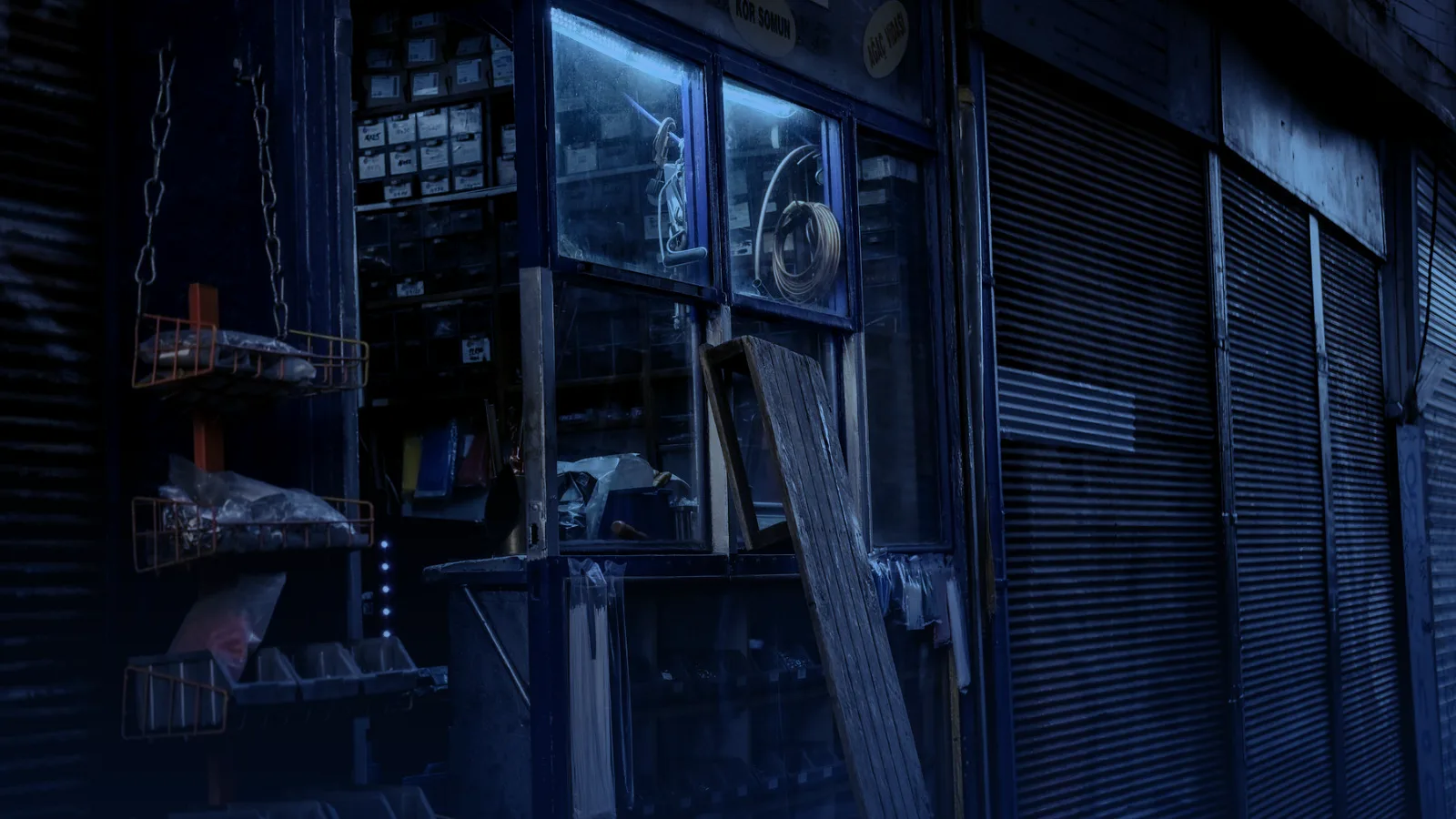
Dust from cutting wood and glass and from paint mixing enters a hardware store's ducts through the return closest to the cutting bench, and with humidity it cakes in the filter and the first run. Zoning the shop into cutting and mixing, heavy aisles, counter and storeroom makes it possible to inspect with the camera only where there is load and to adjust filters and grilles by zone.
A hardware store with wood cutting and paint mixing is recognized by smell before the sign. Fine sawdust covers the counter by mid-morning. Cans of color line up next to a machine that shakes and hums. The owner sweeps twice a day, and even so, by the end of the month the ceiling grille over the cutting bench has a gray crust.
The practical question is whether that dust is getting into the ducts and, if it is, how much it matters. The answer depends on where the return is and how the shop is laid out, more than on how much dust is generated.
How does cutting and paint dust reach the ducts?
Through the return. The store’s air conditioning draws the shop air in through the return grilles, and if one of them sits a few meters from the cutting bench or the paint machine, it also draws in what is generated there. The filter holds much of it, but what gets through settles in the first section of the return and on the coil. Fine wood dust and pigment dust are light enough to travel and, with humidity, sticky enough to stay.
When the system allows it, the review of hardware stores is done by camera through the existing access points, the way the Climatiza technical service performs it.
With the mean annual humidity of 75.7% that ETESA records for Panama, moreover, the sawdust entering the duct does not stay loose: it cakes and is harder to remove the longer it sits. A filter that in a dry shop would last a month saturates in two weeks here, and once saturated, the air finds the edges and passes unfiltered.
What does research show about recirculating air that carries wood dust?
A study in 23 Norwegian woodworking companies found that recirculating air has mixed effects. It cut monoterpenes by 95%, but raised microbial exposure 2 to 5 times in the companies studied, and the effect on wood dust varied by type of shop: it nearly doubled exposure in building element production and halved it in door and window manufacturing (Straumfors and colleagues, 2025, Annals of Work Exposures and Health). It is an industrial setting, not a hardware store, but the lesson holds for the shop: the effect of recirculating depends on each space.
That variability is the reason for zoning. A system that recirculates all the air in the store treats the screw aisle and the cutting bench the same, and the dust from the second ends up in the filter of the first. Separating or shielding the cutting zone changes the condition of the duct more than any cleaning.
How is the shop zoned for the inspection?
| Zone | What falls | What is checked |
|---|---|---|
| Cutting and mixing | Sawdust, glass dust, paint pigment. | Returns within five meters, filter and first run with a camera. |
| Heavy material aisles | Cement, plaster, aggregates. | Grilles and filters of the general unit. If dirty, the source is usually the cutting zone. |
| Counter and register | Fine dust and paper. | Supply diffusers and the unit's pan. |
| Storeroom | Cardboard and packaging dust. | Return and filter, with the criteria for a storeroom with shelving and forklifts. |
Zoning serves three purposes: deciding where the camera goes in, adjusting filter frequency by zone and indicating which layout changes would do the most. Moving a return or putting a barrier on it is usually more effective than cleaning every few months.
Why does it matter and which signs give warning?
It matters for three practical reasons. A loaded system cools worse and the unit works harder to keep the shop going. The merchandise, especially paint, tools and finishing materials, fills with dust. And employees who cut and mix every day spend long shifts at the point of highest load. The EPA and NIOSH guidance for construction in occupied buildings advises blocking return registers near the work area so contaminants are not recirculated. It speaks of construction, not hardware stores, but the principle, not drawing in dust generated near a return, is the same.
The warning signs are a gray crust on the grille over the cutting bench, a filter that fills within days, a solvent or paint smell that persists, and counter dust that reappears as soon as it is wiped. On health, the EPA and the CDC state that duct cleaning has not been shown to prevent health problems, and it is not framed here as protection but as upkeep and order of the shop.
What is the visit like and how often is it worth checking?
The visit starts in the cutting zone, with the technician measuring the distance between the bench, the paint machine and the nearest return. Then the filter is looked at and the camera runs through the return and the first run. After that it moves to the other zones with the same criterion. The general frame of how work is done in this kind of shop is in how the work is organized in a hardware store, and the method in the camera inspection.
An illustrative case, not a real client: a hardware store with daily wood cutting, a return three meters from the bench and a low efficiency filter. The camera shows caked sawdust in the first meter of the return and the rest of the system acceptable. As a starting rule, filters every month or when the gauge indicates, a camera twice a year in that zone and, as a permanent improvement, a physical barrier or relocation of the return.
Which mistakes recur and what is worth asking for?
The usual mistakes are cleaning the whole duct when the load is in one run, not checking the cutting zone filter as often as it needs, and using compressed air to blow out the grille, which lifts the dust and returns it to the shop. Another is not measuring the distance between the return and the dust source, which is the figure that guides most.
- Measured distance between the cutting bench, the paint machine and the nearest return.
- Dated photos of filter, grille and first run before and after.
- Condition of the coil and pan of the unit serving the cutting zone.
- One recommendation per zone, with the proposed filter frequency.
- A note on layout changes that would reduce the load.
With that information, the owner decides with the criteria for when to clean and can compare with other businesses in the list of types of premises.
Scheduling a review starts with a message to Climatiza, and the service page summarizes the process.
Sources
On this site
- Hardware storesHow the work is organized in this sector
- Warehouses and storageA neighboring sector
- Camera inspectionThe real condition before deciding
Climatiza and Radar Panamá
Why does inspecting and cleaning ducts matter?
These are the technical reasons, with their source, why the condition of the ducts is checked before deciding. Duct cleaning has not been shown to prevent health problems according to the EPA and the CDC, and it is proposed only when the observed condition justifies it.
| Advantage | Data with source | What it means in practice |
|---|---|---|
| Know whether cleaning is needed before deciding | The EPA states in its duct cleaning guide that cleaning is justified for visible mold, pests or a notable buildup of dust and debris. | A camera inspection documents the condition and allows a decision based on evidence, without unnecessary work. |
| Anticipate the tropical humidity | According to ETESA (Tocumen station, 1977 to 2010), mean annual relative humidity in Panama is 75.7 % and rises to between 78.2 and 82.4 % in the rainy months. | The condensate pan, the drain and the coil are checked first, because that is where moisture builds up. |
| Keep humidity under control | The EPA recommends in its guide to mold and moisture keeping indoor relative humidity below 60 % and drain pans clean and draining freely. | A humidity reading and a clean pan limit the conditions in which mold grows. |
| A local figure that changes the decision | The INEC Business and Establishment Directory (reference year 2022) records 935 companies engaged in retail sale of hardware, paint and glass products in specialized stores, with 7,605 people employed. (INEC, Business and Establishment Directory 2022, table 12). | It is the sector context taken into account when planning the visit. |
Frequently asked questions
Does cutting sawdust always reach the ducts?
Not always. It depends on the distance between the cutting bench and the return. Within a few meters, some dust enters, stays in the filter and settles in the first run. Further away, the filter usually holds it.
Is blowing the grille with compressed air useful?
It is not advisable. Compressed air lifts fine dust and returns it to the shop or pushes it deeper in. Vacuuming or wiping with a damp cloth is preferable, and looking with a camera if the load is greater than it appears.
How often is the filter checked in a hardware store with daily cutting?
At least once a month, and sooner if it saturates. The cutting and mixing zone needs more attention than the rest of the shop, so the filter of its unit is worth logging with a date and comparing.
How often is the air filter changed in a shop with a lot of cutting dust?
It is changed when the pressure drop exceeds the maximum in the unit’s manual, not on a fixed calendar. The ASHRAE maintenance guide (based on the 2018 Standard 180) proposes reading filter gauges every month. In a hardware store with a saw, the filter fills sooner than planned.
How can it be known whether hardware store dust has reached the coil?
The camera in the air handler shows a gray layer or fine sawdust on the coil fins, and air leaves the grilles with less force. If the coil is clean, the dust stayed in the filter or the return, and the intervention is smaller.
Keep reading the guide

Request an inspection
Do you want to know the condition of your system?
A camera inspection lets you see the inside of the ducts before deciding what to do. Message us and we will confirm availability.
- +507 6388-2083
- info@climatizapanama.com
- Calle Gervasio García, 8, Panama City