
Paitilla
Paitilla: school ducts and school break, when to work
A school in Paitilla cannot stop whenever it wants. It can, however, make good use of the pauses the calendar already gives it.
 By
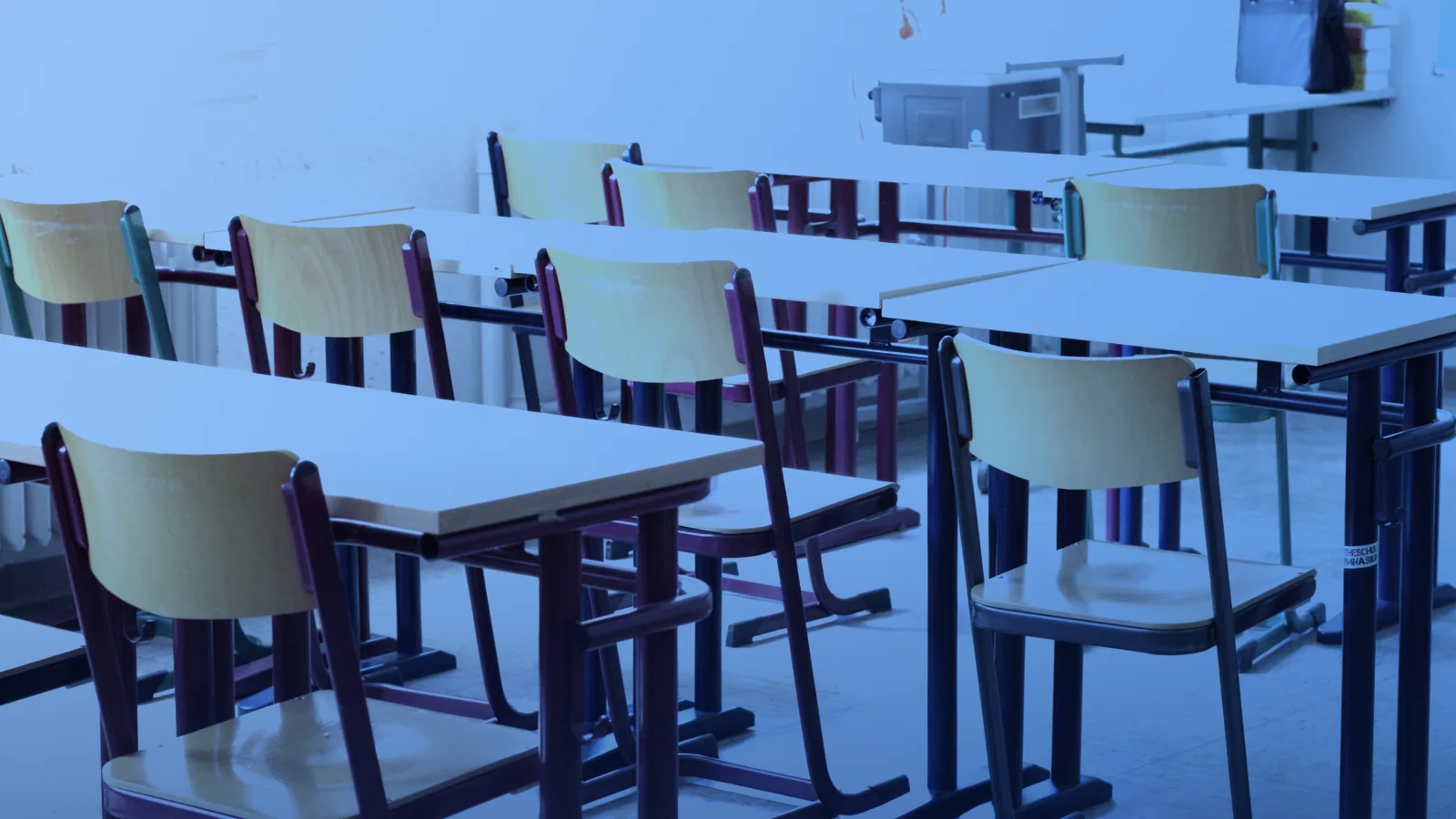
In a Paitilla school, duct work is spread over the breaks of the school calendar: the short break is for camera inspection and filter changes, and the long year-end break for cleaning and drying only what the camera flagged. It is coordinated with management, the maintenance staff and the official calendar, classroom by classroom.
In a Paitilla school, the air in the classrooms is a topic that comes up at the February parents meeting and disappears from the agenda until the next. A teacher says her room smells different after lunch. The maintenance coordinator knows some filters arrive dark at replacement time. Management wants to know what can be done, but also when, because with classes running almost nothing can be opened.
The answer is in the calendar. A school year brings pauses that, well used, are enough to review the entire school without touching a single class.
In which break is each task best done?
The short breaks in the calendar are enough to look, not to clean. They have room for a camera inspection of one wing, filter changes and pan checks, because these need no drying and do not leave a system out of service for several days. The long year-end break, which runs to the restart of classes, is the only one with time to clean and let things dry.
Behind this guide is Climatiza, an inspection and duct cleaning service, which always starts from the real condition of the system before proposing any work in Paitilla.
Planning this way makes it possible to arrive at the long break with information. If the most loaded wings were looked at in the short break, by December it is already known which sections to clean and which can be left. Without that earlier look, the long break is spent cleaning blindly.
What does the evidence say about classrooms?
There are data useful to persuade a school committee. A study of 104 California classrooms with new units found equipment, fan control or filter maintenance problems in 51% of cases, and heavily loaded filters were associated with poor ventilation, according to Chan et al., 2020. It is not a Panamanian study nor one about duct cleaning. It says something simpler: in classrooms, routine maintenance fails often, and it shows in ventilation.
For Panama, humidity has to be added. With an annual mean of 75.7% according to ETESA, a classroom closed for several weeks on holiday needs its condensate pans and drains checked before the return, and the long break is the time to check.
Why does it matter to do it during a break and not with students present?
It matters because an occupied classroom allows neither open access panels nor dust in suspension, and because work done with students present gets interrupted, cut short or done badly. A break allows opening, looking, correcting and drying. It also matters for comfort: a cool classroom with moving air is a classroom where teaching goes better. And for the condition of the equipment and the budget, since a documented inspection makes it possible to ask for resources for what is truly needed.
With parents it is worth speaking plainly. The EPA and the CDC note that duct cleaning has not been shown to prevent health problems, so the school notice reports the condition and upkeep and does not promise effects on students.
How is it coordinated with management and staff?
- Shared calendar. Management provides the break dates and the wings that can be closed during each.
- School map. Classrooms, dining hall, library and labs are marked with their air unit, to be covered in order of load.
- Maintenance escort. A school staff member opens access points and signs off on what was reviewed at the end of each day.
An illustrative case, not a real client: a school with three wings and a dining hall. In the short break the primary wing is looked at with a camera and filters are changed. The camera shows bonded dust in two classrooms with low returns. In the long break those two classrooms are cleaned and the dining hall is looked at again. The rest is not touched. The organization logic by type of place is expanded in how work is done in educational centers and that of official buildings in what changes in public institutions. To place the neighborhood, the Paitilla page gathers the context of the area and the zone map shows the rest.
Which mistakes repeat and what is worth asking for?
The first mistake is waiting for the long break without having looked at anything before, because then everything is cleaned just in case. The second is scheduling cleaning in a short break and leaving the system damp at restart. The third is forgetting the dining hall and library, which load differently from a classroom. It is worth asking the provider for a report by wing with images, the list of what is pending for the next break and a drying and testing note before students return. The criteria for deciding are summed up in when to clean and when to wait.
To ask about availability or request a camera inspection, the Climatiza website lists the ways to contact the team and the duct cleaning service page explains how the work is organized.
Sources
On this site
- Universities and schoolsHow the work is organized in this sector
- PaitillaThe area and its building types
- Camera inspectionThe real condition before deciding
Climatiza and Radar Panamá
Why does inspecting and cleaning ducts matter?
These are the technical reasons, with their source, why the condition of the ducts is checked before deciding. Duct cleaning has not been shown to prevent health problems according to the EPA and the CDC, and it is proposed only when the observed condition justifies it.
| Advantage | Data with source | What it means in practice |
|---|---|---|
| Require method and a report from the provider | NADCA published in 2025 the current edition of its ACR standard on assessment, cleaning and restoration of air systems. | It is an industry reference and not a seal: it helps ask for method, photographs and scope in writing. |
| Know whether cleaning is needed before deciding | The EPA states in its duct cleaning guide that cleaning is justified for visible mold, pests or a notable buildup of dust and debris. | A camera inspection documents the condition and allows a decision based on evidence, without unnecessary work. |
| Protect equipment performance | In a laboratory test with dust equivalent to one year of use, coil pressure drop rose between 6 and 30 % and efficiency (EER) fell between 1 and 9 % (Yang, Braun and Groll, ARTI, 2004). | It is a laboratory result and not a promise of savings: it points to the components worth checking. |
| Keep construction dust out of the system | The EPA and NIOSH Building Air Quality guide asks to block return grilles while construction work takes place in occupied buildings. | Before accepting a new or remodeled system it is worth checking whether construction dust got in. |
Frequently asked questions
Can a classroom duct be checked during recess?
A camera inspection of an empty classroom can take a few minutes, but recess is too short to open and close in an orderly way. A calendar break or an afternoon without classes is preferable.
What comes first, the filter or the duct?
The filter. It is the cheapest thing to check and the quickest to saturate. If the filter is fine and the classroom still has problems, then the camera goes through the return and the branch.
Do all the school ducts have to be cleaned every year?
No. What the camera shows as loaded is cleaned. In many schools it is enough to change filters and look at the most used sections. The yearly inspection says what is needed and what is not.
What does the EPA check in the ducts and equipment of a school?
The EPA’s IAQ Tools for Schools ventilation checklist asks to confirm that ducts are clean, that drain pans slope toward the drain and that fans are switched off when filters are changed. It is a voluntary guide, not an obligation in Panama.
Which classrooms are checked first when the break is short?
The work starts with the most crowded classrooms, those with complaints of odor or humidity and closed spaces such as labs, libraries and cafeterias. The camera decides where cleaning is needed. The rest are noted in the report for the next school break.
Keep reading the guide

Request an inspection
Do you want to know the condition of your system?
A camera inspection lets you see the inside of the ducts before deciding what to do. Message us and we will confirm availability.
- +507 6388-2083
- info@climatizapanama.com
- Calle Gervasio García, 8, Panama City