
Technical training centers
Technical training center: ducts in welding and mechanics workshops
The workshop has no air conditioning, but the hallway does. And the air leaving the workshop through the door ends up in the nearest return.
 By
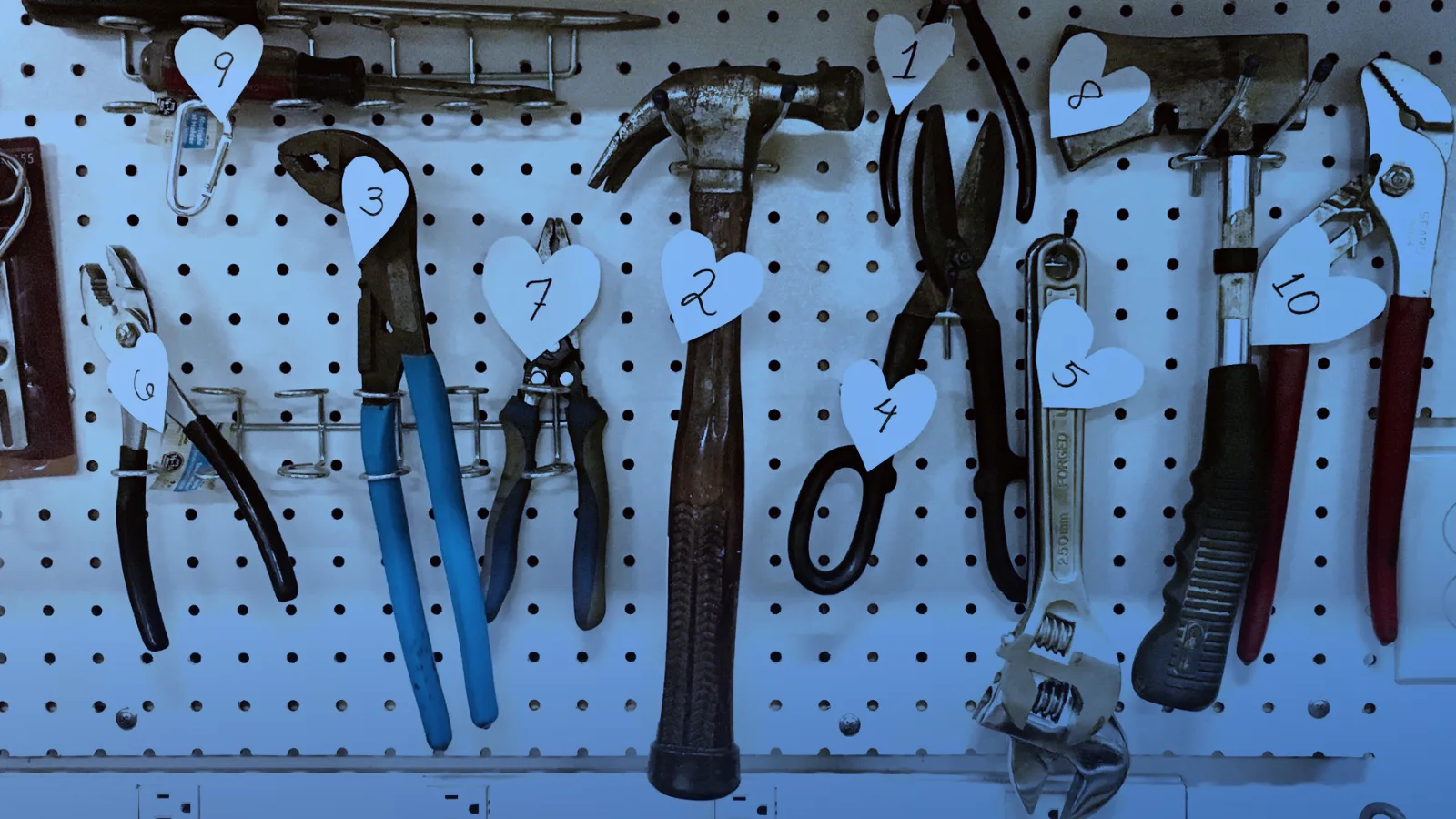
In a technical training center, the first thing checked in the ducts is not the workshop but the first return the air meets on leaving it. Welding fume leaves a dark gray layer, carpentry a fine fiber and mechanics an oily film. The camera inspection locates those traces, and cleaning is limited to the affected sections.
A technical training center gathers under one roof what a factory separates entirely. There are welding workshops with open doors, carpentry with saws, mechanics with oils and, a few meters away, closed theory classrooms, a library and offices with air conditioning. The separation between the two worlds depends on a door and how long it stays open.
Workshop air does not enter through the ducts. It comes in through the doors, mixes in the hallway and the nearest return takes it. From there it travels to the air handler and is distributed, already cooled, to the classrooms hanging from the same system. The director usually finds out through a burnt smell in the next classroom or through grilles that wake up dark when nobody welded at night.
What does each workshop leave in the air reaching the returns?
Each trade leaves a different trace, and in a duct it is recognized more by color and texture than by any analysis. OSHA describes welding fume as visible smoke with metal vapors and gases, with metals such as iron, manganese, chromium, nickel or zinc depending on the material and the electrode, and recommends local exhaust to take it out of the breathing zone. What escapes that exhaust cools and settles as fine particles.
Behind this guide is Climatiza, an inspection and duct cleaning service, which always starts from the real condition of the system before proposing any work in technical training centers.
| Workshop | What usually settles | Sign in the hallway and classrooms |
|---|---|---|
| Welding | Fine metallic particles, dark gray | Burnt smell when the air starts and dark grilles |
| Carpentry | Fine sawdust and fiber, thick layer on the filter | Light dust on desks near the diffuser |
| Auto mechanics | Oil film that traps dust, exhaust soot | Sticky grilles and fuel smell in hallways |
| Refrigeration and electrical | Little residue, pipe cutting dust | Almost none, checked as routine |
Where does the check begin?
Not the workshop, which has its own exhaust and almost never air conditioning, but the first return the air meets on leaving through the door. The EPA, in its guide for building managers, recommends blocking return registers near a construction area so its contaminants are not recirculated. The same reasoning applies to a workshop: if the hallway return faces the welding door, that is the point taking the most load.
From that return, the camera follows the path to the air handler and looks at the coil, the pan and the filter, which in these centers loads up sooner than expected. Then the branches to the nearest classrooms are checked. If the deposit lessens as the duct moves away from the workshop, the problem is localized and only that part is cleaned. If it is even across the whole system, the cause is something else.
Why does it matter if the workshop already has its own exhaust?
Because no exhaust is perfect, and what escapes travels. OSHA’s guidance on air quality in commercial and institutional buildings warns that in buildings with several occupants an evaluation may be needed so that one’s emissions do not affect another. In a technical center the emitter and the receiver belong to the same institution and share a calendar, which makes acting easier and ignoring it harder.
It matters for the comfort of the classrooms, for the state of the unit, whose filters and coil get dirty faster, and for the relationship between the directors and the instructors, who prefer to have the discussion over a report with photos. And it should be stated plainly that duct cleaning has not been shown to prevent health problems, according to the EPA and the CDC. It does not replace workshop exhaust or personal protective equipment. It is proposed when the camera shows a deposit that justifies cleaning.
How does the visit fit the cohort calendar?
A technical center has no long holidays like a school. Cohorts overlap and a welding workshop may have morning practice with one group and evening practice with another. The useful window is each workshop’s cohort changeover, when that particular workshop is without practice for a week or two. In that gap the return and the unit next to that workshop are checked, without touching the rest of the building.
An illustrative case, not a real client: a center with welding and carpentry workshops on the ground floor and classrooms upstairs. The camera shows in the hallway return a dark gray layer that thins over the first meters of duct toward the air handler, and a carpentry unit filter saturated with fiber. The report proposes changing filters more often on that unit and cleaning the initial stretch of the return. The camera check of the ducts is repeated at the next cohort changeover for comparison.
Which mistakes repeat and what should be asked of the provider?
The most common mistake is cleaning classroom ducts without fixing how workshop air gets in: open doors, switched off extractors or expired filters. Within weeks the deposit returns. The second is asking the duct provider for an industrial hygiene study, which belongs to another professional. The director needs to know which units receive workshop air, what state they are in and what changed after the work.
- Report organized by unit and not by room, since one unit can serve six rooms and a hallway.
- What was seen in the hallway return nearest each workshop.
- What was cleaned and what is recommended to the center's maintenance.
- What was left out for lack of access.
The organization recalls that of an educational center with different buildings and systems, the separation between workshop and classroom follows the logic of a plant where offices do not share air with production, and the other kinds of place are in the places where the team works. When the center wants the flagged sections cleaned, the duct cleaning service is scheduled in those same cohort gaps.
The next step after this guide is usually a visit to check the system, which is arranged with the team at Climatiza using the details in their duct cleaning page.
Sources
On this site
- Universities and schoolsHow the work is organized in this sector
- Industry and logistics parksA neighboring sector
- Camera inspectionThe real condition before deciding
Climatiza and Radar Panamá
Why does inspecting and cleaning ducts matter?
These are the technical reasons, with their source, why the condition of the ducts is checked before deciding. Duct cleaning has not been shown to prevent health problems according to the EPA and the CDC, and it is proposed only when the observed condition justifies it.
| Advantage | Data with source | What it means in practice |
|---|---|---|
| Protect equipment performance | In a laboratory test with dust equivalent to one year of use, coil pressure drop rose between 6 and 30 % and efficiency (EER) fell between 1 and 9 % (Yang, Braun and Groll, ARTI, 2004). | It is a laboratory result and not a promise of savings: it points to the components worth checking. |
| Keep humidity under control | The EPA recommends in its guide to mold and moisture keeping indoor relative humidity below 60 % and drain pans clean and draining freely. | A humidity reading and a clean pan limit the conditions in which mold grows. |
| Require method and a report from the provider | NADCA published in 2025 the current edition of its ACR standard on assessment, cleaning and restoration of air systems. | It is an industry reference and not a seal: it helps ask for method, photographs and scope in writing. |
| Check classroom and hall ventilation | A peer reviewed study of 104 classrooms (Chan et al., 2020) found problems in 51 % of them. | The camera and readings show whether air reaches where it should before each school term. |
| A local figure that changes the decision | In 2024 total enrollment in the country was 1,213,119 students, 82.6% in the public sector. University education reached 193,773 students (preliminary figure) and the University of Panama had 88,094, or 45.6% of university enrollment. (INEC, Education 2024). | It is the sector context taken into account when planning the visit. |
Frequently asked questions
Where is it worth starting to check the ducts of a center with workshops?
At the first return the air meets on leaving the workshop, normally the hallway one facing the door. From there the camera follows to the air handler and nearby branches to see how far the deposit reaches.
Does welding fume enter the air conditioning ducts?
If it escapes the workshop exhaust and leaves through the door, the hallway return can pick it up. In the duct it shows as a dark gray layer, sometimes with a metallic shine, different from the light dust of an office.
When are ducts cleaned if the center never closes?
At each workshop’s cohort changeover, when it has no practice for a week or two. The return and the unit next to that workshop are checked, without disturbing the rest of the building.
What residue does each workshop in a technical training center leave in the ducts?
Welding leaves fine gray metallic particles, carpentry leaves fine sawdust with a thick layer on the filter, and automotive mechanics leaves an oil film that traps dust and exhaust soot. Refrigeration and electrical work leave little, and are checked as routine.
Which return in a training center is checked first with the camera?
The first one that the workshop air meets on leaving through the door, not the workshop itself, which usually has its own extraction. The EPA’s Building Air Quality guide recommends blocking returns near a construction zone, and the same reasoning applies to a workshop in operation.
Keep reading the guide

Request an inspection
Do you want to know the condition of your system?
A camera inspection lets you see the inside of the ducts before deciding what to do. Message us and we will confirm availability.
- +507 6388-2083
- info@climatizapanama.com
- Calle Gervasio García, 8, Panama City