
Bilingual schools
Bilingual school on the August calendar: when to check the ducts
By the time the school closes, every provider in the city has a full calendar. And the long break lands in the middle of the rainy season.
 By
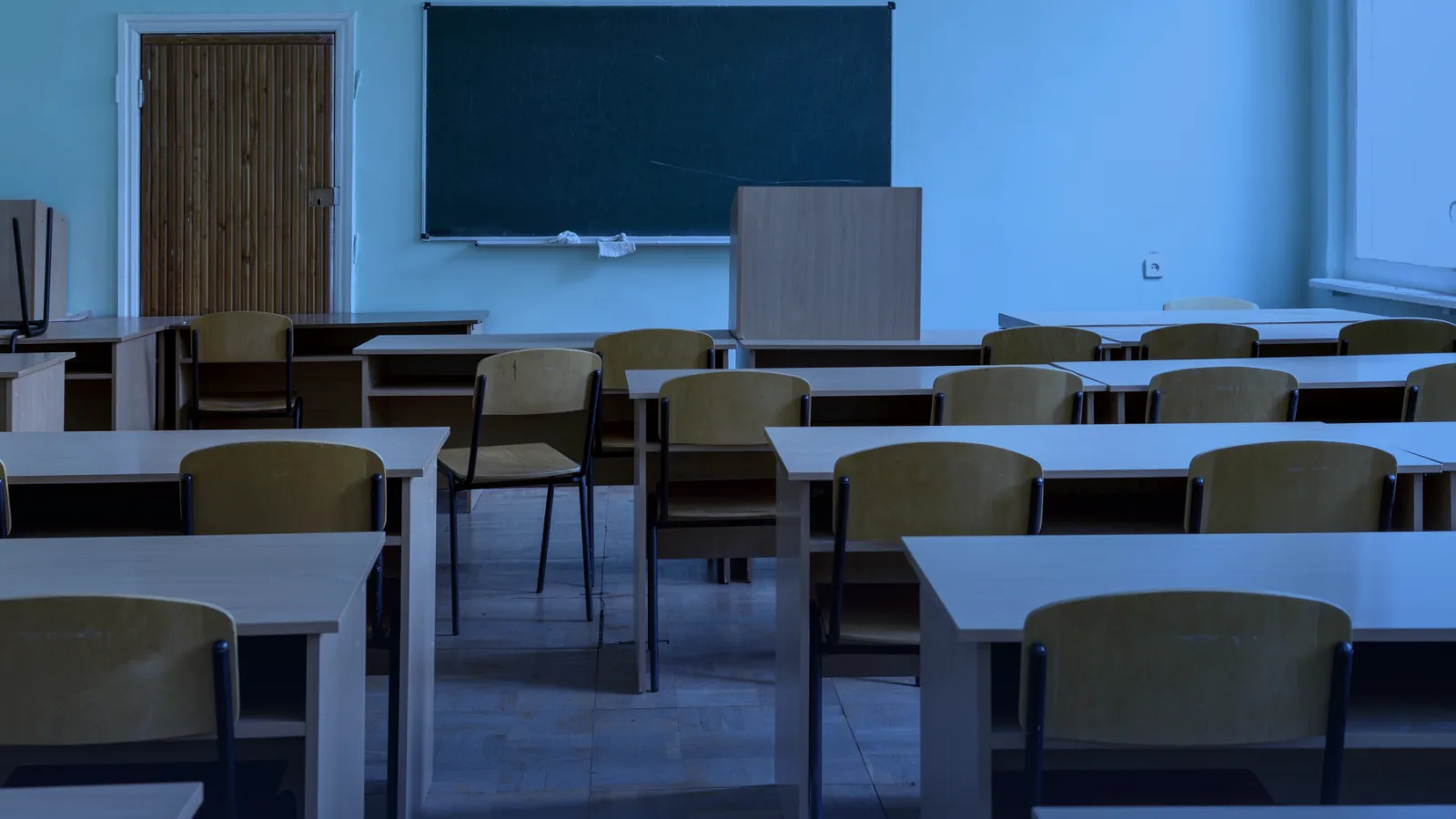
In a school on an August to June calendar, the long window for the ducts is the June and July break, which falls in the middle of the rainy season. The camera inspection is best done earlier, on student-free days in March or April, to reach the break with a list of sections and clean in phases, drying each one before moving to the next.
The facilities committee of a school on an international calendar lives a paradox no national school knows. Classes begin in August and end in June, with short breaks in December and in March or April. Its pauses do not match those of the Ministry of Education, and when the city’s providers have the most free calendar, in January and February, the school is in full swing.
When it finally closes, the break is long, but it lands in June and July. That has a practical consequence that is often forgotten: duct work happens with the rain in sight. A school campus with carpeted rooms, interactive boards and a dining hall needs a plan that takes that climate into account from the start.
Why does the June and July break demand care with humidity?
Because an open or freshly cleaned duct takes up moisture from the air if left unattended. According to ETESA’s climate characterization for the Panama district, mean monthly relative humidity rises from values near 65 percent in March to over 80 percent in October, and June and July already sit on the high part of that curve. Insulation that gets wet takes long to dry, and a closed building with no air running for weeks is the ideal place for that to happen.
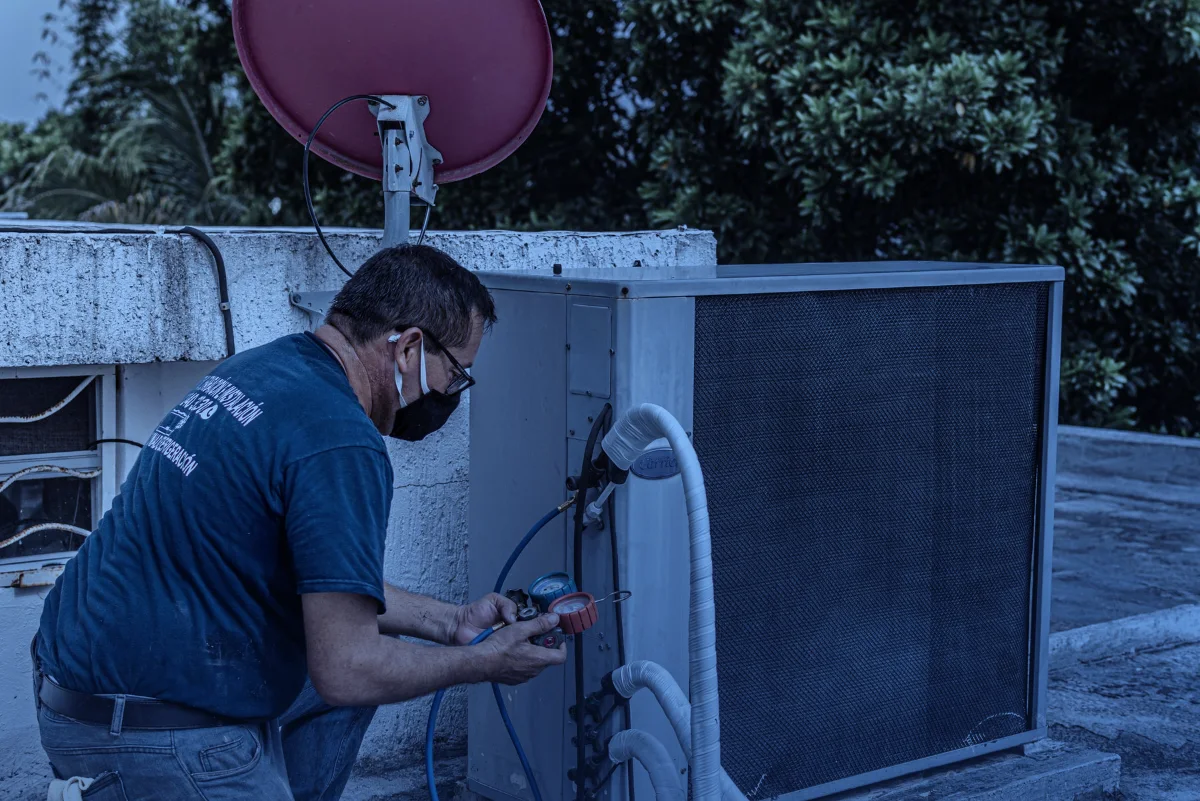
When the system allows it, the review of bilingual schools is done by camera through the existing access points, the way the Climatiza technical service performs it.
The practical rule is simple. Each day only what can be closed that same day is opened, each cleaned section is left with the unit on fan until the camera confirms it is dry, and units are not shut off for weeks with freshly worked ducts. The EPA, in its mold remediation guide, recommends keeping indoor humidity below 60 percent and making sure condensate pans drain freely.
How is the work split between the school calendar and the break?
The key is not to leave for the break what can be seen beforehand. The camera inspection is done on the student-free days of March or April, for example on professional development days, when access points can be opened without anyone depending on the room the next day. With that list, the break is devoted to what does need empty buildings: cleaning the flagged sections, drying and checking.
| Calendar moment | What is done | What is avoided |
|---|---|---|
| Professional development days in March or April | Camera by room and a list of sections | Cleaning without having seen |
| First weeks of June | Cleaning in the highest load wing, unit on fan | Opening several buildings at once |
| Rest of June and July | Next wings and dining hall with the same routine | Shutting off units with freshly opened ducts |
| Last week before August | New filters, start-up and a second camera pass | Reaching day one without checking |
Why does it matter to do it in order and not at the last minute?
Because a school opening in August with a room that smells of damp loses its first week in explanations. It matters for the comfort of children and teachers, who spend hours in closed rooms with the air on. It matters for ventilation, because a study of air conditioned classrooms in Taiwan found carbon dioxide levels above 2,500 ppm that dropped to 1,084 with fresh air, and noted that fans scatter dust and must be kept clean.
It also matters for order. A school with carpeted rooms, projectors and computer carts has more surfaces that hold dust and more equipment that does not tolerate humidity. And it matters for the school board, which prefers a two language report with photos to a manager’s explanation. It is worth saying that duct cleaning has not been shown to prevent health problems, according to the EPA and the CDC, and that here it is proposed only where the camera justifies it.
What does a school visit look like, step by step?
It begins with a short meeting with the facilities committee to locate wings, machine rooms and rooms with complaints. The technician walks the classrooms with the unit off, opens the access points that allow the duct to be seen with a camera and photographs the return and the first stretch of each branch. Carpeted rooms and those housing technology are noted separately, because their maintenance rhythm is different.
An illustrative case, not a real client: a school with two wings and a dining hall. The March camera shows the primary wing with stuck dust in the returns and pans draining slowly, the secondary wing with clean sections and the dining hall with a thin layer of residue in the return near the kitchen. With that report, June starts with a three line list instead of a general cleaning. The secondary wing is left alone.
Which mistakes repeat and what is worth asking for?
Three repeat. Waiting for the break to see the condition, so cleaning is done blind. Opening every building at once to finish quickly, so the rain finds exposed ducts. And switching the units on the Sunday before classes without a second check, which is when odors are discovered with the children already inside.
- Report in Spanish and English for the facilities committee and the school board.
- Photos numbered by room and wing, dated.
- Phased plan with a dryness check between phases.
- List of what is left out for lack of access.
With that, the committee reaches August with a document and not an assumption. How work is organized in other educational centers is explained in the work at universities and educational centers, the other kinds of place are in the places where the team works and the cleaning procedure is in the cleaning service with prior inspection.
To ask about availability or request a camera inspection, the Climatiza website lists the ways to contact the team and the duct cleaning service page explains how the work is organized.
Sources
On this site
- Universities and schoolsHow the work is organized in this sector
- Offices and corporate towersA neighboring sector
- Camera inspectionThe real condition before deciding
Climatiza and Radar Panamá
Why does inspecting and cleaning ducts matter?
These are the technical reasons, with their source, why the condition of the ducts is checked before deciding. Duct cleaning has not been shown to prevent health problems according to the EPA and the CDC, and it is proposed only when the observed condition justifies it.
| Advantage | Data with source | What it means in practice |
|---|---|---|
| Know whether cleaning is needed before deciding | The EPA states in its duct cleaning guide that cleaning is justified for visible mold, pests or a notable buildup of dust and debris. | A camera inspection documents the condition and allows a decision based on evidence, without unnecessary work. |
| Anticipate the tropical humidity | According to ETESA (Tocumen station, 1977 to 2010), mean annual relative humidity in Panama is 75.7 % and rises to between 78.2 and 82.4 % in the rainy months. | The condensate pan, the drain and the coil are checked first, because that is where moisture builds up. |
| Keep humidity under control | The EPA recommends in its guide to mold and moisture keeping indoor relative humidity below 60 % and drain pans clean and draining freely. | A humidity reading and a clean pan limit the conditions in which mold grows. |
| Keep construction dust out of the system | The EPA and NIOSH Building Air Quality guide asks to block return grilles while construction work takes place in occupied buildings. | Before accepting a new or remodeled system it is worth checking whether construction dust got in. |
| A local figure that changes the decision | In 2024 total enrollment in the country was 1,213,119 students, 82.6% in the public sector. University education reached 193,773 students (preliminary figure) and the University of Panama had 88,094, or 45.6% of university enrollment. (INEC, Education 2024). | It is the sector context taken into account when planning the visit. |
Frequently asked questions
When is it worth checking the ducts of a school on an August calendar?
The camera inspection fits on the student-free days of March or April, to reach June with a list. Cleaning of flagged sections is done in the June and July break, in phases and with a dryness check.
Why does rain complicate the work in the June and July break?
Because ambient humidity is high and an open or freshly cleaned duct takes up water if left unattended. That is why only what is closed the same day is opened and the unit stays on fan until dryness is confirmed.
Is the whole campus cleaned every year?
No. Sections where the camera shows loaded dust, residue or damage are cleaned and the rest is just monitored. A year without findings serves as a comparison for the next and avoids unnecessary work.
Why does cleaning ducts in the rainy season require letting each section dry?
Because an open duct absorbs moisture from the air. ETESA records monthly relative humidity running from 64.9 percent in March to 82.4 percent in October, and wet interior insulation is slow to dry. That is why only what can be closed the same day gets opened, and the unit stays in ventilation mode.
What does the duct report for an international school board contain?
It comes in Spanish and English with the same photos, organized by building and by phase. It states which classrooms were cleaned and which only received new filters, and leaves a list of pending items for the December break. That way the board compares one year with the next without relying on anyone’s memory.
Keep reading the guide
Request an inspection
Do you want to know the condition of your system?
A camera inspection lets you see the inside of the ducts before deciding what to do. Message us and we will confirm availability.
- +507 6388-2083
- info@climatizapanama.com
- Calle Gervasio García, 8, Panama City