
Cold rooms and chambers
Cold room: anteroom, air ducts and condensation
When the anteroom drips, the first impulse is to dry the floor. The second is to look at the ceiling. The third, which hardly anyone takes, is to look at the air conditioning duct passing overhead.
 By
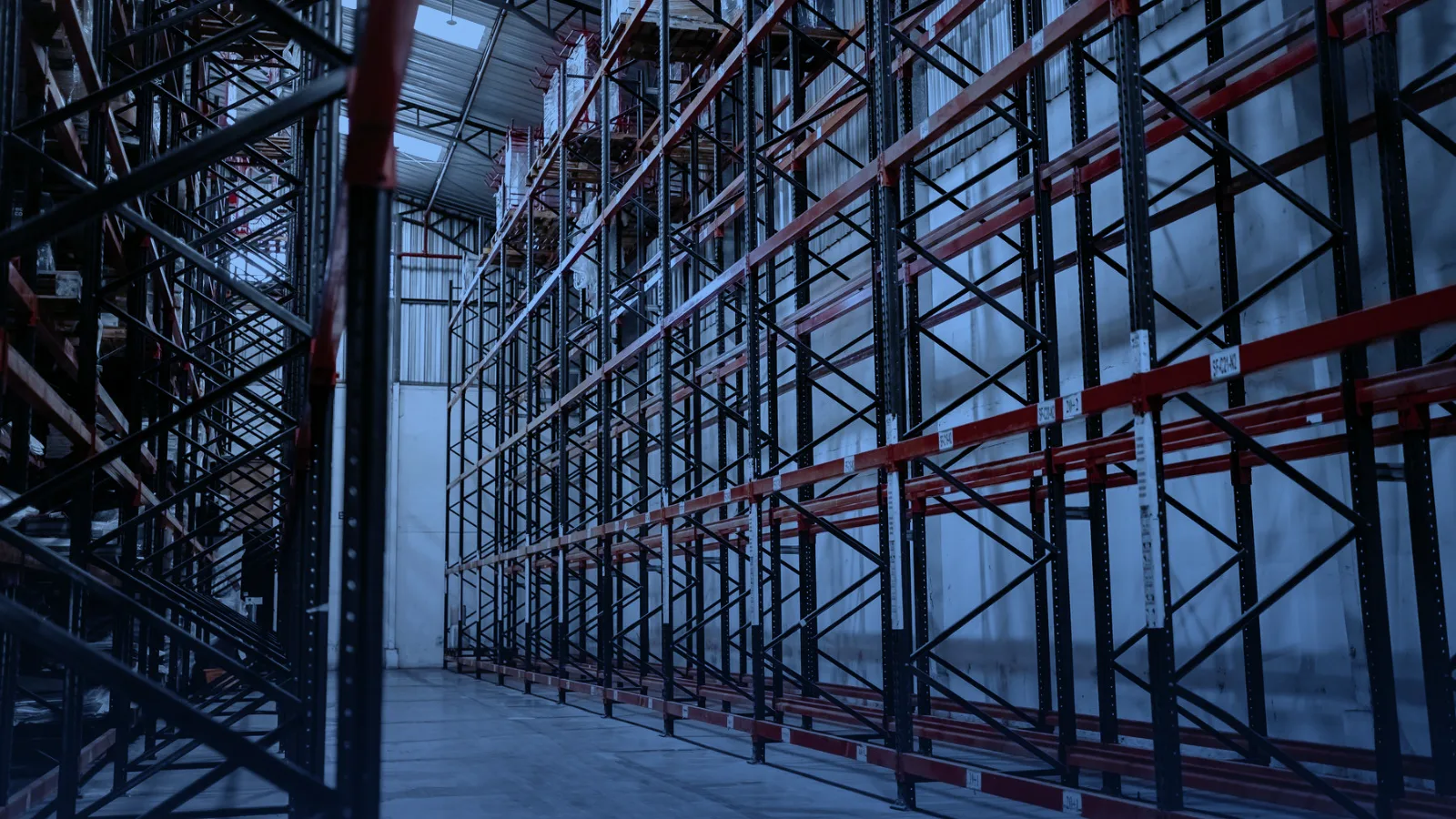
The anteroom of a cold room drips because the humid Panama air comes in each time a door opens and condenses on any surface below the dew point, including the dispatch area air duct if it passes uninsulated. It is corrected in order: insulate and seal, adjust door and curtain, and clean the duct only if the camera shows residue or mold.
In a food distributor, the dispatch shift knows the puddle. It shows up at the end of the day in the anteroom, next to the threshold, and someone dries it with a mop because tomorrow it will be there again. Sometimes there are drops on the dispatch grille closest to the door, or a damp smell when the office air is turned on. Each symptom seems a separate matter, but they almost always come from the same thing: hot, humid outside air meeting a cold surface.
Why does the anteroom of a cold room drip?
Because each time a door opens, air from the warm side comes in, and in Panama that air averages 75.7 % relative humidity according to ETESA and IMHPA, and more in the rainy months. When it touches a surface below the dew point, the vapor turns to liquid: on the door frame, on the ceiling, on the floor next to the threshold and on any cold metal. The anteroom exists precisely to cushion that clash, but it only works if the doors are not opened at the same time and if the air curtain or fast door does its job.
Measurements in a laboratory scale and a real scale refrigerated room (Gonçalves et al., 2019, with tracer gas) show that air exchange through the doorway is not uniform: the maximum velocity occurs near the door jambs, not in the center. In practice that means humidity comes in strongest along the edges of the frame, which is exactly where frost and dripping are seen first. The EPA, in its guide on mold and moisture, reminds that condensation signals high humidity and that cold surfaces are best covered with insulation.
The fieldwork is carried out by the Climatiza team, who check branches, grilles and air handlers and record the result in an illustrated report, also in the case of cold rooms and chambers.
What does the air duct have to do with all this?
A lot, because the dispatch area and the plant office usually have ducted air conditioning, and the stretch that passes next to the anteroom or crosses it works in the worst conditions of the building: cold sheet metal inside, humid air outside and door cycles throughout the shift. If the exterior insulation is torn, wet or has open seams, the duct sweats like a glass of ice. And if dust has built up inside, that dust absorbs moisture and does not dry between shifts.
That damp layer is where the mold that shows on grilles grows, and the one that drips when the air is switched off and the metal warms up. In an air conditioned warehouse without cold rooms humidity is a seasonal problem. Next to an anteroom it is an everyday problem, which is why the logic of the check changes: here the source is corrected first and cleaning comes after, because cleaning a duct that will get wet again tomorrow solves nothing.
Why does it matter to fix it if the cold room keeps cooling?
Because a dripping anteroom costs quietly. Ice on the door frame forces more defrost cycles, the wet floor is a hazard for whoever pushes a pallet, and office air that smells of dampness starts to smell like neglect to a customer visiting the plant. It also matters for order: a plant with a well documented cold chain and a soaked duct above the anteroom has a contradiction visible to any inspector.
It should be clear what cleaning does not do. The EPA and the CDC note that it has not been shown to prevent health problems, so in a cold room it is framed as maintenance of the duct and the dispatch area, and only if the camera shows residue or mold that justifies it.
What is looked at in the visit and in what order is it corrected?
The camera enters the stretch next to the anteroom and looks inside for water, stains and compacted dust, and outside it checks the condition of the insulation and joints. Then it checks the dispatch grilles and diffusers, the unit condensate pan and the slope toward the drain, and observes whether the air curtain or fast door works. The camera inspection leaves photos of each point and makes it possible to separate what is ceiling condensation from what is the duct, and that distinction changes the solution.
An illustrative case, not a real client: a distributor with a continuously used dispatch anteroom that drips every afternoon. The camera shows wet insulation on the stretch crossing the anteroom, damp dust in the first meters and a pan with residue. The order of work is to insulate and seal the stretch, adjust the fast door, dry out and then clean what was left with residue. With the insulation fixed, many anterooms stop dripping without touching the duct, and when the dripping continues, the duct is the next place to look.
- Photos of the stretch passing next to the anteroom, inside and out, with date.
- Condition of the insulation and joints, with the humid air entry points marked.
- Condition of the condensate pan and its slope toward the drain.
- A note on the fast door or air curtain, for whoever maintains the anteroom.
- Proposed order of work: insulate, seal and only then clean.
For the maintenance manager, the most useful piece of information is the frequency. A distributor with continuous dispatches loads the anteroom far more than a plant with two exit windows a day, and that fact explains the interval better than a calendar, as detailed in the criteria for deciding when to clean. Logging door cycles and photographing the same grille every week shows when the mold comes back. More examples of this kind of plant are on the industry page, and the other kinds of place show how the check adapts to each case.
The next step after this guide is usually a visit to check the system, which is arranged with the team at Climatiza using the details in their duct cleaning page.
Sources
On this site
- Industry and logistics parksHow the work is organized in this sector
- Warehouses and storageA neighboring sector
- Camera inspectionThe real condition before deciding
Climatiza and Radar Panamá
Why does inspecting and cleaning ducts matter?
These are the technical reasons, with their source, why the condition of the ducts is checked before deciding. Duct cleaning has not been shown to prevent health problems according to the EPA and the CDC, and it is proposed only when the observed condition justifies it.
| Advantage | Data with source | What it means in practice |
|---|---|---|
| Anticipate the tropical humidity | According to ETESA (Tocumen station, 1977 to 2010), mean annual relative humidity in Panama is 75.7 % and rises to between 78.2 and 82.4 % in the rainy months. | The condensate pan, the drain and the coil are checked first, because that is where moisture builds up. |
| Protect equipment performance | In a laboratory test with dust equivalent to one year of use, coil pressure drop rose between 6 and 30 % and efficiency (EER) fell between 1 and 9 % (Yang, Braun and Groll, ARTI, 2004). | It is a laboratory result and not a promise of savings: it points to the components worth checking. |
| Follow a technical inspection reference | The ANSI/ASHRAE/ACCA 180 standard is the standard practice for inspection and maintenance of commercial HVAC systems. | It is an industry reference, not a legal requirement in Panama, and helps organize the review plan. |
| A local figure that changes the decision | According to INEC, in 2024 Colón Free Zone imports totaled B/.12,646.5 million, 35.9% below 2023, and re-exports B/.12,208.2 million, 8.6% below. 74.6% of imported value arrived by sea. The figures give the scale of the goods that pass through warehouses and sheds. (INEC, Foreign Trade Yearbook, Colón Free Zone 2024). | It is the sector context taken into account when planning the visit. |
Frequently asked questions
Why does the cold room anteroom drip?
It drips because humid outside air comes in when the doors open and condenses on surfaces below the dew point: frame, ceiling, floor and cold metal. If the dispatch air duct passes uninsulated, it can also be one of those surfaces.
Does the duct need cleaning if the anteroom drips?
Not necessarily. First the stretch is insulated and sealed and the door or air curtain is adjusted. The duct is cleaned only if the camera shows damp dust, residue or mold, because cleaning something that gets wet again does not solve the problem.
How can ceiling condensation be told apart from duct condensation?
With the camera and photos of each point. A puddle on the floor at the end of the shift usually comes from the threshold and the ceiling. Drops on the dispatch grille and wet metal or torn insulation point to the duct. Each case has a different fix.
Why does the air conditioning duct drip near the anteroom of a cold room?
Because the duct sheet metal sits below the dew point and condenses vapor from the air. The EPA recommends covering cold surfaces with insulation to prevent it, and the annual mean relative humidity of 75.7 percent according to ETESA means each door opening lets vapor into the anteroom.
How can condensation from the cold room be told apart from moisture inside the dispatch-area duct?
By its location. Ice on the evaporator or door frame points to the cold side and too much humid air coming in. Black or green spots on grilles and diffusers point to the warm side and damp dust inside the duct. A puddle at the end of the shift usually comes from the ceiling and the door.
Keep reading the guide

Request an inspection
Do you want to know the condition of your system?
A camera inspection lets you see the inside of the ducts before deciding what to do. Message us and we will confirm availability.
- +507 6388-2083
- info@climatizapanama.com
- Calle Gervasio García, 8, Panama City