
Customs offices
Customs: ducts between cargo inspection areas and offices
In a customs house the office and the inspection yard share a wall, a door and sometimes the same air. The question is how much of the yard reaches the return.
 By
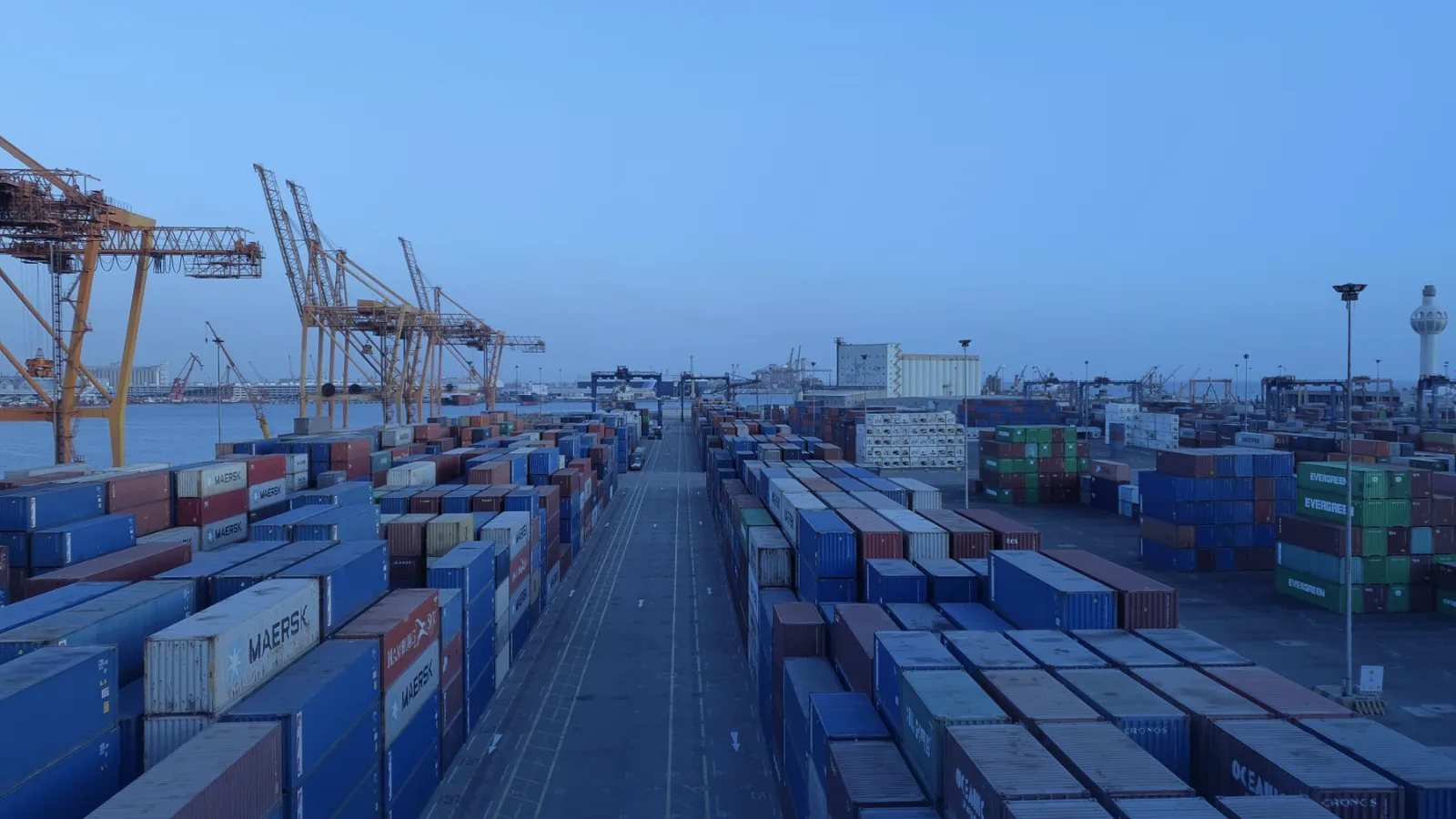
In the ducts of offices attached to the cargo inspection area, the first thing checked is the return closest to the connecting door, because that is where dust and equipment fumes from the yard arrive. Then the run to the air handler and the supply branches is followed. The camera shows whether the deposit comes from the yard and whether the separation between areas works.
Customs officers know the moment. A container is opened, a cloud of cargo dust comes out, a forklift passes with its engine running and the door connecting to the offices is opened because someone needs a stamp. Ten minutes later, the desk closest to that door smells different. The head of office suspects that the air conditioning is carrying the yard indoors, and the suspicion deserves a check.
That suspicion can be settled with evidence. Air comes and goes through three paths, which are the door, the service windows and the return. Telling which one weighs most is the job of the review, and what is done afterward depends on it.
How does yard air reach the office ducts?
It arrives through pressure difference. When the air conditioning pulls more air out of the office than it delivers, the space sits at lower pressure and draws in outside air through any opening. Each time the yard door opens, the push is stronger. The return collects that mixture, passes it through the filter and leaves the rest on the coil and the first section of the duct. With an annual mean humidity of 75.7% according to ETESA, the dust and soot that get in settle damp and stick more than in a dry climate.
The fieldwork is carried out by the Climatiza team, who check branches, grilles and air handlers and record the result in an illustrated report, also in the case of customs offices.
The office ducts do not receive the same dust as the yard ones. What reaches the return is fine, a mix of cargo dust, engine soot and packaging fibers, and it shows on the camera as a dark gray layer in the first section that lessens as the duct goes on. If the deposit is spread evenly, the origin is more general. If it concentrates near the connecting door, the path is the door.
Why does it matter if the offices run normally?
It matters because a customs workday is long and office air is part of the workstation. A return loaded with soot demands more of the unit, and a filter that saturates in a few weeks forces frequent changes nobody had budgeted. It also matters for internal morale: when officers perceive a bad smell or heavy air, the complaint reaches the head of office and from there maintenance, with no one holding data to answer.
The OSHA 3430 guide on air quality in commercial buildings notes that when different uses share a building, emissions from one zone can affect another and it is worth assessing. A customs house is a clear example, and a report with images makes it possible to assess without arguments. What it does not promise is an effect on health: the EPA finds no evidence that duct cleaning prevents illness, so the argument is the condition of the system and the evidence to decide.
How is the visit coordinated with a yard that never stops?
It is coordinated with the head of operations, who knows the low dispatch hours and the days with fewer containers. The team does not ask to stop anything: it asks for the window in which the yard moves least and the connecting door can stay closed. The EPA and NIOSH air quality guide for occupied buildings recommends, when work is going on in a zone, blocking the return registers of that zone so that whatever is stirred up does not recirculate. In a customs house that translates into closing the door and protecting the nearest return while the work goes on.
| Load source | How it reaches the office | What is looked at first |
|---|---|---|
| Cargo dust | Door and nearby return | First section of the return |
| Forklift exhaust | Service window to the yard | Filter and nearest grille |
| Packaging fibers | Door and hallway | Coil and pan |
| Yard humidity | Negative pressure in the office | Insulation and drain |
An illustrative case, not a real client: a customs office with a door to the yard and a service window. The camera shows the gray layer concentrated in the first two meters of the return near the door and the rest of the system nearly clean. The sensible decision is to clean that section, install an automatic door closer, check the filter on that grille every week and leave the other branches alone. Cleaning everything would have used more hours without changing the source.
Before the camera confirms anything, the head of office can watch for three simple signs. The first is the filter of the grille closest to the door, which darkens well before the others. The second is a thin gray film on the desks near the connecting door at the end of the day. The third is a smell of fuel or cargo that appears in the busiest hours of the yard and fades when it calms down. Noting the hour and place of each observation for two weeks gives the review a starting point and helps tell whether the problem lies with the door, the pressure or the system.
Which mistakes repeat and what is worth asking for?
The mistake of cleaning without closing the door that brings the dust repeats, so the deposit returns. So does treating the whole office as a single space, and not leaving in writing which hours were agreed with the yard. It is worth asking for a report with the date and the real working hours, images of the first section of the return near the door, the condition of the filter and the pan and a note on the pressure difference observed. The scheme is similar to a public body that works by areas and permits and spaces with a warehouse floor share logic with a warehouse whose office breathes the air of the floor.
To read each finding and decide what is cleaned and what is watched, the criteria for when cleaning makes sense help, and the overview of other places with mixed uses is in the types of premises where ducts are reviewed.
To ask about availability or request a camera inspection, the Climatiza website lists the ways to contact the team and the duct cleaning service page explains how the work is organized.
Sources
On this site
- Public buildings and ministriesHow the work is organized in this sector
- Warehouses and storageA neighboring sector
- Camera inspectionThe real condition before deciding
Climatiza and Radar Panamá
Why does inspecting and cleaning ducts matter?
These are the technical reasons, with their source, why the condition of the ducts is checked before deciding. Duct cleaning has not been shown to prevent health problems according to the EPA and the CDC, and it is proposed only when the observed condition justifies it.
| Advantage | Data with source | What it means in practice |
|---|---|---|
| Anticipate the tropical humidity | According to ETESA (Tocumen station, 1977 to 2010), mean annual relative humidity in Panama is 75.7 % and rises to between 78.2 and 82.4 % in the rainy months. | The condensate pan, the drain and the coil are checked first, because that is where moisture builds up. |
| Protect equipment performance | In a laboratory test with dust equivalent to one year of use, coil pressure drop rose between 6 and 30 % and efficiency (EER) fell between 1 and 9 % (Yang, Braun and Groll, ARTI, 2004). | It is a laboratory result and not a promise of savings: it points to the components worth checking. |
| Follow a technical inspection reference | The ANSI/ASHRAE/ACCA 180 standard is the standard practice for inspection and maintenance of commercial HVAC systems. | It is an industry reference, not a legal requirement in Panama, and helps organize the review plan. |
| A local figure that changes the decision | In August 2026 Panama’s public sector had 270,301 employees, and 175,532 of them belonged to the central government. (Comptroller General of the Republic, Public sector payroll report, August 2026). | It is the sector context taken into account when planning the visit. |
Frequently asked questions
Can dust from the inspection yard reach the office ducts?
Yes, mainly through the connecting door and the nearest return. The camera shows whether the deposit concentrates in that section. If so, the door and the pressure are corrected first and the cleaning comes after.
Does cargo dispatch have to stop to check the ducts?
No. The window of least movement in the yard is requested and the door is kept closed during the work. The head of operations sets the hours and the team adapts to them.
What should the report for an office next to the yard include?
Images of the first section of the return near the door, the condition of the filter, pan and coil, the date and real hours of the work and a note on the pressure observed between office and yard.
Which offices in a customs house load the most dust into the ducts?
The service windows and the waiting room, which receive cargo dust and soot with every door opening, and the unit room, where the filter darkens on its intake face within a few weeks. The administrative offices at the back receive air that is already filtered and a lighter load.
What measure protects the service windows of a customs house while the ducts are being worked on?
Blocking the return registers of the work zone, as the EPA and NIOSH Building Air Quality guide recommends for occupied buildings, so that whatever is stirred up does not recirculate toward the public. With the 75.7 percent mean humidity that ETESA records, dust settles damp and sticks more.
Keep reading the guide

Request an inspection
Do you want to know the condition of your system?
A camera inspection lets you see the inside of the ducts before deciding what to do. Message us and we will confirm availability.
- +507 6388-2083
- info@climatizapanama.com
- Calle Gervasio García, 8, Panama City