
24 de Diciembre
24 de Diciembre: workshop with office, do fumes reach the ducts?
A workshop and an office under the same roof share a wall, a drop ceiling and sometimes the same air. What counts is the path the fumes follow.
 By
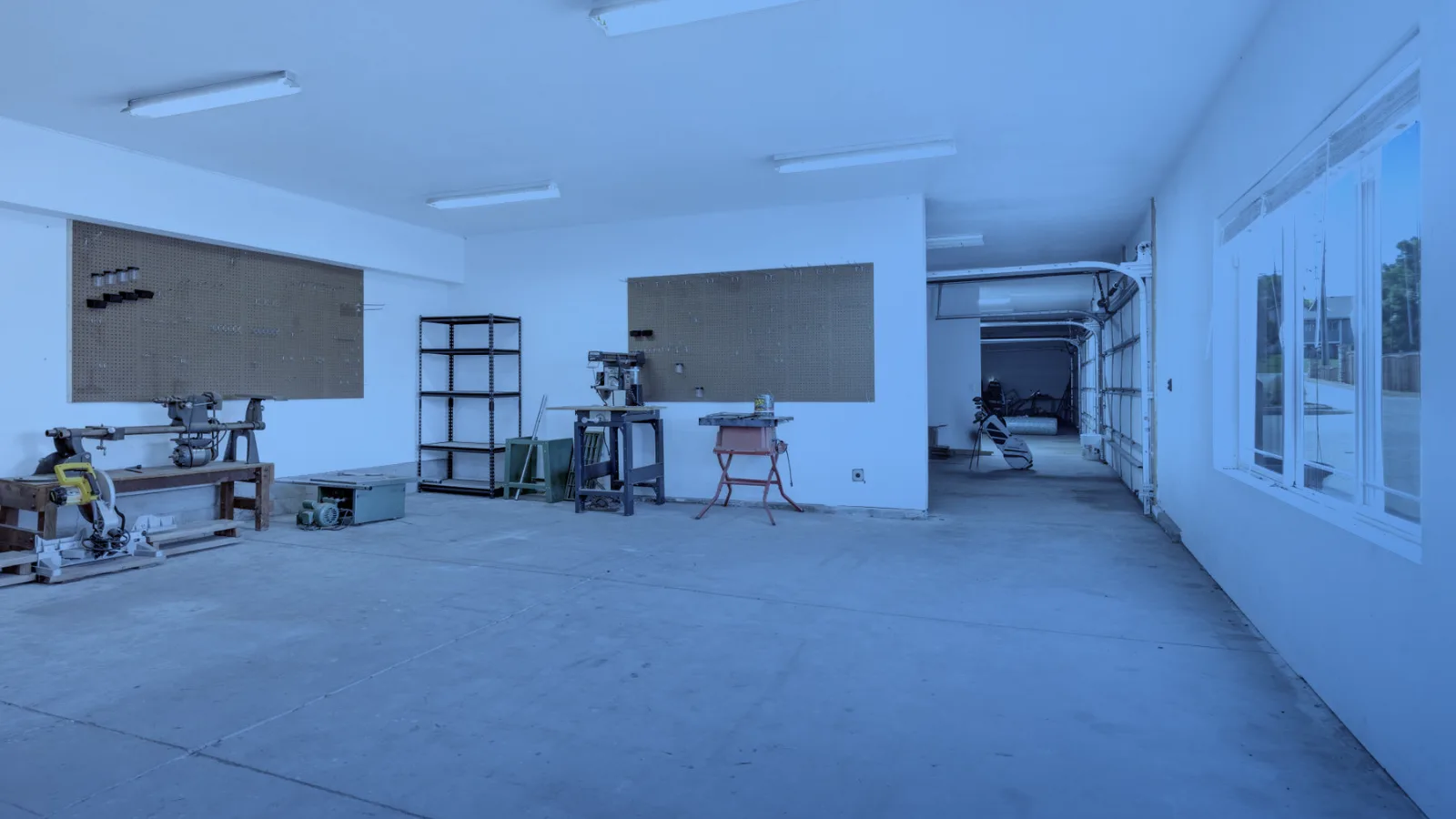
Fumes from a workshop can reach the ducts of the adjoining office by three paths: a return located in a shared drop ceiling, unsealed gaps where pipes and cables pass, and the pressure difference an extractor creates. The camera shows whether there is deposit in the office duct, and before cleaning it is wise to cut the path where it comes in.
Anyone with a small workshop in 24 de Diciembre and the office attached to the shop floor knows the scene. Mid morning the welder is switched on or a piece is sanded, and within minutes someone at a desk remarks on a burnt smell. The door is opened, the workshop fan is turned on and the smell eases, but it comes back after a while. The doubt that remains is whether that smoke leaves by the door or whether the office air conditioning is carrying it inside.
The doubt has an answer, and it is more practical than it seems. In a wide corregimiento like 24 de Diciembre, where small workshops live alongside homes and shops, many premises were built in stages and share structure. Understanding how the workshop and the office connect is the first step, before thinking about any cleaning.
Where does workshop smoke get into the office ducts?
There are three paths and it is wise to check them in this order. The first is the return: if the office grille is in the drop ceiling and that space above the tiles extends to the shop floor, the unit picks up whatever floats up there. The second is the pass through gaps, where a pipe, a cable or an electrical conduit crosses the wall unsealed. The third is pressure. A workshop extractor leaves the shop floor at lower pressure than the office or the reverse, and the air follows that difference through any opening.
To coordinate a visit related to 24 de Diciembre, Climatiza answers inquiries and confirms availability according to the schedule of the place.
With the annual mean humidity of 75.7% that ETESA records, the smoke and fine dust from the workshop settle on surfaces as a sticky film that dry air would not form. That is why, when a path is open, the office duct starts to darken faster than that of a premises without a workshop.
What does the evidence say about air passing between neighboring rooms?
A peer reviewed study in a hospital outpatient clinic measured how aerosols move between rooms. It found that mechanical ventilation and portable air cleaners reduced migration in some scenarios, but that the building’s own supply could increase it up to 5.5 times along the clinic because of the currents it creates. The work does not address workshops or welding smoke. What it shows is that the design of airflow can move particles between neighboring spaces, which is why in a workshop the path of the air is examined and not only the wall.
Why does it matter even if the office is small?
It matters because the office of a workshop is where the customer is served, quotes are given and the deal is closed. A burnt smell in that room says a lot about the business, even if the shop work is flawless. It also matters for the equipment: a unit that picks up soot and oil on its coil cools worse and wears faster, and in a small premises a breakdown leaves everyone working in the heat. And it matters for order, because if the smoke comes in through an unsealed gap, the filter and the cleaning only postpone a problem that is fixed with sealant and a sheet of board.
It is best not to promise more than is known. The EPA reminds that duct cleaning has never been shown to prevent health problems, so the visit is justified by the condition of the office and the system, and by deciding with images what gets fixed first.
What does a visit to a workshop with an office look like?
- Talk to the owner. The owner is asked what jobs are done, at what time and when the smell is noticed in the office.
- Look at the return and the drop ceiling. A tile is lifted and it is checked whether the space above connects with the shop floor.
- Camera through the office duct. The first section is surveyed from the return toward the unit and the condition of the interior is photographed.
- Look for gaps and test the direction of the air. With a paper strip or test smoke it is seen which way the air moves at the wall openings.
An illustrative case, not a real client: a carpentry workshop with a two desk office. The camera shows a thin dark film of sawdust and varnish smoke in the first three meters of the return duct, and an unsealed gap where the saw cable passes. The sensible decision is to seal the gap and separate the return from the shared drop ceiling, clean that section and check the filter every week for a month. Cleaning without cutting the path would have left the film ready to return.
Which mistakes repeat and what is worth asking for?
The most common mistake is cleaning first and sealing later. A study on new ducts found that oil and the dust stuck to it were hard to remove by brushing or compressed air, so a greasy film may call for a different method and a prior assessment. Another mistake is mixing the workshop duct, which is an extraction system and is handled separately, with the office air conditioning. And another is not noting at what hour the smell appears, a detail that guides more than any figure.
It is worth asking for dated photos of the inside of the office duct, the list of gaps found, a note on whether the return shares a drop ceiling with the shop floor and a suggestion of when to look again. The particulars of the corregimiento are in the 24 de Diciembre page, the map of other communities is gathered in the areas where work is done, and the criteria for deciding are explained in when cleaning makes sense and when it does not. The camera route is in how a camera inspection is carried out.
Those who want to go from this reading to a real review can start at the Climatiza service page or write through the main Climatiza site.
Sources
- Salmonsmith et al., 2025, Aerosol Science and Technology: mechanical ventilation and aerosol spread in a hospital outpatient clinic
- Holopainen et al., 2003, Indoor Air: effectiveness of duct cleaning methods on newly installed ducts
- OSHA 3430: indoor air quality in commercial and institutional buildings
On this site
- Industry and logistics parksHow the work is organized in this sector
- 24 de DiciembreThe area and its building types
- Camera inspectionThe real condition before deciding
Climatiza and Radar Panamá
Why does inspecting and cleaning ducts matter?
These are the technical reasons, with their source, why the condition of the ducts is checked before deciding. Duct cleaning has not been shown to prevent health problems according to the EPA and the CDC, and it is proposed only when the observed condition justifies it.
| Advantage | Data with source | What it means in practice |
|---|---|---|
| Protect equipment performance | In a laboratory test with dust equivalent to one year of use, coil pressure drop rose between 6 and 30 % and efficiency (EER) fell between 1 and 9 % (Yang, Braun and Groll, ARTI, 2004). | It is a laboratory result and not a promise of savings: it points to the components worth checking. |
| Keep humidity under control | The EPA recommends in its guide to mold and moisture keeping indoor relative humidity below 60 % and drain pans clean and draining freely. | A humidity reading and a clean pan limit the conditions in which mold grows. |
| Require method and a report from the provider | NADCA published in 2025 the current edition of its ACR standard on assessment, cleaning and restoration of air systems. | It is an industry reference and not a seal: it helps ask for method, photographs and scope in writing. |
Frequently asked questions
Can workshop smoke damage the office air conditioning?
It can leave a film of soot and oil on the coil and duct, so the unit cools less well. The camera shows how much there is. Before cleaning, the path where the smoke gets in is cut.
Does a finer filter on the office grille help?
It helps retain part of the soot, but it does not correct the path. If the return shares a drop ceiling with the workshop, the filter saturates quickly. The return is separated and the gaps are sealed before changing the filter.
Are the workshop duct and the office duct cleaned together?
No. The workshop extraction duct is a different system and is handled separately. The office one is cleaned only if the camera shows deposit, and always after cutting the path by which the smoke arrives.
What does OSHA guide 3430 say when two activities share one building?
OSHA guide 3430-04 (2011) notes that in buildings with several tenants an assessment may be needed so that one tenant’s emissions do not affect another. The same reasoning holds for a workshop and an office under one roof: what matters is separating the air paths.
Why does a greasy film inside a duct call for a different cleaning method?
Because oil and the dust stuck to it are hard to remove. Holopainen and colleagues (2003, Indoor Air) observed this in new ducts with oil residue: brushing and compressed air were not enough. That is why the film is assessed before the method is chosen.
Keep reading the guide

Request an inspection
Do you want to know the condition of your system?
A camera inspection lets you see the inside of the ducts before deciding what to do. Message us and we will confirm availability.
- +507 6388-2083
- info@climatizapanama.com
- Calle Gervasio García, 8, Panama City