
Theaters and auditoriums
Theater: ducts over the stage and seating, set dust
In a theater the seating area is what people see, but dust is born behind the curtain. That is why the review starts where the scene is built.
 By
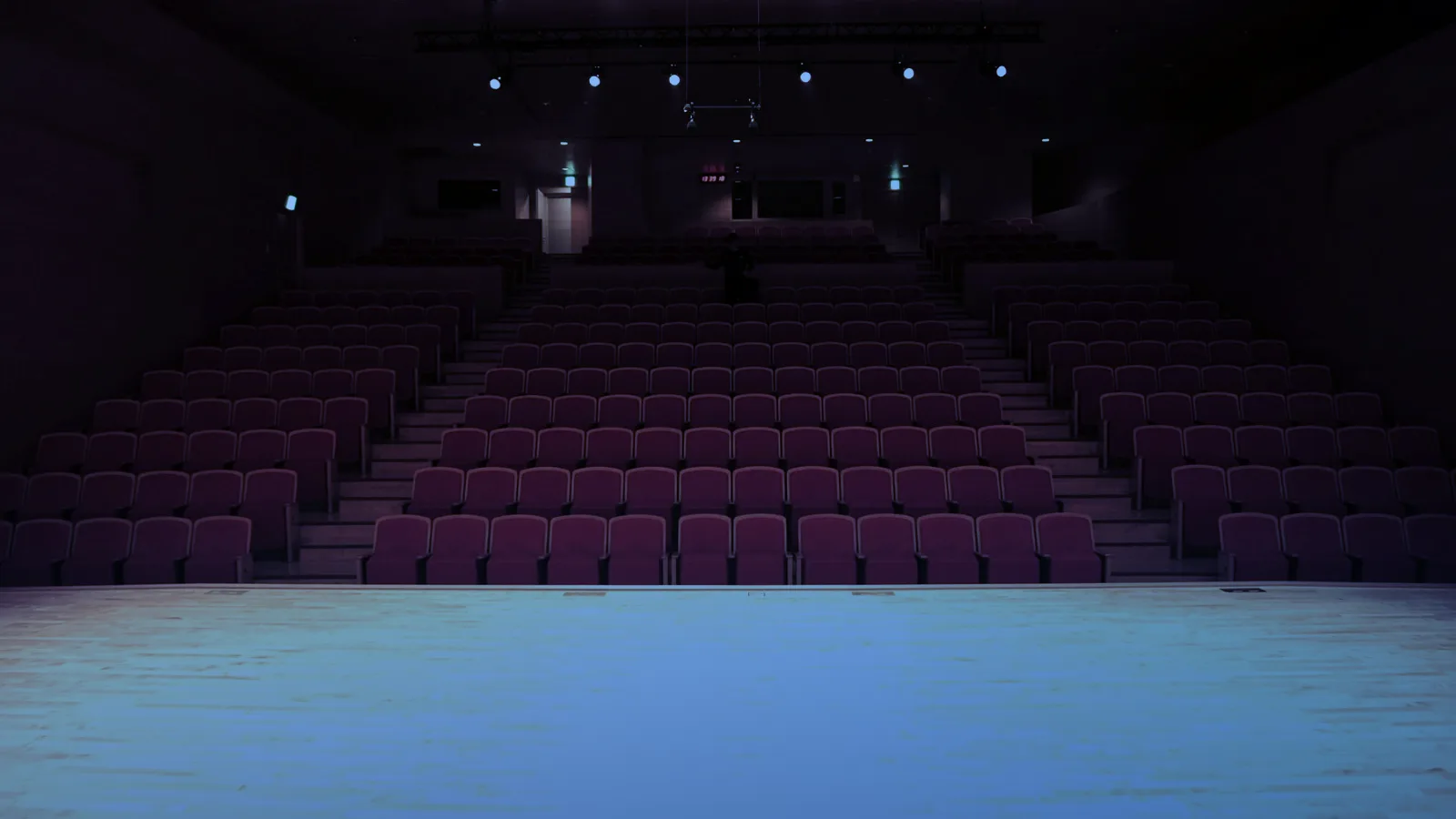
Set dust and stage haze can reach the seating area ducts, especially when the returns of the stage and the workshop are not covered during material cutting. The review starts at the workshop and the stage, continues through the first section of the hall return and ends in the seating area. It is scheduled on days without a performance.
A theater’s technical director sees it every season. A new production is built, the workshop cuts wood and paints flats for weeks, and when the play opens, the first row of the seating smells slightly of paint and someone remarks that the air is “dry and heavy”. After the performance, stage haze lingers under the lights, and the house crew opens the doors to ventilate. What nobody sees is where the air goes that does not leave through the door.
A good part goes to the return. And from there to the hall duct, which acts as a funnel for everything that floats between the stage and the seating. A theater therefore has a logic of its own: the dust is born on one side of the hall and is deposited on the other, and the review of the system follows that route.
How does set dust reach the seating area ducts?
It arrives with the air the system moves between the stage and the hall. A set build is, as far as air goes, a small construction job inside the theater: wood is cut, sanded, painted, fabrics are glued. All of it releases fine particles that float for hours. The EPA and NIOSH guide on air quality in occupied buildings recommends, when works are going on, blocking the return registers of the work zone so that what is raised does not recirculate. Covering the returns of the workshop and the stage during cuts is the cheapest measure of all and prevents most of the deposit.
To coordinate a visit related to theaters and auditoriums, Climatiza answers inquiries and confirms availability according to the schedule of the place.
When they are not covered, the dust travels through the return, passes the filter, which catches the coarse part, and leaves the fine part on the coil and in the first meters of the duct. In a climate of 75.7% annual mean humidity, according to ETESA, that dust turns damp and sticks more easily than in a dry climate theater. That is why the film of paint and sawdust is seen first on the grilles closest to the stage.
What does stage haze do inside the hall ducts?
Theater fog effects are produced with glycol, glycerin or white mineral oil fluids, according to the ESTA standards on atmospheric effects. Those fluids do not disappear. Part of them settles as an oily film on the grilles, diffusers and the first meters of the hall return duct. That film holds the sawdust and fabric dust that float afterward, and the result is a sticky layer that no longer comes off with a dry cloth.
A study on new ducts found that oil and the dust stuck to it were hard to remove by brushing or compressed air. In a theater that means a fog film accumulated over several seasons calls for a prior assessment and sometimes a method different from dry dust. The camera makes it possible to see whether it is a thin layer to be watched or a deposit that already compromises airflow.
Why does it matter if the audience does not complain?
It matters because a theater lives off the comfort of two uninterrupted hours in a seat. Air that feels dry, a slight smell of paint or a seating area uneven in temperature detract from the experience even if nobody says so. It matters for the equipment: a unit with a coil coated in oily film cools worse, and in theaters with high humidity poor drainage shows up in the hall within a few performances. It matters for stage staff, who work among curtains and dust. And for management it matters to have images that explain which productions load the system most.
It is worth saying it plainly: cleaning ducts has not been shown to prevent health problems, according to the EPA and the CDC, and no review should be sold as protection for spectators or actors. What it does provide is a system in good condition, decisions made with evidence and a comfortable seating area.
How is the visit organized on days without a performance?
| Load source | Where it settles first | What is done |
|---|---|---|
| Cutting and sanding in the workshop | Nearby return and filter | Cover returns during cuts |
| Paint and adhesives | Stage grilles | Look at the first section with the camera |
| Stage fog | Hall diffusers and return | Assess the film before cleaning |
| Fabric and curtain dust | Air handler filter | Change the filter after each production |
The order of the visit follows that table. It starts at the workshop and the stage, where the dust is born, continues through the hall return and ends in the seating area. A day without a performance is enough to open access panels, run the camera and photograph. Cleaning, if the image justifies it, is scheduled for a pause between seasons. An illustrative case, not a real client: a theater with an attached workshop. The camera shows sawdust and paint stuck in the stage return and a thin fog film on the seating diffusers. The sensible decision is to cover the workshop returns during the next cuts, clean the stage section and watch the seating area until the season closes.
Which mistakes repeat and what is worth asking for?
The mistake of cleaning the seating area without having resolved the source in the workshop repeats, so the deposit returns with the next production. So does treating the fog as if it were dry dust and not telling the technical direction that the stage returns are best covered. It is worth asking for a report with the date, images of the stage return, of the first section of the hall and of the seating diffusers, the condition of the filter and a note on which production loaded the system most. The organization follows the logic of a theater that schedules the work around its program, and resembles that of a cinema hall that fills by showing, except that a cinema builds nothing behind the screen. The technique is in how a camera inspection is carried out and the criteria for deciding in when cleaning makes sense and when it does not.
To ask about availability or request a camera inspection, the Climatiza website lists the ways to contact the team and the duct cleaning service page explains how the work is organized.
Sources
On this site
- Theaters and auditoriumsHow the work is organized in this sector
- CinemasA neighboring sector
- Camera inspectionThe real condition before deciding
Climatiza and Radar Panamá
Why does inspecting and cleaning ducts matter?
These are the technical reasons, with their source, why the condition of the ducts is checked before deciding. Duct cleaning has not been shown to prevent health problems according to the EPA and the CDC, and it is proposed only when the observed condition justifies it.
| Advantage | Data with source | What it means in practice |
|---|---|---|
| Protect equipment performance | In a laboratory test with dust equivalent to one year of use, coil pressure drop rose between 6 and 30 % and efficiency (EER) fell between 1 and 9 % (Yang, Braun and Groll, ARTI, 2004). | It is a laboratory result and not a promise of savings: it points to the components worth checking. |
| Keep humidity under control | The EPA recommends in its guide to mold and moisture keeping indoor relative humidity below 60 % and drain pans clean and draining freely. | A humidity reading and a clean pan limit the conditions in which mold grows. |
| Require method and a report from the provider | NADCA published in 2025 the current edition of its ACR standard on assessment, cleaning and restoration of air systems. | It is an industry reference and not a seal: it helps ask for method, photographs and scope in writing. |
| A local figure that changes the decision | According to La Estrella de Panamá (July 2019), after the restoration of the Teatro Nacional, opened in 1908, its capacity stood at 753 seats and the air conditioning is switched on by area. The same report recalls that when the building was built air conditioners did not exist, and circulation depended on a more open space. (La Estrella de Panamá, the Panamanian House of Culture is reborn (July 7, 2019), in Spanish). | It is the sector context taken into account when planning the visit. |
Frequently asked questions
Can stage haze dirty the seating area ducts?
Yes, it leaves an oily film on grilles, diffusers and the first meters of the duct, which then holds dust. The camera shows its thickness and makes it possible to decide whether it is watched or whether the section needs assessment before cleaning.
What is done before each build to protect the system?
The returns of the workshop and stage are covered during cuts, vacuuming is used instead of sweeping and the filter is changed when the production ends. They are cheap measures that prevent most of the deposit.
Does the review require canceling performances?
No. It is scheduled on days without a performance, with access panels and camera in an empty hall. If the image justifies cleaning, it is booked for the pause between seasons and not between two performances.
What simple measure keeps scenery shop dust from reaching the stalls?
Covering the shop and stage returns during cutting. The EPA and NIOSH Building Air Quality guide recommends blocking the return registers of the work zone, and scenery construction is a small works project inside the theater. It prevents most of the deposit in the house duct.
How is each type of scenery residue recognized in the house?
Cutting and sanding leaves the filter loaded on both faces and dust in the first section of the return. Paint and solvents leave odor in the balcony and stains on the high diffusers. Fog and stage smoke leave a greasy shine on metal and adhered dust on the stalls diffusers.
Keep reading the guide

Request an inspection
Do you want to know the condition of your system?
A camera inspection lets you see the inside of the ducts before deciding what to do. Message us and we will confirm availability.
- +507 6388-2083
- info@climatizapanama.com
- Calle Gervasio García, 8, Panama City