
Hangars
Hangar: air conditioned offices inside the hangar and their ducts
In a hangar the workshop and the office share a roof, and the air conditioning duct is the bridge between them. It pays to know what crosses that bridge.
 By
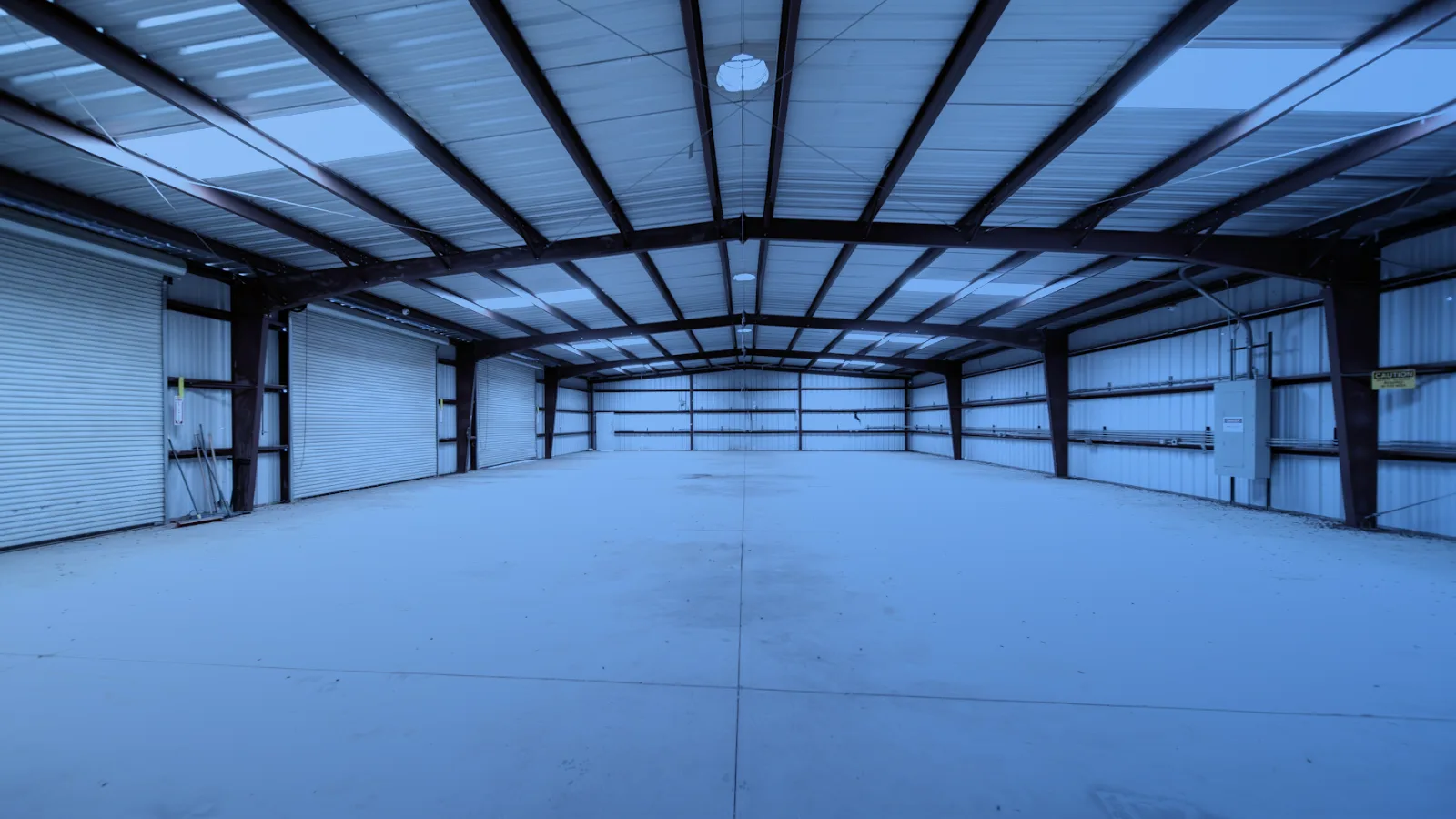
In the offices of a hangar, the first check is where the return takes its air from, the hangar floor or an interior corridor, then the condition of filters and linings, and finally the sections that cross the workshop wall. The camera shows dust, film and moisture, but it does not measure vapors. If odors of fuel or paint raise doubts, a separate measurement is requested.
A hangar is a place where aircraft are fueled, drained, degreased and sometimes painted. Every task leaves something in the air of the bay: fuel vapor, solvents, paint mist, sanding dust. A few meters away, behind a wall, there is a planning office, a spare parts room and a shift supervisors’ room with air conditioning, and the people in them walk in and out of the workshop many times a day.
The manager’s question is usually simple: if the workshop smell shows up in the office, is it coming through the duct? Sometimes yes, sometimes it is the door left open. To find out, the path of the air has to be examined and not only the condition of the duct. That is what this article is about. How the work is organized in an industrial plant or workshop is explained in how the job is organized in an industrial facility.
Where does the office return take its air from?
It is the first question and it defines everything else. If the return opens toward the bay, the unit recirculates whatever floats in the workshop. If it takes air from an interior corridor or a closed plenum, the contact is smaller. OSHA’s guide to indoor air quality in commercial and institutional buildings notes that in buildings with several uses an evaluation may be needed so that one occupant’s emissions do not affect another. A hangar is that case taken to the extreme, with an industrial activity and an office under one roof.
When the system allows it, the review of hangars is done by camera through the existing access points, the way the Climatiza technical service performs it.
There is a second point of entry, the outdoor air intake. If it faces the apron, or sits close to the paint booth outlet or the workshop exhaust, the air being drawn in already arrives loaded. In a study of a commercial painting hangar published in Building and Environment in 2021, the authors explain that vapor sources move with the place where painting happens, and that the extraction must therefore follow them. For an office this means the same return can be clean one month and loaded the next.
Why does it matter if the office air “smells like the hangar”?
Because the comfort of those who work in planning or in the supervisors’ room depends on it, and because odor complaints wear down the relationship between workshops and offices. It also matters for the equipment: filters that saturate with paint mist and dust darken and load well before the change date, and a porous lining that absorbs solvents holds the odor for weeks. And it matters for order, because when an internal audit or an inspector arrives it is better to have dated photos than explanations from memory.
It is worth saying plainly what the duct does not solve. Vapors do not stick to metal the way dust does, and cleaning does not remove them from the air. The EPA and the CDC state that duct cleaning has not been shown to prevent health problems, so here cleaning is proposed to remove visible residue and to maintain the equipment, not as a protective measure. If there is concern about exposure to vapors, the matter calls for a measurement by an industrial hygiene specialist.
What does the visit to hangar offices look like?
It is coordinated with the safety officer and with the workshop head, because the visit must enter the bay and sometimes areas where fuel is handled. First the units, returns and outdoor air intakes are identified. Then the camera runs through each section in the order in which the air reaches the office, starting with the one closest to the bay. The report keeps what was seen in each unit separate and notes any section that crosses the workshop wall.
An illustrative case, not a real client: a hangar with a planning office whose return faces the bay. The camera shows a filter with a dark, sticky film, a lining with stains in the first section and the rest of the duct dry. The sensible decision is to move or route the return toward the interior, change the filter more often, replace the affected lining section and clean only what has bonded residue. Cleaning everything without touching the return would have brought the odor back within weeks.
Which mistakes keep repeating in these spaces?
The first is treating the odor as a cleaning problem when it is a problem of air path. The second is mixing, in one contract, the extraction of the paint booth, which is another system with its own responsible parties, and the air conditioning of the offices. The third is leaving the doors open without adjusting the office pressure, so the workshop air enters the first grille it finds. A study by Bennett and colleagues on a military painting hangar (2016) found that when supply air exceeded exhaust air, recirculation and fugitive emissions formed, a reminder that balance weighs as much as cleaning. For the office side, see how the work goes in a corporate office, and the method of review is in the guide to camera inspection.
What is worth asking the provider for?
- A simple plan showing the location of each return and outdoor air intake.
- Images of filters, linings and sections that cross the workshop wall.
- A clear separation between what was observed and what belongs to the paint booth extraction.
- A recommendation on filter change frequency.
- A note of the hangar safety rules that were followed during the visit.
For the full picture of workplaces, all the types of place where the team works gathers them.
For a first conversation about the system, the contact details are on the Climatiza site and the method is described on its duct cleaning service page.
Sources
- Liu et al., 2021, Building and Environment: removing painting VOCs in a commercial hangar with portable exhaust hoods (DOI 10.1016/j.buildenv.2021.107797)
- Bennett et al., 2016, Journal of Occupational and Environmental Hygiene: exposures during aircraft painting under crossflow ventilation (DOI 10.1080/15459624.2015.1117617)
- OSHA 3430: indoor air quality in commercial and institutional buildings
On this site
- Industry and logistics parksHow the work is organized in this sector
- Offices and corporate towersA neighboring sector
- Camera inspectionThe real condition before deciding
Climatiza and Radar Panamá
Why does inspecting and cleaning ducts matter?
These are the technical reasons, with their source, why the condition of the ducts is checked before deciding. Duct cleaning has not been shown to prevent health problems according to the EPA and the CDC, and it is proposed only when the observed condition justifies it.
| Advantage | Data with source | What it means in practice |
|---|---|---|
| Know whether cleaning is needed before deciding | The EPA states in its duct cleaning guide that cleaning is justified for visible mold, pests or a notable buildup of dust and debris. | A camera inspection documents the condition and allows a decision based on evidence, without unnecessary work. |
| Anticipate the tropical humidity | According to ETESA (Tocumen station, 1977 to 2010), mean annual relative humidity in Panama is 75.7 % and rises to between 78.2 and 82.4 % in the rainy months. | The condensate pan, the drain and the coil are checked first, because that is where moisture builds up. |
| Keep humidity under control | The EPA recommends in its guide to mold and moisture keeping indoor relative humidity below 60 % and drain pans clean and draining freely. | A humidity reading and a clean pan limit the conditions in which mold grows. |
| Keep construction dust out of the system | The EPA and NIOSH Building Air Quality guide asks to block return grilles while construction work takes place in occupied buildings. | Before accepting a new or remodeled system it is worth checking whether construction dust got in. |
| A local figure that changes the decision | According to INEC, in 2024 Colón Free Zone imports totaled B/.12,646.5 million, 35.9% below 2023, and re-exports B/.12,208.2 million, 8.6% below. 74.6% of imported value arrived by sea. The figures give the scale of the goods that pass through warehouses and sheds. (INEC, Foreign Trade Yearbook, Colón Free Zone 2024). | It is the sector context taken into account when planning the visit. |
Frequently asked questions
Does duct cleaning remove the fuel smell from the office?
Only if the odor comes from bonded residue on a filter or lining. Vapors in the air are not cleaned out with the duct. The place the return takes its air from must be reviewed and, if exposure is in doubt, a measurement requested from a specialist.
Can the inspection be done while the workshop is operating?
It is coordinated with safety and with the workshop head. Offices can usually be checked without stopping operations, but any section inside the bay is scheduled around ongoing tasks and the hangar’s access rules.
Who handles the paint booth extraction?
It is a separate system, with its own owners and its own maintenance. The inspection of the office air conditioning ducts takes it as context, but does not include it in the report or the service.
Who is responsible for the office air when the workshop and the office share a roof?
The hangar operator or whoever maintains the office unit is responsible, in coordination with the workshop’s industrial safety staff. OSHA notes that in buildings with several occupants an assessment may be needed so the emissions of one activity do not affect another. The report with images supports that analysis.
Can an office duct be inspected with an aircraft under maintenance inside the hangar?
Yes, if hangar safety allows it and the work does not coincide with fuel draining or painting. The camera enters the duct only through office access panels, without touching the aircraft or its work area. The equipment’s entry and exit route is agreed in writing.
Keep reading the guide

Request an inspection
Do you want to know the condition of your system?
A camera inspection lets you see the inside of the ducts before deciding what to do. Message us and we will confirm availability.
- +507 6388-2083
- info@climatizapanama.com
- Calle Gervasio García, 8, Panama City