
Metro stations
Metro station: ducts in shops and technical rooms
Every train that arrives pushes air toward the concourse, and that air carries dust. The shops and technical rooms of the station breathe it throughout service hours.
 By
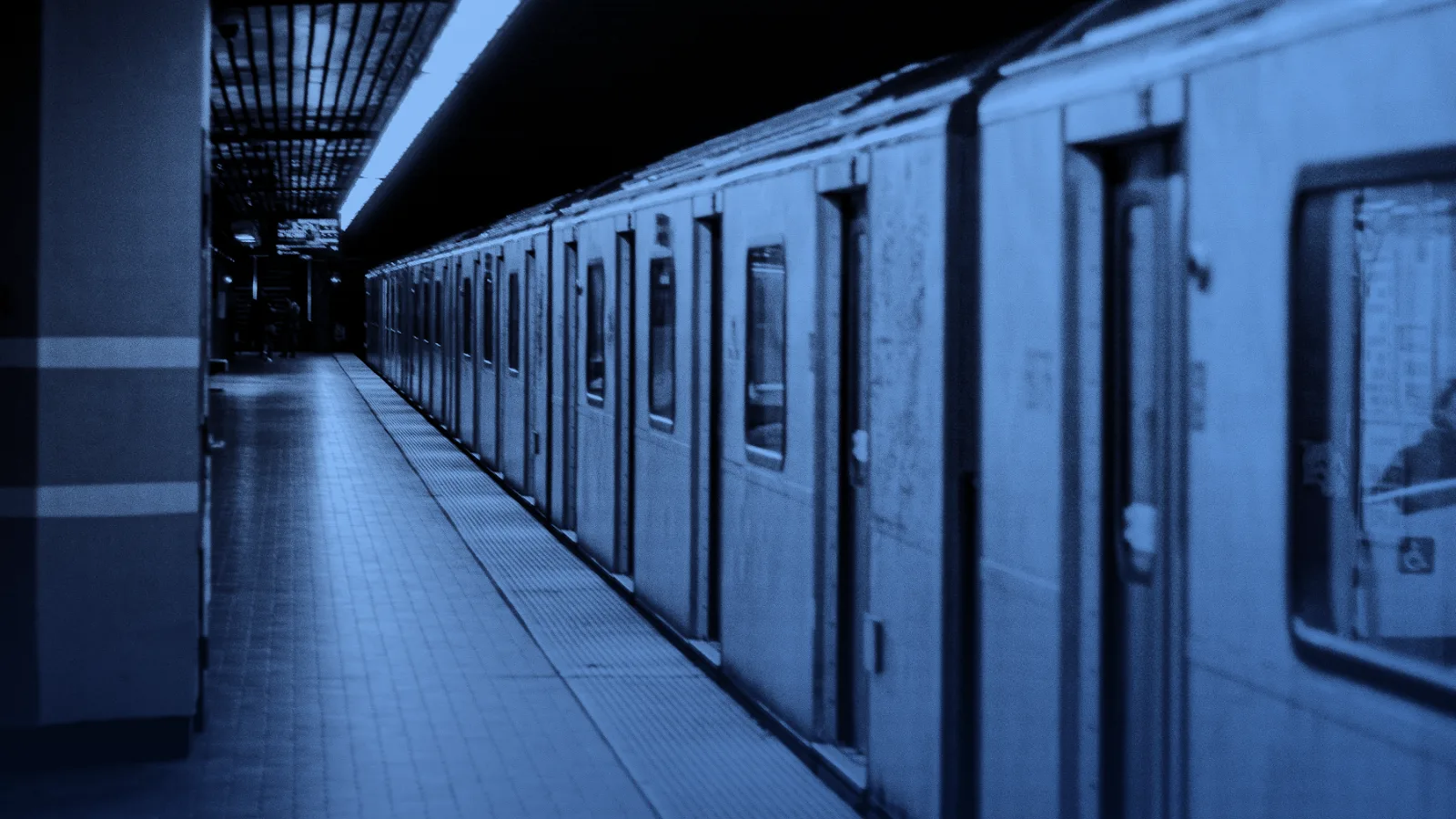
In a metro station the first checks go to what is closest to the passenger flow: filters and returns in the shops and technical rooms. Brake dust and heavy foot traffic load the filters sooner than planned. The camera confirms the condition of grilles and branches, and the report keeps each shop and room separate so management can decide with photos.
A station manager knows that the shops have a trait no ordinary mall shares. The flow of people is not spread over the day: it comes in waves, every time a train opens its doors, and at peak hours the concourse fills in seconds. People bring clothing, footwear and dust, and every train brings air pushed in from the tunnel.
The station’s shops, from the coffee stand to the pharmacy, and the communications and signaling rooms share that reality. The manager’s question is what the ducts look like and how often it makes sense to look. How the work is organized in a commercial space of this kind is told in how the job is organized in a shop or retail unit, and here the interest is in what changes by being underground or next to the tracks.
What dust reaches the shops in a station?
A study by Martins and colleagues published in Environmental Research in 2016 compared the air of the Barcelona, Athens and Porto metros with the same methods. On platforms, fine particles always exceeded those of the city’s outdoor air, and iron was the most abundant metal, between 29 % and 43 % of the mass of those particles, attributed to friction between rails, wheels and brakes. The levels depended on train frequency and on the ventilation of each station. They are neither tropical cities nor the Panama metro, but they describe the mechanism: fine metallic dust exists wherever there is braking, and it moves with the air.
Climatiza is the technical service behind this guide and works with camera inspection, an illustrated report and cleaning only when the condition justifies it, including in the case of metro stations.
The consequence for a shop is quite concrete. The return grille sits a few meters from the passenger flow and its filter takes that load throughout the opening hours. An identical shop on an open street would not see a filter this dark. That is why a station’s calendar is not copied from a neighborhood store.
Why does it matter for the shop and the technical room?
For the shop, what matters is customer comfort, since a customer spends a couple of minutes in the store and forms a quick impression: air that smells stale, grilles with dark edges or uneven cooling are linked with neglect. For the merchant, equipment wear matters too, because a saturated filter makes the unit work harder. For management, order matters: there are several tenants with different systems, and a report per shop avoids arguments about whose problem it is.
The communications, signaling and control rooms are air conditioned because the equipment needs stable temperature. There fine dust can settle on fans and boards, so the room’s filter and return deserve more attention than the rest. In how the air of a server room is looked after the logic of those spaces is explained. As in other buildings, the EPA and the CDC state that duct cleaning has not been shown to prevent health problems, so cleaning is considered only when the camera shows residue that justifies it.
What does the visit look like inside a station?
The most delicate part is access. It is coordinated with the station operator or management, who set the time windows, the authorized areas and the safety rules for tracks and technical rooms. As a rule the work is scheduled outside service hours or in low traffic windows. The camera runs through each shop in a simple order: return, air handler, branches and diffusers, and the report is delivered per shop.
An illustrative case, not a real client: a fast food shop and a communications room share the same station. In the shop, the camera shows the filter loaded with fine dust and a dark edge at the return, with branches carrying only loose dust. The decision is to change filters more often and clean only the grille. In the room, the filter is saturated and there is settled dust in the first section, so that section is cleaned and a shorter filter change cycle is agreed. The shop’s kitchen exhaust duct is another system and is handled separately.
Which mistakes keep repeating?
The first is setting the frequency by a neighborhood store’s calendar, when the station’s load is greater. The second is looking only at the duct and forgetting the filter, which saturates fastest. The third is lumping all tenants into one report without separating who is responsible for what. The fourth is not asking the station operator about access rules until the day of the visit. ASHRAE’s air quality maintenance checklist proposes reading the filter pressure drop every month, a simple habit that in a station warns earlier than any complaint.
What is worth asking the provider for?
- One report per shop and per technical room, with dated images.
- Condition of the filter and the return grille, which are the first to load.
- A list of areas without access and the reason.
- Compliance with the station’s safety rules, on record.
- A filter change frequency recommendation for each space.
For the general organization of inspection and cleaning, the guide to camera inspection summarizes what is surveyed and what is documented.
Scheduling a review starts with a message to Climatiza, and the service page summarizes the process.
Sources
On this site
- Stores and supermarketsHow the work is organized in this sector
- Data centers and server roomsA neighboring sector
- Camera inspectionThe real condition before deciding
Climatiza and Radar Panamá
Why does inspecting and cleaning ducts matter?
These are the technical reasons, with their source, why the condition of the ducts is checked before deciding. Duct cleaning has not been shown to prevent health problems according to the EPA and the CDC, and it is proposed only when the observed condition justifies it.
| Advantage | Data with source | What it means in practice |
|---|---|---|
| Anticipate the tropical humidity | According to ETESA (Tocumen station, 1977 to 2010), mean annual relative humidity in Panama is 75.7 % and rises to between 78.2 and 82.4 % in the rainy months. | The condensate pan, the drain and the coil are checked first, because that is where moisture builds up. |
| Protect equipment performance | In a laboratory test with dust equivalent to one year of use, coil pressure drop rose between 6 and 30 % and efficiency (EER) fell between 1 and 9 % (Yang, Braun and Groll, ARTI, 2004). | It is a laboratory result and not a promise of savings: it points to the components worth checking. |
| Follow a technical inspection reference | The ANSI/ASHRAE/ACCA 180 standard is the standard practice for inspection and maintenance of commercial HVAC systems. | It is an industry reference, not a legal requirement in Panama, and helps organize the review plan. |
| A local figure that changes the decision | INEC’s Business and Establishment Directory (reference year 2022) records 39,937 wholesale and retail trade establishments, including Free Zones, and vehicle repair, the sector with the most establishments in the country, out of 96,397. The category is broad and does not separate supermarkets or stores. (INEC, Business and Establishment Directory 2022). | It is the sector context taken into account when planning the visit. |
Frequently asked questions
How often should the filters of a shop in a station be checked?
More often than in a street shop, because brake dust and foot traffic load them sooner. A monthly pressure drop reading, as ASHRAE proposes, or a visual check, warns when to change them.
Can the inspection be done while the station is in service?
It depends on the operator’s rules. Shops are usually checked during low traffic hours or after closing, and technical rooms and restricted areas are scheduled in the windows the operator authorizes.
Is a food shop’s kitchen duct part of the service?
No. Kitchen extraction is a different system, with its own company and its own standard. The inspection covers the air conditioning of the dining area, the counter and the technical rooms.
Can the camera be run through the duct of a technical room without stopping the equipment?
Yes. When the duct has existing access panels the camera goes in through them and the equipment keeps running. Opening panels over racks or switchboards is avoided. The operator’s technical lead accompanies the visit, and any later cleaning is done with the room covered and the unit’s filter checked beforehand.
Who is responsible for the duct of a shop inside a station, the concessionaire or the operator?
It depends on the contract. If the shop has its own unit, the concessionaire looks after it, and if it hangs from the station’s system, the operator is responsible. That is why the first task is to identify which unit supplies each shop, and the report is split into one part for each.
Keep reading the guide

Request an inspection
Do you want to know the condition of your system?
A camera inspection lets you see the inside of the ducts before deciding what to do. Message us and we will confirm availability.
- +507 6388-2083
- info@climatizapanama.com
- Calle Gervasio García, 8, Panama City