
Plantas industriales
Air conditioning maintenance in industrial plants in Panama: comfort, process and dust
Two kinds of air live side by side in a plant and are easily confused: the air that keeps the office cool and the air the process needs to run. Mixing them up is behind almost every maintenance misunderstanding.
Looking for the service for plantas industriales?
- The camera inspection comes first and the quote follows, with the photos in view.
- Work is done by sections and at an agreed time, so operations are not slowed down.
- At the end you receive a report with before and after photos.
 By
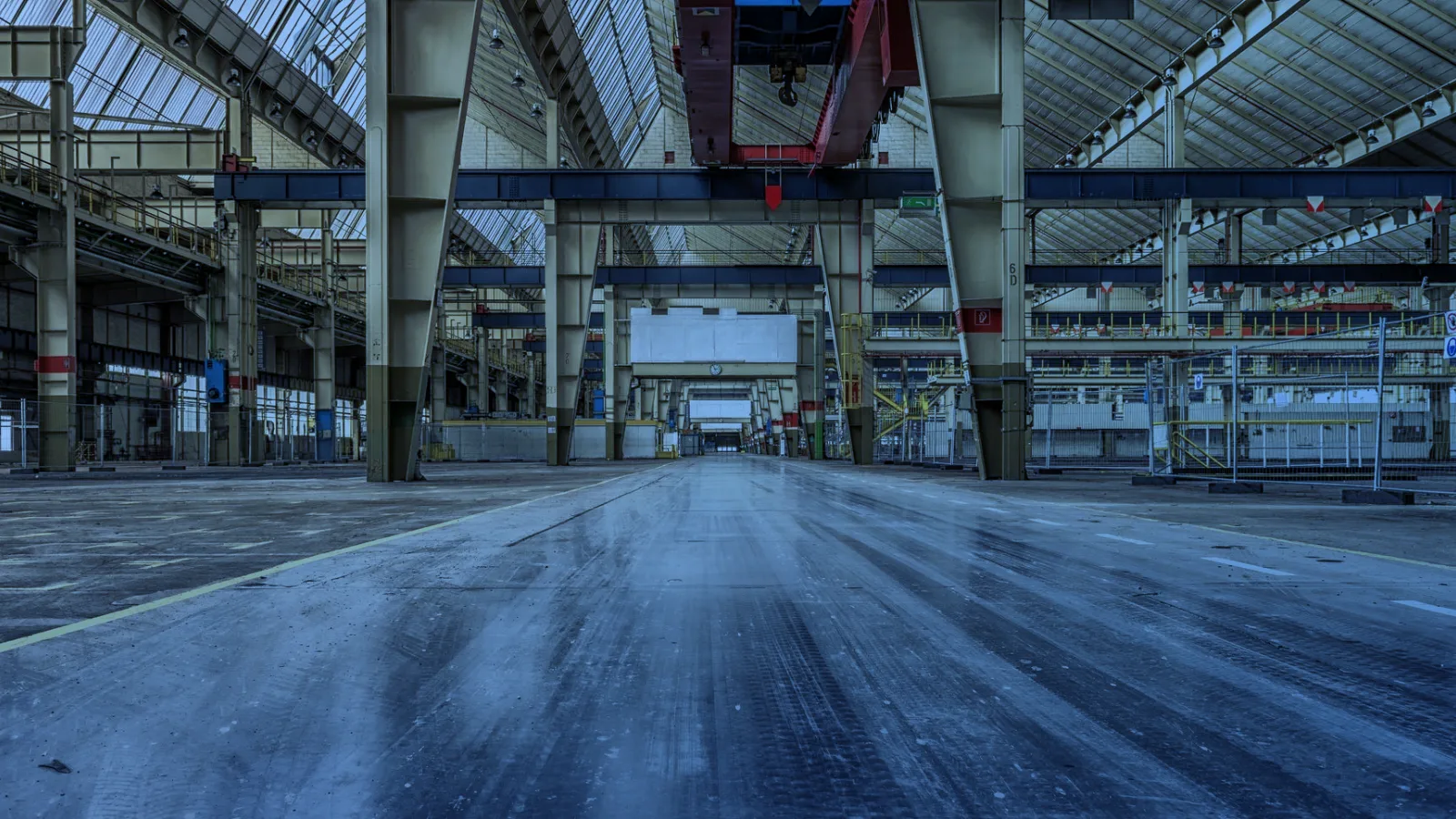
In a plant it makes sense to separate in writing comfort air, for offices and dining areas, from process air. Comfort air is maintained with inspection and minimum tasks per component, as in any commercial building. Process air gets its own plan agreed with the production lead. The dust in the environment decides how quickly filters and coils get dirty.
A plant maintenance manager often gets the wrong complaint. The planning office is stuffy, the dining area smells odd and someone asks to “check the air”, but nobody clarifies which air is meant. If it is the office air, the problem is solved as in any building. If it is a chamber or a process room, the conversation is with production and under other rules.
This article sorts out that distinction, explains why a plant’s dust changes the math and proposes a minimum plan that any manager can review with a provider. It is not about cleaning for the sake of cleaning. It is about knowing which unit is in what condition and deciding with evidence.
What is the difference between comfort air and process air?
Comfort air serves people: offices, dining area, locker rooms, meeting room. Its maintenance follows the criteria of any commercial building, with inspection and minimum tasks per component, which is what the ANSI/ASHRAE/ACCA 180 standard sets according to the description published by the US Department of Energy. The standard was conceived for commercial systems and does not cover process equipment.
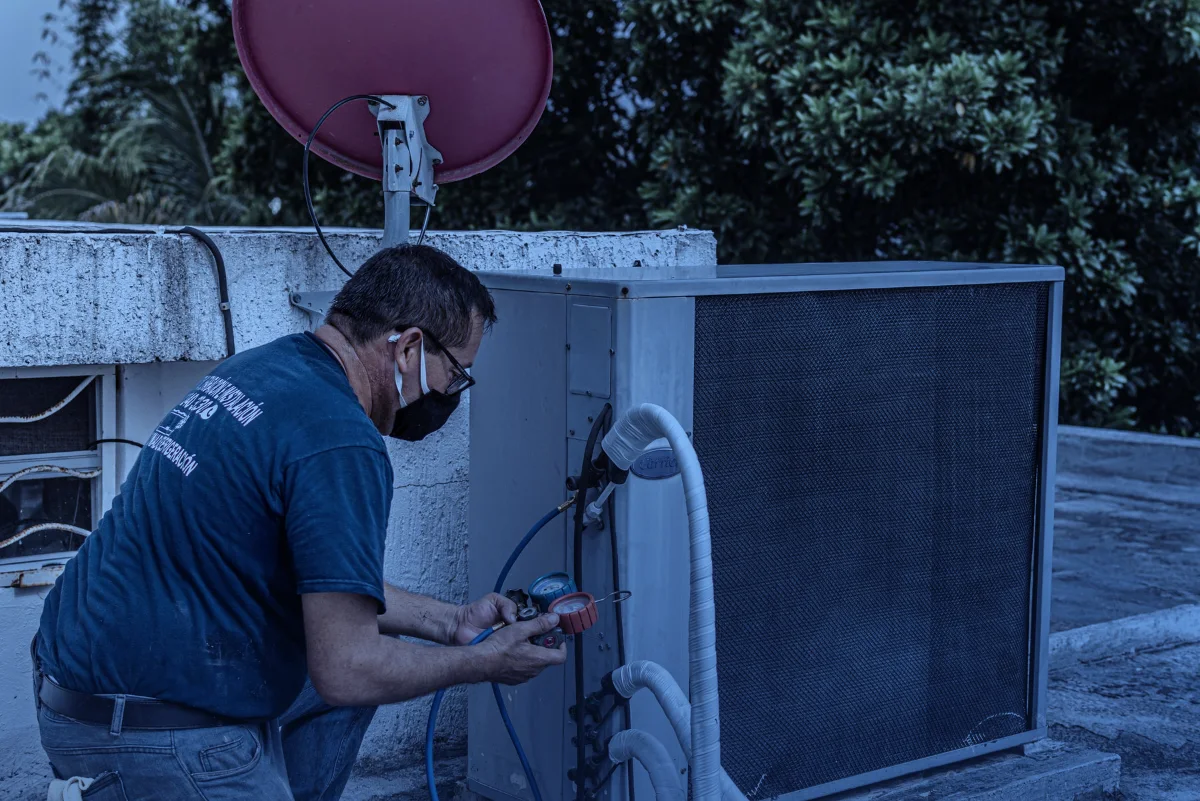
The fieldwork is carried out by the Climatiza team, who check branches, grilles and air handlers and record the result in an illustrated report, also in the case of plantas industriales.
Process air serves the product or the machine: a clean room, a drying chamber, a control room with its own tolerances. There the process lead rules, defining temperature, humidity and cleanliness according to what is manufactured. Kitchen extraction and process fume ducts follow different standards and are not covered here. It helps for the plant inventory to tag each unit with one of the two labels before requesting any service.
Why does a plant’s dust change the math?
Because it gets dirty faster. A model by Waring and Siegel (2008) estimates that particle loading on commercial filters is around 44 times that of residential filters, 130 versus 2.97 grams per square meter per month. It is a model and not a field measurement, but it illustrates something practical: a schedule designed for a home or a quiet office does not work in a hall where cutting, grinding or loading goes on all day.
On top of that comes the climate. ETESA records an average annual relative humidity of 75.7% at Tocumen, so the coil condenses almost all year and the dust reaching a wet surface sticks instead of falling. The mix of dust and humidity is the reason that in Panama the condensate pan and the coil are the first thing looked at, and not the duct.
Why does it matter if the plant produces the same?
Because neglected comfort air is paid for in things that do not show in the production report: uncomfortable people who perform less, equipment working at its limit in the hottest hour and breakdowns that appear mid-shift. A unit with a dust-loaded coil holds temperature while it spends capacity, and when it loses it, it fails all at once.
It also matters for operational order. A plant with an inventory, the condition of each unit and reports with photos decides what is attended to in the scheduled shutdown and what waits, and arrives at the meeting with management or a client audit with evidence in hand. Honesty about scope is needed: the EPA and the CDC note that duct cleaning has not been shown to prevent health problems, so here cleaning is proposed only when the camera shows accumulated dust affecting the equipment.
What does a visit to a plant look like?
The visit starts at the safety office, with the induction and protective equipment the plant requires. Then it is agreed with the lead which areas are worked on, by sections so production does not stop, and which stay out because of process rules. With that map the technician walks through the air handlers of offices and dining area and, if the client asks, those of auxiliary halls.
What shows up most are filters that reached their limit earlier than expected, grilles blocked by pallets or shelving, coils with a thin caked layer of dust and pans with sediment. An illustrative case, not a real client: a hall with mezzanine offices. The report separates two sections, offices and storage, with the photo of each air handler’s filter, the access points that are missing or covered and a list of process areas not touched because of plant rules.
A good practice is to leave the night shift or the weekend for tasks that take units out of service, and the normal workday for readings and photos. That way maintenance does not compete with production, and the information reaches the manager before a big decision has to be made.
What minimum plan makes sense for a plant?
- Separate in writing which units are comfort and which are process.
- Technical inventory and operating conditions of each unit.
- A monthly reading of filter pressure drop, as the ASHRAE maintenance checklist recommends, and replacement of those over the manufacturer’s maximum.
- Inspection of coils, pans and drains, with photos.
- Camera inspection of the ducts when there are signs or before deciding on a cleaning.
- Report with photographs and readings, compared with the previous visit.
Common mistakes and what to demand
The most frequent mistake is applying the same schedule to the whole plant, without distinguishing which unit breathes process dust and which lives in a closed office. The second is changing filters by date, when a shift with a lot of movement can load them in half the time and a quiet one can stretch it. The third is covering the access to the air handlers with shelving or pallets, until nobody can open them without moving half the warehouse.
Three simple things are worth demanding from the provider. A report that distinguishes comfort from process, photos of what was seen inside the unit and not only of the nameplate, and a list of what was not touched with the reason. With that, management can decide at the next shutdown what gets fixed, what is watched and what is left as is, without depending on the memory of whoever made the visit.
Anyone who looks at a production plant and at a neighboring warehouse or logistics park sees that the criterion is the same: real condition first, schedule after. When in doubt, the camera inspection provides the images on which to decide, the scope of the service is agreed by sections and the criteria for when to clean avoid doing it out of habit. To place the plant among similar spaces, the list of types of place served helps with comparison.
To ask about availability or request a camera inspection, the Climatiza website lists the ways to contact the team and the duct cleaning service page explains how the work is organized.
Sources
On this site
- Industry and logistics parksHow the work is organized in this sector
- Warehouses and storageA neighboring sector
- Camera inspectionThe real condition before deciding
Climatiza and Radar Panamá
Why does inspecting and cleaning ducts matter?
These are the technical reasons, with their source, why the condition of the ducts is checked before deciding. Duct cleaning has not been shown to prevent health problems according to the EPA and the CDC, and it is proposed only when the observed condition justifies it.
| Advantage | Data with source | What it means in practice |
|---|---|---|
| Know whether cleaning is needed before deciding | The EPA states in its duct cleaning guide that cleaning is justified for visible mold, pests or a notable buildup of dust and debris. | A camera inspection documents the condition and allows a decision based on evidence, without unnecessary work. |
| Anticipate the tropical humidity | According to ETESA (Tocumen station, 1977 to 2010), mean annual relative humidity in Panama is 75.7 % and rises to between 78.2 and 82.4 % in the rainy months. | The condensate pan, the drain and the coil are checked first, because that is where moisture builds up. |
| Keep humidity under control | The EPA recommends in its guide to mold and moisture keeping indoor relative humidity below 60 % and drain pans clean and draining freely. | A humidity reading and a clean pan limit the conditions in which mold grows. |
| A local figure that changes the decision | According to INEC, in 2024 Colón Free Zone imports totaled B/.12,646.5 million, 35.9% below 2023, and re-exports B/.12,208.2 million, 8.6% below. 74.6% of imported value arrived by sea. The figures give the scale of the goods that pass through warehouses and sheds. (INEC, Foreign Trade Yearbook, Colón Free Zone 2024). | It is the sector context taken into account when planning the visit. |
How to hire the service for plantas industriales
- Message us on WhatsApp with the type of place and the area.
- The camera inspection is arranged at a time that does not affect your operation.
- The quote is prepared from what was observed, never blind.
- If cleaning is justified, it is done by sections and the final report is delivered. If it is not, we tell you.
Frequently asked questions
Can process air be cleaned with the same service as office air?
No. Process air has its own rules set by the production lead, and standard 180 does not cover it. That is why it is separated in writing and process areas are worked on only if the plant authorizes it.
Does production have to stop for the inspection?
Normally not. Work goes by sections and it is agreed with the lead which areas can be worked on without stopping. Office and dining area air handlers can usually be reviewed without touching the line.
How often are filters checked in a dusty plant?
According to the real load and not a generic schedule. The ASHRAE maintenance checklist proposes reading the pressure drop monthly and replacing filters over the manufacturer’s maximum. In a dusty plant that reading can bring the change forward.
Keep reading the guide
Request an inspection
Do you want to know the condition of your system?
A camera inspection lets you see the inside of the ducts before deciding what to do. Message us and we will confirm availability.
- +507 6388-2083
- info@climatizapanama.com
- Calle Gervasio García, 8, Panama City