
Restaurants and cafés
Air duct cleaning for restaurants in Panama: what it covers and what it does not
A restaurant has two air systems that are easily confused: the dining room air conditioning and the kitchen exhaust. This guide explains which is which, when it makes sense to check the dining room ducts, how the visit is scheduled without losing service and what the owner should ask for before hiring.
Looking for duct cleaning for your restaurant? A camera inspection comes first and the quote follows, with the photos in view. The work is done before opening or after closing, so no service is lost. At the end you receive a report with before and after photos.
 By
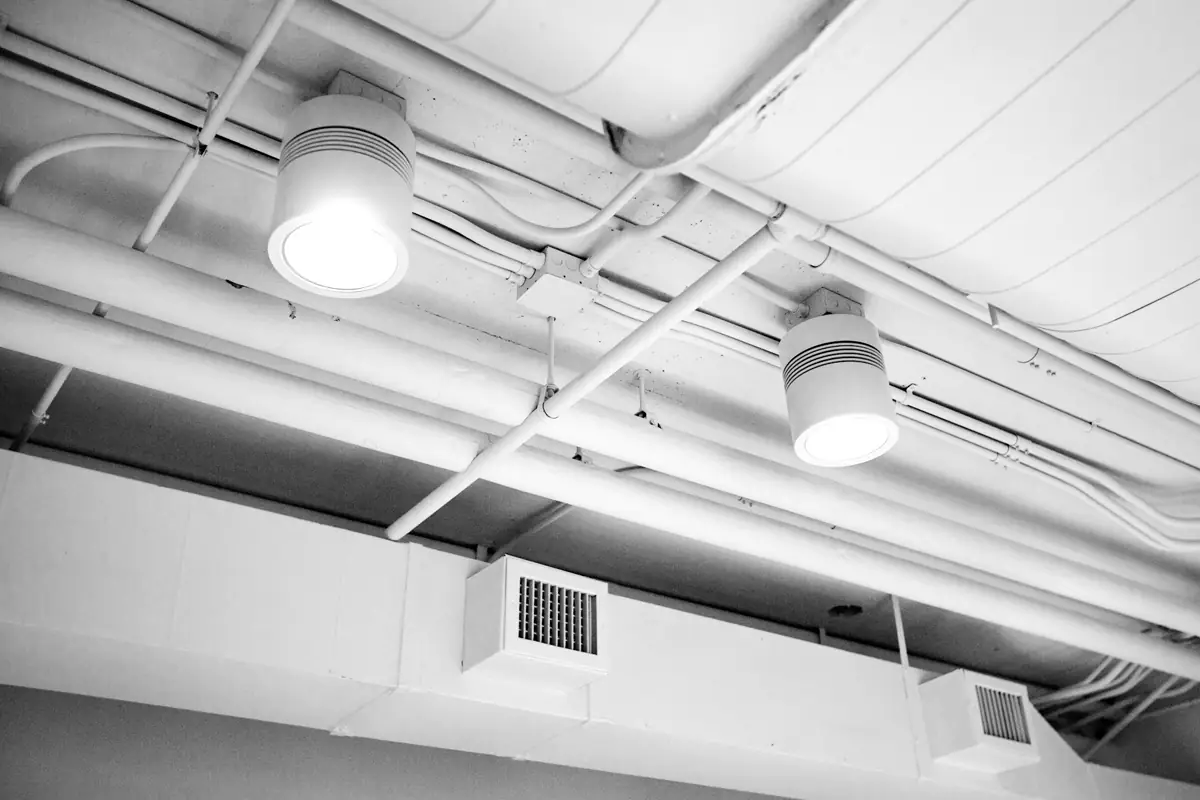
In a restaurant two systems must be told apart: the dining room air conditioning, whose ducts are inspected with a camera and cleaned only if the image justifies it, and the kitchen grease exhaust, which has its own standard (NFPA 96) and is handled separately. The dining room ducts are checked before opening or after closing, starting with the returns and with the point where dining room air separates from kitchen air.
In Panama, the INEC Directory of Companies and Premises (reference year 2022) records 13,586 premises in the Hotels and restaurants category, the second sector with the most premises after commerce. The category groups lodging and food service, so it is not only restaurants, but it gives the scale of a sector where the dining room air is part of the customer experience.
That is why it helps to start by clarifying what is being asked for. This guide covers the air conditioning ducts of the dining room and service area. The kitchen grease exhaust is another system and is mentioned only so the owner can tell them apart.
What are the two air systems of a restaurant?
The dining room air conditioning cools and moves the air of the room through returns, ducts and diffusers, just as in an office. The kitchen exhaust removes smoke, steam and grease from cooking through its own hoods and ducts.
The US Fire Administration (USFA) reported about 7,100 structure fires in restaurants in 2002, around 64 % caused by cooking. Its report explains that NFPA 96 covers the exhaust and grease removal systems of commercial kitchens, a system separate from the dining room air conditioning. The figure is from the US and from some years ago, and it is cited as context, not as a local number.
When duct cleaning is requested it helps to be clear about which of the two is being hired. Grease exhaust ducts call for their own provider and procedure and are not covered here.
When is it time to check the dining room ducts?
The EPA guide on duct cleaning states that it is justified for visible mold, pests or a notable buildup of dust and debris. In a restaurant the signs usually look like this: a kitchen or damp smell in the dining room even with the kitchen closed, grilles and diffusers with a film of dust or grease, dripping at diffusers or areas of the dining room that cool differently.
In Panama humidity weighs in. According to the IMHPA climate document, average annual relative humidity is 75.7 % and rises to between 78.2 and 82.4 % in the rainy months, so the condensate pan, the drain and the coil are the first points checked.
A check is also worth doing after a remodel, when the dining room is extended with an enclosed terrace or when a unit is replaced. If the dining room and the kitchen share returns, air from one area can reach the other, and that is verified with a camera.
How is the visit scheduled without losing service?
The key is the work window. A restaurant lives by its shifts, and the visit fits around them and not the other way around.
- Choose the window. Before opening or after closing, when the equipment is off and the room is empty. In places that open late the window is short and agreed carefully.
- Start with the returns. The filter, the return grille and the first section of duct are checked, since they receive the most dust.
- Look at where dining room and kitchen separate. The point where dining room air separates from kitchen air is checked, to see whether they share a return or a ceiling void.
- Decide by zone. Each zone gets one decision: clean, fix or monitor.
- Deliver the report. Before and after photos per zone and a list of what was left out, marked as not reviewed.
With this sequence the restaurant does not lose a shift and the owner keeps the report as a record of what was found.
What is worth asking for before hiring?
It is worth asking in writing for the camera inspection before quoting, the exact scope (which ducts and which dining room units), the before and after photos and the criterion used to decide whether to clean. It is also worth asking expressly whether the service includes the kitchen exhaust, because normally it is not included and calls for another provider.
As an industry reference, NADCA published in 2025 the current edition of its ACR standard and ANSI/ASHRAE/ACCA Standard 180 is the standard practice for inspection and maintenance of commercial HVAC systems. Neither is a seal or a legal requirement in Panama, but they help ask for method, photos and scope.
A laboratory figure puts things in perspective: in a test with dust equivalent to one year of use, coil pressure drop rose between 6 and 30 % and efficiency (EER) fell between 1 and 9 % (Yang, Braun and Groll, ARTI, 2004). It is a laboratory result and not a promise of savings. The EPA also notes that duct cleaning has not been shown to prevent health problems.
Sources
- USFA: Restaurant Fires (2004)
- INEC: Directory of Companies and Premises 2022
- EPA: Should You Have the Air Ducts in Your Home Cleaned? (duct cleaning guide)
- EPA and NIOSH: Building Air Quality, a guide for building owners and facility managers
- NADCA: 2025 edition of the ACR standard for assessment, cleaning and restoration of air systems
- ANSI/ASHRAE/ACCA 180: standard practice for inspection and maintenance of commercial HVAC systems
- IMHPA: climate characterization of the Panama district
- Yang, Braun and Groll, ARTI, 2004: effect of dust on the coil
On this site
- Restaurants and coffee shopsHow the work is organized in this sector
- All areasThe 54 areas, grouped by district
- Air conditioning duct cleaningThe service and how it is done
Climatiza and Radar Panamá
How to hire duct cleaning for your restaurant
Write us on WhatsApp with the type of place and which area it is in. The camera inspection is arranged at a time that does not affect your service. The quote is prepared from what is observed, never blind. If cleaning is justified, it is done by zones and the final report is delivered. If it is not justified, we tell you.
Frequently asked questions
Does duct cleaning include the kitchen grease exhaust?
Not necessarily. The kitchen grease exhaust is a separate system, with its own standard (NFPA 96), and it helps to clarify in writing which one is being hired. This service focuses on the air conditioning ducts of the dining room.
Does the restaurant have to close for the ducts to be checked?
No. The work is done before opening or after closing, and only the zone being worked on that day is blocked.
Can only the dining room be checked?
Yes. The inspection can be limited to the dining room and service area, and the report marks what was not reviewed.
Why does the dining room smell like the kitchen?
It can come from several points: shared returns, grilles with a film of grease or saturated filters. The camera shows whether the source is in the duct or elsewhere in the system, before cleaning is proposed.
Does duct cleaning improve customers’ health?
There is not enough evidence to say so. The EPA states that duct cleaning has not been shown to prevent health problems. That is why the decision rests on the visible condition of the duct.
Keep reading the guide
Request an inspection
Do you want to know the condition of your system?
A camera inspection lets you see the inside of the ducts before deciding what to do. Message us and we will confirm availability.
- +507 6388-2083
- info@climatizapanama.com
- Calle Gervasio García, 8, Panama City