
Clinics and health centers
Air duct cleaning for clinics and health centers in Panama: coordination and limits
In a clinic, duct cleaning is coordinated with management, respects restricted areas and does not replace the center’s infection control. This guide explains what the evidence says, what can and cannot be promised and how the visit is organized.
Looking for duct cleaning for your clinic? A camera inspection comes first and the quote follows, with the photos in view. The work is done by areas, outside patient hours when possible and respecting restricted areas. At the end you receive a report with before and after photos.
 By
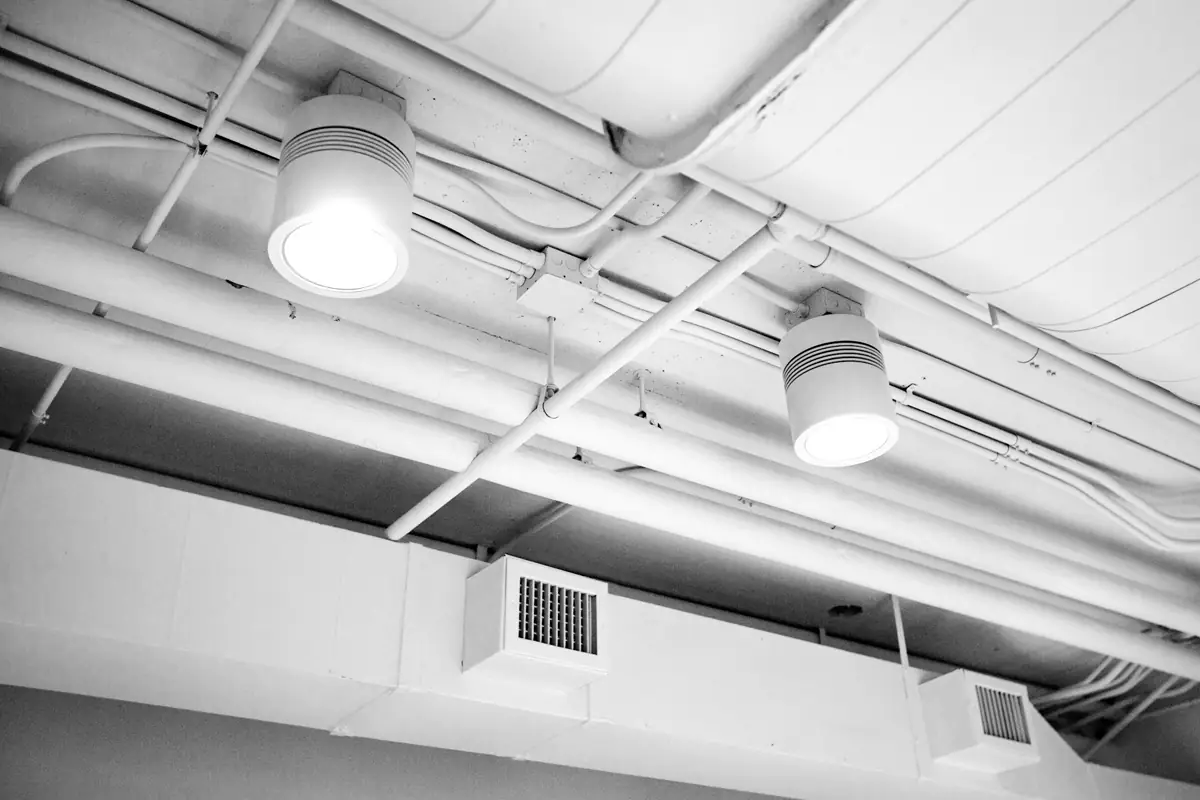
In a clinic or health center, duct cleaning is framed as maintenance and coordination, not as a measure that prevents infections: the CDC notes that duct cleaning has not been shown to prevent health problems. A camera inspection is done by area, with management as the contact, outside patient hours when possible, and whatever cannot be checked is marked as not reviewed.
In 2025, according to the INEC, 777 health facilities were operating in Panama, 8.0 % of them hospitals. The 777 include sub-centers and health posts. In all of them the air conditioning and ventilation are part of the building’s conditions, and their maintenance is coordinated with whoever runs the center.
A health center has rules that other buildings do not: restricted areas, areas that cannot be opened and schedules set by patient care. That is why this guide insists on two things: coordinating well and not promising more than is known.
What does the evidence say and what does it not?
The CDC guideline on environmental infection control in health-care facilities states that well-designed HVAC systems require routine maintenance and monitoring, that filters are monitored and replaced according to the manufacturer, and that dust and moisture buildup in the system increases risk. The same guideline notes that duct cleaning has not been shown to prevent health problems, so here it is described as maintenance and coordination.
A 2026 study in the Journal of Hospital Infection measured the air in a coastal, semi-tropical health center: airborne fungi went from 1 structure per cubic meter leaving the air handler to 387 at a supply register, which coincided with contamination in the ducts after the filter. After a section was replaced and the surfaces cleaned it fell to 171, and the genera Aspergillus and Penicillium went from 151 to less than 1. It is a single case and does not allow generalizing.
From that comes the prudent stance: the camera inspection serves to see the real condition of the system and decide with evidence, and any clinical decision belongs to the center’s infection control team and medical direction.
What changes in a clinic compared with other buildings?
Patient care rules. Waiting rooms and consulting rooms run on set hours, and there are areas, such as operating rooms, laboratories or isolation zones, with their own access rules. The work is coordinated with the administrative office, which indicates which areas can be checked, when and with what precautions.
What cannot be checked is not improvised. If a restricted area is not opened, the report marks it as not reviewed and it is left for separate coordination with management. That protects the center and leaves a clear record of the real scope of the work.
How is the visit coordinated?
The sequence aims for no patient or procedure to be affected.
- Talk to management. It is confirmed who authorizes entry, which areas are restricted and what protocols the crew must follow.
- Choose the slots. Hours without patients, breaks or lower-activity days are preferred, by areas.
- Inspect with a camera. Waiting rooms and consulting rooms first, with restricted zones noted as not reviewed.
- Decide by area. Each area gets one decision: clean, fix or monitor, with its photos.
- Deliver the report. Before and after photos per area and a list of what was left out, so management can decide what to handle first.
The report stands as a technical record of the system’s condition. It is not a health certificate and does not replace the center’s own controls.
What is worth asking for before hiring?
It is worth asking in writing for the camera inspection before quoting, the exact scope (which areas, which units and which are left out), the before and after photos, the criterion used to decide whether to clean and the crew’s entry protocol. It is also worth asking what the provider promises and what it does not: a promise of infection prevention has no backing in the evidence.
As a technical reference for commercial systems there is ANSI/ASHRAE/ACCA Standard 180, the standard practice for inspection and maintenance of commercial HVAC systems. It is a reference and not a legal requirement in Panama. The EPA notes, like the CDC, that duct cleaning has not been shown to prevent health problems, and that it is justified for visible mold, pests or a notable buildup of dust and debris.
Sources
- INEC: Health Services 2025
- CDC: Guidelines for Environmental Infection Control in Health-Care Facilities, air
- CDC: Guidelines for Environmental Infection Control in Health-Care Facilities, recommendations
- Pisaniello et al., Journal of Hospital Infection, 2026
- EPA: Should You Have the Air Ducts in Your Home Cleaned? (duct cleaning guide)
- ANSI/ASHRAE/ACCA 180: standard practice for inspection and maintenance of commercial HVAC systems
On this site
- Hospitals and clinicsHow the work is organized in this sector
- All areasThe 54 areas, grouped by district
- Air conditioning duct cleaningThe service and how it is done
Climatiza and Radar Panamá
How to hire duct cleaning for your clinic
Write us on WhatsApp with the type of center and which area it is in. The camera inspection is arranged with management at a time that does not affect patient care. The quote is prepared from what is observed, never blind. If cleaning is justified, it is done by areas and the final report is delivered. If it is not justified, we tell you.
Frequently asked questions
Can the work be done with the clinic open?
Yes, by areas and at the hours management sets, preferably without patients. Only the area being worked on is blocked.
What about operating rooms and restricted zones?
They are not opened without authorization. If they are not checked, the report marks them as not reviewed and they are coordinated separately with management.
Does duct cleaning prevent infections?
There is no evidence to support that. The CDC and the EPA state that duct cleaning has not been shown to prevent health problems. Clinical decisions belong to the center’s infection control team.
What does the service deliver at the end?
A report with before and after photos per area, one decision per area (clean, fix or monitor) and the list of what was left out. It is not a health certificate.
Are small practices served?
Yes. A practice with individual units and no ducts gets a clear explanation of what was found and which maintenance applies, without forcing a cleaning that does not.
Keep reading the guide
Request an inspection
Do you want to know the condition of your system?
A camera inspection lets you see the inside of the ducts before deciding what to do. Message us and we will confirm availability.
- +507 6388-2083
- info@climatizapanama.com
- Calle Gervasio García, 8, Panama City