
Sector · Churches and temples
A tall nave, days with many people and days with none: how a temple’s ducts are reviewed
In a temple the air conditioning works mostly on gathering days, and between one and the next the nave may stay closed.
 By Limpieza de Ductos Panamá
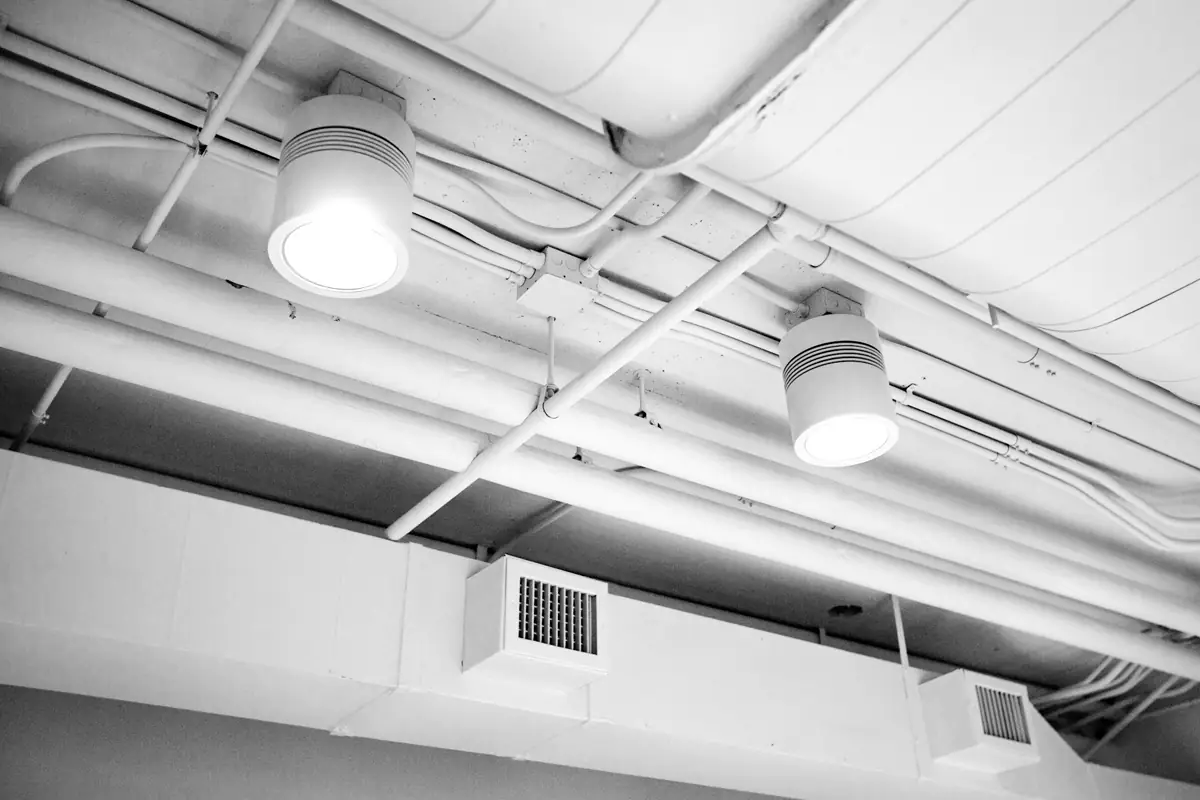
Duct cleaning in a church or temple is the camera inspection and cleaning of the inside of the ducts that serve the nave and the annexes, agreed with the person in charge of the place around the days of use. The access points are located first, the areas the temple names are respected, and cleaning is done only where the camera justifies it.
What sets churches and temples apart
Facts that help decide in churches and temples
- In Panama: In the Panama and San Miguelito districts the mean annual relative humidity is 75.7%, ranging from 64.9% in March to 82.4% in October (Tocumen station, 1977-2010 series). (ETESA, climate characterization of Panama and San Miguelito)
- Technical fact: The EPA and NIOSH building guide recommends scheduling any duct cleaning for periods when the building is unoccupied, and clarifies that dust in a duct does not by itself indicate a current microbiological problem. It is a general guide for buildings, not specific to temples. (EPA and NIOSH, Building Air Quality, Appendix B)
- Peer-reviewed study: A 2020 study continuously monitored a historic wooden church in southern Poland and recorded indoor relative humidity between 45.6% and 91.6%. The authors conclude that humidity depended mainly on the climatic zone and on the number of people at the services. It is a single church, in a cold climate. (Nawalany, Sokolowski and Michalik, Buildings, 2020)
Types of place within churches and temples
| Type of place | What changes in the work plan |
|---|---|
| Churches and temples | The access points to the nave ducts are located and the days without activity are agreed |
| Cathedrals and basilicas | Large and often old buildings: first it is established which system serves each space |
| Chapels | A small space: one unit and its return in a short visit |
| Temple halls and annexes | Meeting rooms and attached offices, which often have their own unit |
| Temples of other faiths | Each community defines its access and calendar, and the work adjusts to them |
How the work is organized in churches and temples
- Agree on days and access. With the person in charge, the days without activity, the access points and the areas not reviewed are set.
- Inspect with a camera. The authorized ducts of the nave and the annexes are run through, starting with the returns closest to the congregation.
- Hand over a report by space. Each space has its photos, the access used and what could not be seen.
An example of what the report brings
What you are left with at the end
- A visit plan agreed with the person in charge of the temple
- Photographs of the inside of the authorized ducts
- A record of the access points used and the areas that were asked not to be reviewed
- A suggestion of when to look again, based on the days of use
Reference sources
- EPA: Building Air Quality, a Guide for Building Owners and Facility Managers (guide for building managers)
- EPA: Should You Have the Air Ducts in Your Home Cleaned? (guide written for homes)
- NADCA: ACR, The NADCA Standard (edición 2025) (industry reference, not a seal)
- Technical references of this site, with all 45 sources
On this site
- All sectorsWhat changes in each type of place
- Camera inspectionThe real condition before deciding
- Service areasWhere work is done
Climatiza and Radar Panamá
Frequently asked questions
Are services or gatherings interrupted?
No. The work is scheduled on the days and hours the person in charge of the temple sets, outside the activities.
Which areas can be reviewed?
Those the person in charge authorizes. Whatever is left out, because of access or the temple’s instruction, is noted as not reviewed.
What if the building is old or has heritage value?
It is asked beforehand what can be opened or touched, and what the person in charge or the responsible body says is respected. No work is done without that agreement.
How are very high ducts reached?
Before the visit it is asked about the ladders or platforms available. A section that cannot be reached safely is noted as not reviewed.
How often does it make sense to check the ducts in churches and temples?
There is no fixed frequency. It makes sense to look before a date with a large attendance, after weeks with the temple closed, or when odors or moisture are noticed in the nave.
What does the report include for churches and temples?
It brings photographs of the inside of the ducts. It is organized by space (nave, annexes and halls) and notes each agreed access point and each area the temple asked not to review.
Keep exploring

Request an inspection
Do you want to know what your place needs?
Tell us what type of place it is and which area it is in. A camera inspection shows the inside of the ducts before anything is decided.
- +507 6388-2083
- info@climatizapanama.com
- Calle Gervasio García, 8, Panama City