
Sector · Call centers
In a call center many people share each square meter: how its ducts are checked without stopping operations
A call center brings many people together on open floors, with equipment switched on and shifts that sometimes do not stop all day.
 By Limpieza de Ductos Panamá
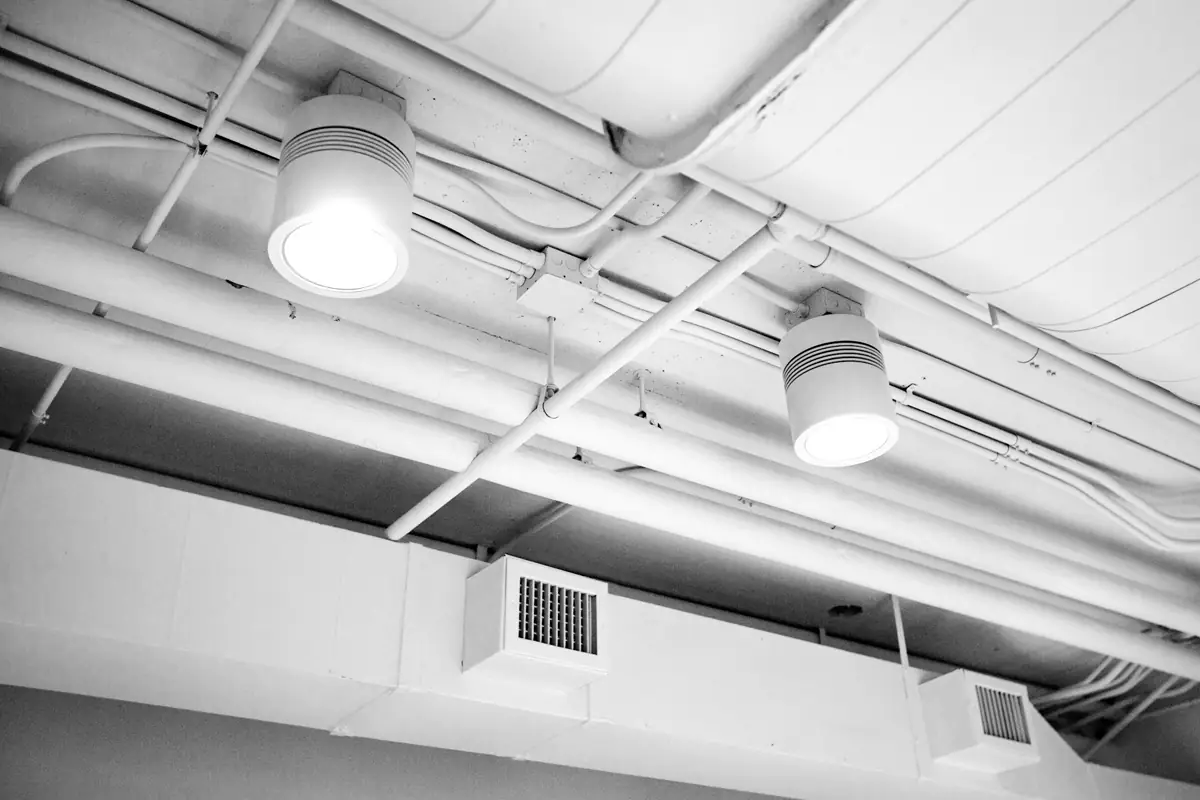
Duct cleaning in a call center is the camera inspection and cleaning of the inside of the air conditioning ducts serving the operations floors. It is scheduled by shift and by floor sector so service does not stop, and cleaning is done only where the camera shows it is needed.
What sets call centers apart
Facts that help decide in call centers
- In Panama: According to ASEP, cited by La Prensa on February 13, 2016, 92 concessions had been granted for call center services and 42 were operating. People employed in the activity went from 12,643 in 2012 to 8,500 the year before the article. These are figures from that date and not current ones. (La Prensa, Call center industry loses strength (2016))
- Technical fact: s2OSHA states that CO2 can be used as a rough indicator of the effectiveness of ventilation and of excessive population density, and that high levels may indicate overcrowding or inadequate outdoor air. (s2OSHA, Indoor Air Quality in Commercial and Institutional Buildings (3430-04))
- Peer-reviewed study: In a study carried out in a real call center, agents were slower at the post-call task when the temperature exceeded 25.4 °C. The authors attribute the heat to disputes over the thermostat and recommend restricting setpoint changes. (Federspiel et al., Indoor Air (2004))
Types of place within call centers
| Type of place | What changes in the work plan |
|---|---|
| Call centers | Open floors with grouped workstations, worked on by sector |
| Contact centers | Service across several channels with staggered shifts, which allows going sector by sector |
| Customer service centers | The floor sector with the fewest agents logged in is chosen for each time slot |
| Technical support centers | Continuous operation that forces the work to be split into short parts |
| Shared service centers | Company areas on one floor, with a single system that is reviewed from end to end |
| 24-hour monitoring rooms | Rooms that cannot be switched off, so the intervention is agreed in parts |
How the work is organized in call centers
- Map the floor. Which unit serves each sector is identified, along with how many people are logged in on each shift.
- Split by sector. With the supervisor, the floor is divided into sectors that can be left without staff for a short time.
- Hand over the report. Each sector receives its photos and a note on what was done and what comes next.
An example of what the report brings
What you are left with at the end
- A report by floor sector, with photos of the inside of the ducts
- A note on the condition of the unit serving the most densely grouped workstations
- The list of sections that could not be reached during the shifts
- A suggestion of when to look again, based on how full the floor is
Reference sources
- EPA: Should You Have the Air Ducts in Your Home Cleaned? (guide written for homes)
- EPA: Building Air Quality, a Guide for Building Owners and Facility Managers (guide for building managers)
- ANSI/ASHRAE/ACCA Standard 180: inspección y mantenimiento de sistemas HVAC comerciales (industry reference)
- Technical references of this site, with all 45 sources
On this site
- All sectorsWhat changes in each type of place
- Camera inspectionThe real condition before deciding
- Service areasWhere work is done
Climatiza and Radar Panamá
Related guides and answers
Frequently asked questions
Does service have to stop for the ducts to be checked?
No. The floor is divided into sectors and the work takes place in the one with the fewest people logged in, with the supervisor’s agreement.
Can the work be done at night?
Yes, if the building allows it and access is agreed with the administration. Night shifts are coordinated just like day shifts.
What does CO2 have to do with a duct inspection?
None directly. CO2 is an indicator of air renewal and of how many people are on the floor. The camera shows the condition of the duct and does not measure ventilation.
Does the work change if the call center is in an office building?
Yes. Access, elevator use and which units belong to the tenant and which to the building have to be coordinated with the administration.
How often does it make sense to check the ducts in call centers?
There is no fixed frequency. It makes sense to look when the floor feels hot or stuffy, after adding workstations, and when the layout of the equipment changes.
What does the report include for call centers?
It brings photographs of the inside of the ducts. It is organized by floor sector, so the supervisor knows which shift was affected and which was not.
Keep exploring

Request an inspection
Do you want to know what your place needs?
Tell us what type of place it is and which area it is in. A camera inspection shows the inside of the ducts before anything is decided.
- +507 6388-2083
- info@climatizapanama.com
- Calle Gervasio García, 8, Panama City