
Ice cream shops
Ice cream shop with dripping grilles: causes inside the ducts
A drop falling from the grille onto the display case is not a water leak: it is vapor from the room condensing on a cold surface. The useful question is why that grille is so cold and why the room is so humid.
 By Limpieza de Ductos Panamá
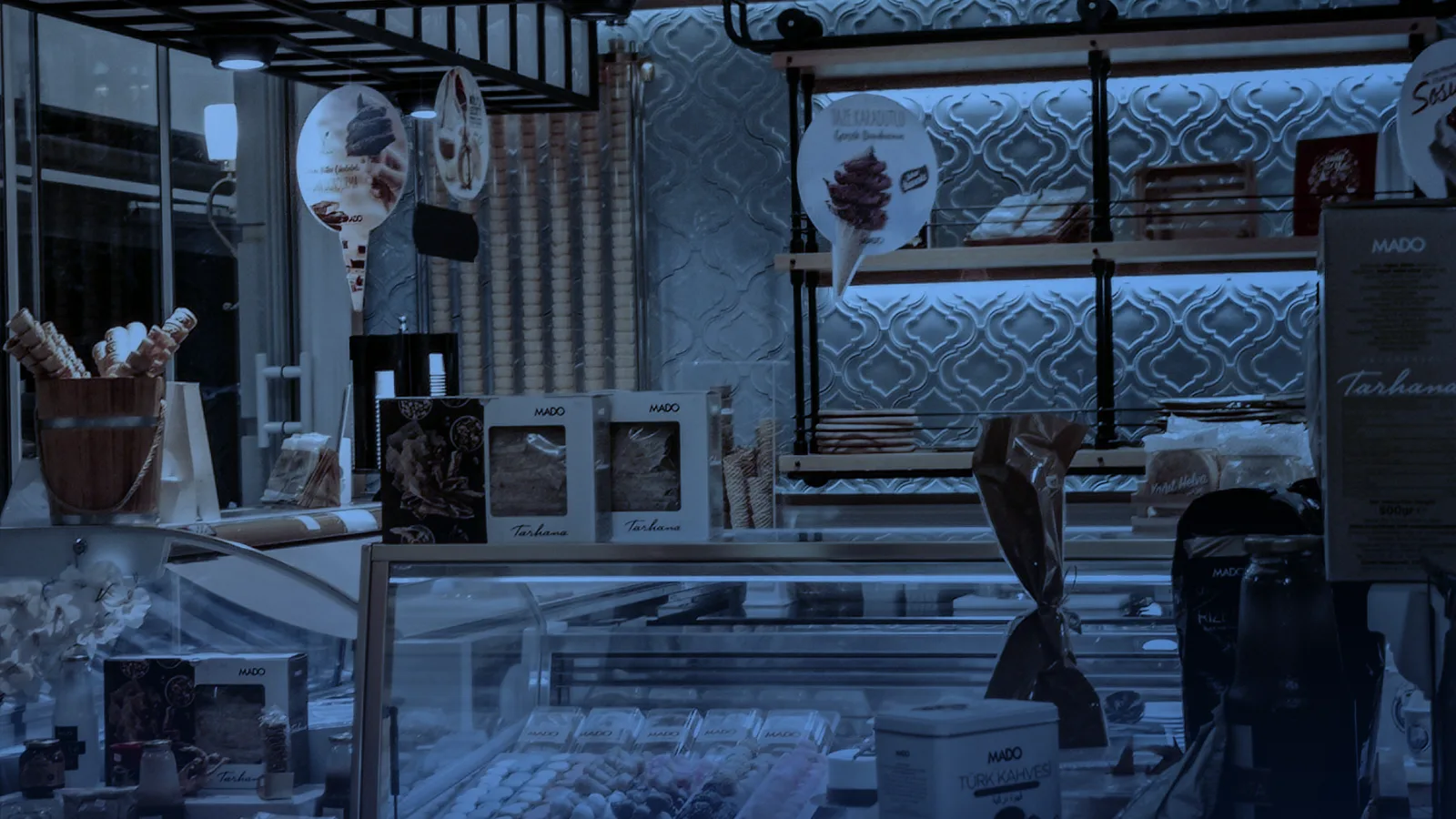
Grilles in an ice cream shop drip when room air, loaded with humidity from the open door, touches a grille or duct section colder than its dew point. The most common causes are inside the duct: missing or wet insulation, a dirty filter and duct that cut airflow and overcool the air, and a condensate pan that overflows. The cold display cases add their own chilled air to the clash.
Cold cases plus an open door: the thermal clash
With ETESA data for Panama and San Miguelito, average temperature of 27.3 °C and average humidity of 75.7%, the dew point of outdoor air is around 22 °C by calculation. Any surface below that temperature gets wet. A supply grille receives air at 12 to 14 °C, so its metal sits far below the dew point when the door keeps letting street air in.
The cases make it worse. They spill cold air toward the counter and that air, mixing with the humid air from the public, raises relative humidity right where the grilles sit. In the rainy months, when humidity at Tocumen passes 78%, the same shop that did not drip in March starts to. It helps to tell what each part of the system does before calling anyone, and knowing how a food business with a dining area is handled helps with that.
Dirty or uninsulated duct: where the drop forms
The duct sets the grille temperature. A flexible duct with torn or crushed insulation leaves the cold inner tube exposed to ceiling air, where water forms and runs to the grille opening. A dust loaded filter and interior section cut the airflow: the coil works with less air, the air leaves colder and slower, and the grille cools more than designed. EPA recommends keeping indoor humidity below 60% and checking that drip pans are clean and drain freely.
Behind this guide is Climatiza, an inspection and duct cleaning service, which always starts from the real condition of the system before proposing any work in ice cream shops.
| What is seen | Likely cause | Where to look |
|---|---|---|
| One grille drips, always the same one | Damaged insulation on that section or diffuser without a gasket | Flexible section above that grille |
| All of them drip after several months | Dirty filter and duct, low airflow | Filter, return and first supply section |
| Damp stain on the ceiling near the unit | Overflowing condensate pan or blocked drain | Evaporator unit and its drain line |
| Drips only on rainy afternoons with a crowd | Room humidity above what the unit removes | Door, air curtain and display case schedule |
What to check before calling the technician
A half hour check separates duct cases from operating cases. It is done with the shop open and without special tools.
- Touch the grille edge: if it is icy to the touch and the others are not, the problem is local, not system wide.
- Hold the filter against the light. If light does not pass, airflow is already compromised.
- Lift a ceiling tile next to the grille and see whether the flexible duct jacket is dry, wet or torn.
- Note what time dripping starts and how many people were in. If it matches the afternoon line, the room is loading more humidity than the unit removes.
- Check that the door closes on its own and that the air curtain, if there is one, is switched on.
- Check that the unit pan is dry and the drain clear: the EPA and NIOSH building guide warns that stagnant water in the pan under the coil favors mold growth if it is not cleaned often.
How to keep the water off the product
While the cause is corrected, the product cannot wait. Some room measures apply the same day and some system measures get scheduled.
- Move or cover. Shift the case out from under the dripping grille, or place a temporary catch tray on the case lid, never on the product.
- Cut the entry of humid air. Door closed between customers, air curtain on during rainy hours and cases closed when not serving.
- Recover airflow. Change the filter and ask for a camera check of the section feeding the grille to know whether the interior is loaded or the insulation is torn.
- Fix the section. Replace the flexible duct with a damaged jacket, seal the diffuser joint and clear the pan drain. If the porous duct liner shows microbial growth, the EPA and NIOSH guide says to replace it, not clean it.
What to include in the camera inspection
An ice cream shop inspection is short, because the system is usually one or two units with a few meters of duct. What makes it useful is the order: film from the dripping grille toward the unit, photograph the outer jacket of each flexible section, look at the pan and drain with the unit off, and measure the air temperature at the grille with the shop in normal operation. With that the report can say whether cleaning is needed, whether insulation is needed, or whether the duct is fine and the problem is the door.
A report that only says “dirty duct” does not solve the dripping. The owner needs the jacket photo, the temperature reading and one line saying which section to replace. When the ice cream shop shares a wall with a store or a clothing shop, the criteria for a small retail business with a sales floor help compare what is normal in the area. The guide on when cleaning makes sense explains why a cleaning without new insulation leaves the drip where it was.
More about the inspection and cleaning service that applies these criteria is on the Climatiza duct cleaning page and on the Climatiza home page.
Sources
On this site
- Restaurants and coffee shopsHow the work is organized in this sector
- Stores and supermarketsA neighboring sector
- Camera inspectionThe real condition before deciding
Climatiza and Radar Panamá
Frequently asked questions
Does lowering the thermostat stop the dripping?
No, it usually makes it worse. With a lower setting the air leaves colder and the grille sits further below the room dew point. What reduces dripping is removing humidity: door closed, airflow recovered and, if the unit cannot do more, checking its dehumidifying capacity.
Is dripping a sign the duct has mold?
Not on its own. Dripping indicates condensation, and sustained condensation can favor mold on porous liners and pans. The camera shows whether there is visible growth. If there is on a porous liner, the EPA and NIOSH guide says to replace that section.
Can the shop keep selling with a dripping grille?
Yes, if the product stays out from under the drip and the case remains closed. The case is moved or a temporary catch tray is placed on the lid, the incident is recorded and the section check is scheduled within the following days.
Keep reading

Request an inspection
Do you want to know the condition of your system?
A camera inspection lets you see the inside of the ducts before deciding what to do. Message us and we will confirm availability.
- +507 6388-2083
- info@climatizapanama.com
- Calle Gervasio García, 8, Panama City