
Supermarkets
Supermarket: ducts above produce, meat and in-store bakery
A supermarket has one air system but not one kind of air. The section over the rotisserie and the one over the detergent aisle work under different conditions and should not get the same attention or the same schedule.
 By Limpieza de Ductos Panamá
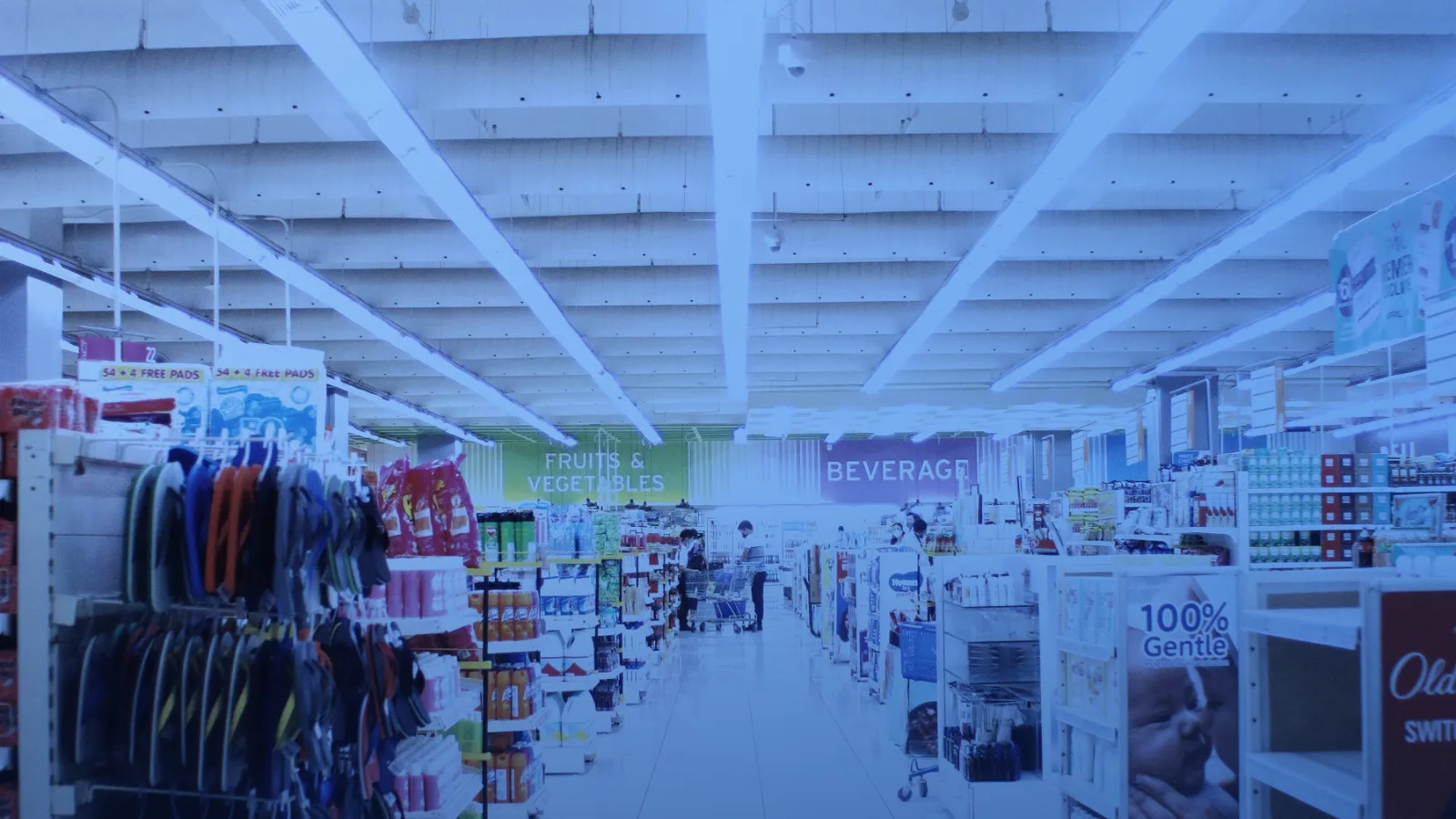
In the ducts above meat, produce and the in-store bakery three things need checking that dry aisles do not have: humidity and grease in the returns near ovens and the rotisserie, condensation on sections crossing over open refrigeration, and flour dust on the bakery diffusers. They are ranked with a load map by zone, inspected with a camera during low traffic hours and documented with photos per numbered grille.
Load map: where the duct works hardest
Before hiring anyone it is worth drawing the store plan with every grille and noting what sits below it. That load map is the document that orders everything else, because it shows that a 2,000 square meter store may have twenty grilles over zones that matter and sixty over zones that only need the general schedule. The FDA Food Code, in section 6-202.12, asks that heating and air conditioning intakes and outlets do not contaminate food or food contact surfaces, and that is met by looking at the grilles facing exposed product, not all of them alike.
| Store zone | Main duct load | Priority |
|---|---|---|
| In-store bakery and rotisserie | Steam, fine grease and airborne flour | High |
| Butcher and fish counters | Humidity from constant washing and odor | High |
| Produce aisles with open refrigeration | Condensation on cold sections and dripping | High |
| Checkouts and entrance | Street dust and open doors | Medium |
| Dry aisles and stockroom | Cardboard and packaging dust | Low |
In-store bakery and rotisserie: humidity and grease
The store bakery usually has its own exhaust hood, but the air conditioning that cools the bread sales area is three meters from the oven. The nearest return takes in steam every time the oven door opens and flour every time a tray is dusted. With Panama’s humidity that flour dust does not stay dry: it forms a paste that sticks to the inside of the return and the filter. The rotisserie adds fine grease that settles on the same grille.
Section 6-501.14 of the same Code is clear: intake and exhaust air ducts are cleaned and filters changed so they are not a source of dust and dirt. In practice that means the filter of the unit serving bakery and rotisserie is looked at monthly and changed when the pressure drop calls for it. The ASHRAE preventive maintenance checklist for air quality lists as a monthly task reading the pressure drop gauge of each air handler and replacing filters that exceed the manufacturer’s maximum.
Climatiza is the technical service behind this guide and works with camera inspection, an illustrated report and cleaning only when the condition justifies it, including in the case of supermarkets.
Produce aisles and open refrigeration
Open display cases for produce, dairy and meat spill cold air into the aisle. A 1999 ASHRAE study in two US stores measured that for every percentage point less of relative humidity in the store, the refrigeration equipment used about 10 kWh less per day, through less frost and fewer defrost cycles. It is not a savings promise for a store in Panama, but it explains why humidity in the produce aisle is an operating matter and not only a comfort one. A duct with a loaded filter moves less air, removes less humidity and lets the cases frost sooner.
- Diffusers over open cases with drops or stains on the surrounding ceiling.
- Cases that frost more in the afternoon, when the store is full and the doors open nonstop.
- Butcher counter return with a persistent odor even when the counter is clean.
- Bakery grille with white dust stuck to the edges.
- Produce unit filter that loads in half the time of the dry aisle one.
How to schedule by zone without closing the store
A supermarket does not close to check ducts. Work goes by zone and in the lowest traffic window, which in most stores is between night closing and early morning restocking. The organization of a retail store with a sales floor and stockroom gives the basic order, and the load map says where to start.
- Night 1: bakery and rotisserie. With ovens off and bread cases empty. Camera in the return and diffusers, filter photo and a decision per section. The criteria for a bakery with its own production apply here as they are.
- Night 2: butcher, fish and produce. Product covered or moved to cold storage, cases in normal mode to see the real condensation over the cold sections.
- Night 3: checkouts, entrance and dry aisles. Faster check, with camera inspection only where the grille shows load, and filters of the general units.
- Following week. Cleaning of the marked sections, in the same order and the same windows, and result photos per grille.
What report to ask for the store management
Store management answers to a regional office and to the health inspector, and needs a document that works for both. A useful report is organized by load map zone, not by work order. For each zone: grille number, photo of the interior before, photo after if cleaned, filter condition and one decision line. At the end, a summary page with the zones not checked and the reason, for example a case that could not be moved. If the store belongs to a chain, the same format allows comparing stores, and the inspection planner helps set each zone’s frequency according to use.
What the report should not bring: statements about product quality, promises of clean air or health, or measurements nobody asked for. What the camera observed and what was done, with dates. That is what management can sign.
Those who want to go from this reading to a real review can start at the Climatiza service page or write through the main Climatiza site.
Sources
On this site
- Stores and supermarketsHow the work is organized in this sector
- Bakeries and pastry shopsA neighboring sector
- Camera inspectionThe real condition before deciding
Climatiza and Radar Panamá
Frequently asked questions
Are supermarket ducts cleaned whole or by zone?
By zone, with the camera as the criterion. Sections over bakery, meat and produce usually need cleaning before those over dry aisles, and spending on the whole system at once allocates the budget poorly. What shows load is cleaned and the rest is noted for the next check.
Does the in-store bakery hood replace the air duct check?
No. The hood extracts what comes out of the oven. The air conditioning that cools the bread sales area has its own return, which takes in steam and flour even when the hood works well. They are two systems and are checked separately.
What does the health inspector ask about the ducts?
Evidence that grilles over exposed product are not a dust source, and that filters are changed. A report with photos per numbered grille and the filter change sheet answers that. No air measurements or whole system cleaning certificates are requested.
How often are high priority zones checked?
It depends on bakery volume and store traffic, not on a fixed date. A practical criterion: filters of those units monthly, camera in bakery, meat and produce twice a year, and dry aisles once. If a zone loads faster, the schedule is adjusted.
Keep reading

Request an inspection
Do you want to know the condition of your system?
A camera inspection lets you see the inside of the ducts before deciding what to do. Message us and we will confirm availability.
- +507 6388-2083
- info@climatizapanama.com
- Calle Gervasio García, 8, Panama City