
Operating rooms and sterile areas
Operating room: positive pressure and what to check before surgery
Positive pressure in an operating room is not produced by the filter. It is produced by air arriving through the duct in greater quantity than air leaving. If the duct fails, pressure drops even with a brand new filter.
 By Limpieza de Ductos Panamá
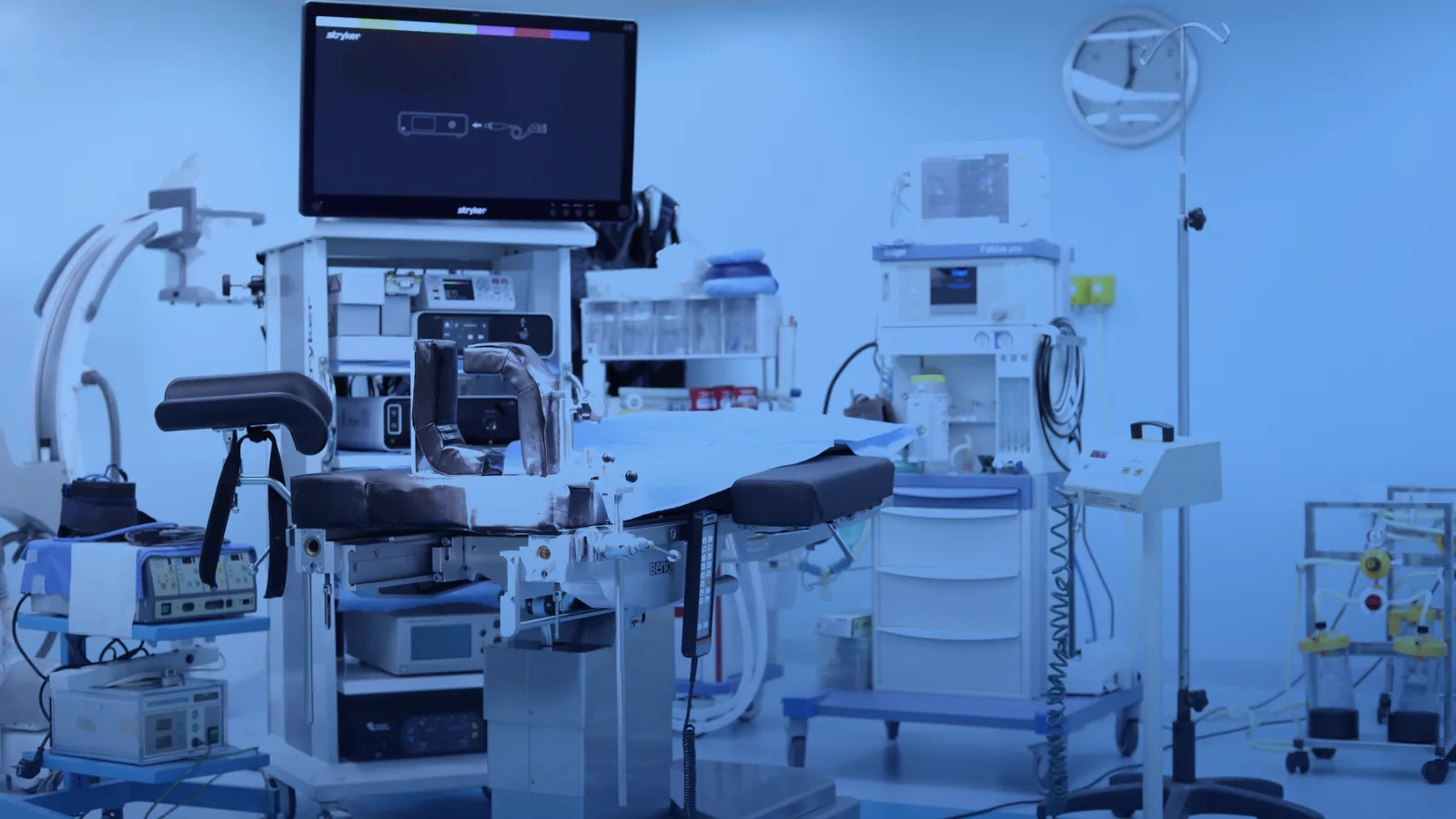
Before scheduling surgery, the duct is checked to confirm it delivers the design airflow: sections without crushing or leaks, dampers in position, coil and prefilters without excessive load, terminal filter housing sealed and the room manometer reading positive against the corridor. The CDC calls for positive pressure in operating rooms and a minimum of 15 air changes per hour. The duct is inspected with a camera and the results are documented for the infection committee.
What positive pressure is and what breaks it
An operating room is kept with more air coming in than going out, so air flows from the room to the corridor and not the other way round. The CDC guideline on environmental control in health care facilities states that operating rooms should be kept at positive pressure with respect to corridors and adjacent areas, with a minimum of about 15 air changes per hour of filtered air, three of which must be outdoor air.
That difference depends on the airflow arriving through the supply duct. Anything that reduces that airflow reduces the pressure: a saturated prefilter, a coil with a dust layer, a crushed flexible duct section above the ceiling, a damper someone half closed during a repair, an open joint letting air escape before it reaches the room. It is also broken by anything that increases exhaust, such as an anesthetic gas exhaust set too high. In how work is organized in a hospital by area the general order is explained.
Terminal filters and duct: which one protects which
The terminal filter sits in the operating room ceiling, at the end of the run. What reaches it has already gone through the air handler prefilter, the coil and meters of duct. If that duct sheds residue, the terminal filter holds it back, but it loads up early and the airflow drops. If the terminal filter housing has a badly seated gasket, duct air slips past the edge unfiltered. The two parts are looked after together.
To coordinate a visit related to operating rooms and sterile areas, Climatiza answers inquiries and confirms availability according to the schedule of the place.
| Component | What is checked | How it is verified |
|---|---|---|
| Air handler prefilter | Pressure drop and change date | Air handler gauge and filter log |
| Coil | Dust layer on the fins and standing water in the tray | Visual inspection with the unit stopped |
| Supply duct | Joint leaks, crushed sections, loose residue, moisture | Camera through the access panels, as described in the camera inspection |
| Dampers | Marked position and no change since balancing | Compare with the balancing report |
| Terminal filter housing | Sealed gasket, no air bypass at the edge | Filter integrity test according to hospital protocol |
| Room | Positive pressure against the corridor | Room manometer and smoke test at the door |
Signs that the duct is compromising the room
- The room manometer reads lower than the previous week without the terminal filter having been touched.
- The operating room door closes by itself or no longer pushes outward with resistance: the room lost its outward push.
- The terminal filter loads up in half the usual time: the duct upstream is shedding residue.
- Room humidity above the value set by the hospital protocol with the system running: the coil is not dehumidifying or untreated air enters through a leak.
- Temperature that does not reach the set point: the airflow arriving is below design.
- Test smoke at the door gap moving into the room instead of out of it.
None of these signs says on its own where the problem is. Together they point at the duct, and that is where the camera saves time: instead of opening ceilings along the whole corridor, the run from the air handler to the filter housing is surveyed and the leak or the crushed section is pinpointed with a photo.
Inspection sequence before resuming surgery
- Read the room manometer and record it. It is the starting point. If the reading is positive and stable, the check is preventive. If not, it is corrective and the room is not scheduled until it is closed out.
- Check the air handler: prefilter, coil and tray. The CDC states that filters are monitored and replaced according to the manufacturer. A saturated prefilter is the cheapest cause to fix and the first to rule out.
- Survey the duct with a camera from the air handler to the terminal filter. Look for leaks, crushed flexible sections, loose residue and moisture. Each finding is photographed with its location on the drawing.
- Verify dampers and the terminal filter housing. Dampers are compared with the balancing report. The housing gasket is checked before the filter integrity test, which follows hospital protocol.
- Repeat the manometer reading and the smoke test. Only when the room reads positive again and smoke leaves through the door is it returned to the surgical schedule.
Duct cleaning, if the camera shows bonded residue, is done with the room off the schedule and the terminal filter housing covered. The criteria for deciding whether a section is cleaned or only repaired are in when a section should be cleaned and when a repair is enough.
What to document for the infection committee
The committee does not ask for a clean duct certificate. It asks for evidence that the room meets its pressure and airflow, and that the causes of any drop were identified and closed out. The file usually accepted has six parts: dated manometer readings before and after, camera photos with their location on the drawing, change log of prefilters and terminal filters, current balancing report, terminal filter integrity test result and a list of sections without access with the reason.
An operating room shares with an industrial clean room its dependence on airflow and pressure, but not the goal or the protocol. Anyone managing both will find in the particle control logic of industrial plants the differences in approach. The general survey and documentation method is described in the technical duct cleaning guide.
Those who want to go from this reading to a real review can start at the Climatiza service page or write through the main Climatiza site.
Sources
On this site
- Hospitals and clinicsHow the work is organized in this sector
- Industry and logistics parksA neighboring sector
- Camera inspectionThe real condition before deciding
Climatiza and Radar Panamá
Frequently asked questions
Does cleaning the operating room duct reduce infections?
That cannot be claimed. The CDC states that duct cleaning has not been shown to prevent health problems. What the duct check does do is restore the design airflow and positive pressure, which are the parameters the committee verifies.
How often is an operating room duct checked?
The frequency is set by the hospital protocol, not by a duct standard. The usual practice is a daily manometer reading, a monthly air handler check and a camera survey when the reading drops, when the terminal filter is changed early or after nearby construction work.
Can the camera go into the duct with the operating room in use?
No. Opening an access panel on the supply duct alters the room airflow. The camera is run with the operating room off the schedule, even if only for an hour, and with the terminal filter untouched.
What if the last section of duct is flexible?
It is the section that gets crushed most and loses most airflow. The camera covers it fully and, if it has kinks or sagging, the recommendation is to replace it with rigid duct, not to clean it.
Keep reading

Request an inspection
Do you want to know the condition of your system?
A camera inspection lets you see the inside of the ducts before deciding what to do. Message us and we will confirm availability.
- +507 6388-2083
- info@climatizapanama.com
- Calle Gervasio García, 8, Panama City