
Convention centers
Convention center: ducts between one event and the next setup
A trade show comes in with carpet, wooden panels, screws and saws, and leaves with the same things in pieces. The hall is cleaned in hours. The air system that breathed all of it is not.
 By Limpieza de Ductos Panamá
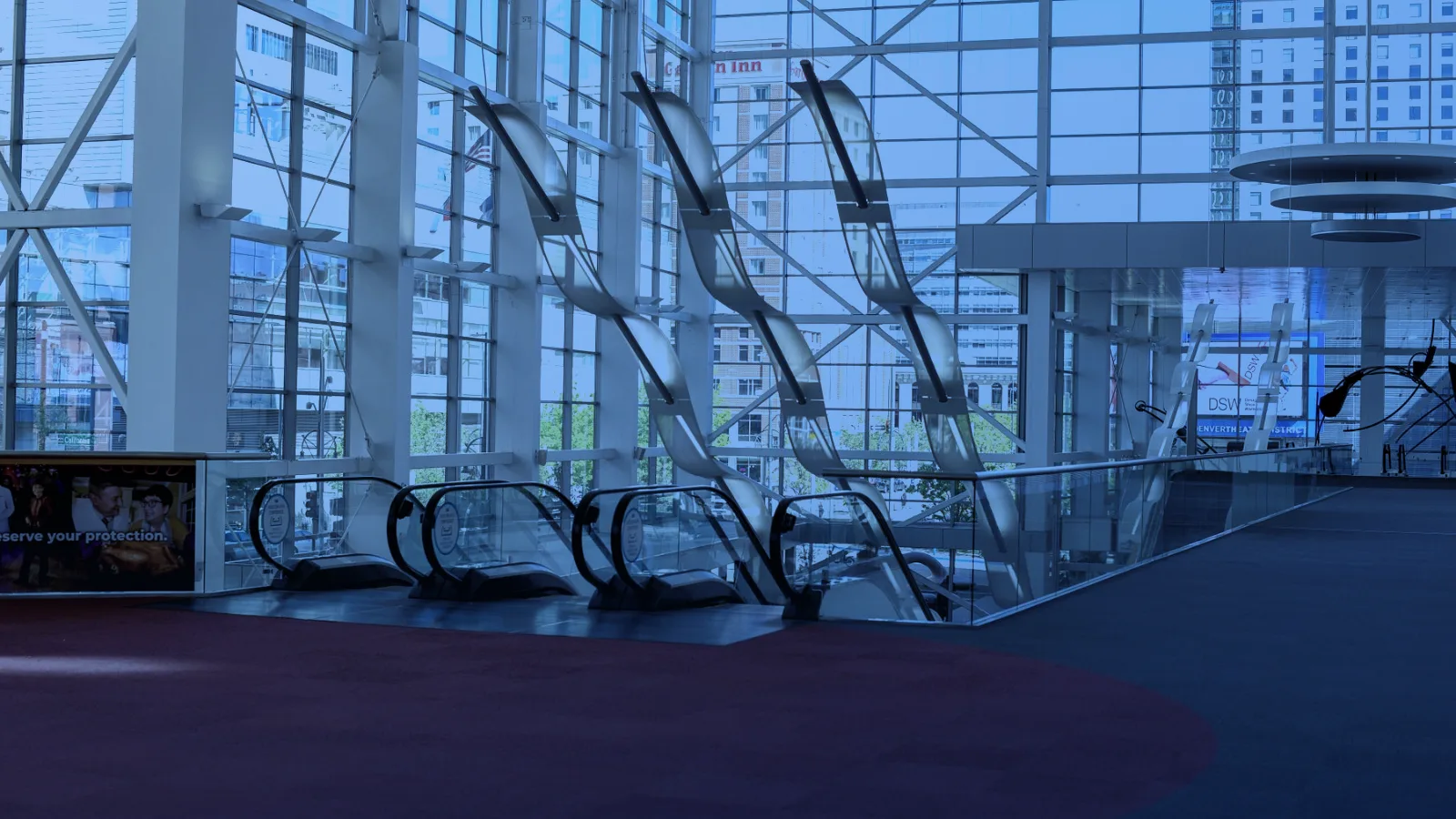
The teardown is the window: once the last structure leaves and before the next setup comes in, the hall is empty, the ceiling accessible and the air system still loaded with the event’s dust. In that gap the hall’s filters and returns are checked, the camera is run through the sections the show used most, and it is decided whether any section is cleaned right away or scheduled for a longer gap.
Setup dust: what trade shows leave behind
An event setup is a small, fast construction job. Particleboard panels are cut, new carpet that sheds fiber is rolled out, structures are sanded and painted, stages are moved with forklifts. All of it happens with the air conditioning running, because the hall has to be cold when the public arrives. The return collects wood dust, carpet fiber, paint aerosol and the haze from some effects machine during the event.
The EPA air quality guide for occupied buildings recommends, when there is construction work in the building, blocking the return registers of the work zone so dust does not recirculate. In a convention center the setup is that construction work, repeated every week, and almost nothing ever gets blocked. What was not blocked during the setup shows up later in the filter, the coil and the first section of the hall’s duct.
- Cutting of wooden panels inside the hall, with no dust extraction.
- New carpet rolled out and removed at every event.
- Painting or lacquering of structures on site.
- Smoke or haze machines during the event.
- Combustion forklifts in the hall or at the adjoining dock with the gate open.
- Large crowds, in blocks of a few hours, with doors open to the lobby.
Windows between teardown and setup
A convention center’s calendar is measured in hours, not days. An event ends at night, the teardown takes the early morning and the morning, and the next setup can start that same afternoon. The window for the duct is the gap between the last teardown truck leaving and the first setup truck arriving, and sometimes that is only a few hours. That is why it helps to separate what fits in a short gap from what needs a long one.
Climatiza is the technical service behind this guide and works with camera inspection, an illustrated report and cleaning only when the condition justifies it, including in the case of convention centers.
| Window | What fits | What is left for later |
|---|---|---|
| Short gap between teardown and setup | Filters, return grilles, camera in the first section of the hall | Cleaning of long sections, work that needs drying |
| Full day with no event | Camera through the whole hall system and cleaning of the flagged sections | Nothing, if it was scheduled from the short window report |
| Season with fewer events | Check of units, pans and ducts of the lobby and support rooms | Anything that requires closing a hall already booked |
Divisible halls and shared systems
A large format hall is divided with movable panels into two, three or more rooms, and the air system almost never divides with them. While room A is being torn down, room B may be hosting a congress, and both share a return. That changes two things: dust from A’s teardown enters B’s air, and the duct review in A cannot make noise or open sections above B. The camera that goes in through the empty hall’s access panel shows how far the shared section reaches, and that fact decides whether A’s window is usable or whether it is better to wait until B empties too.
It helps to have a simple drawing of which unit serves each division of the hall, with the returns marked. With it, production can schedule events so that divisions sharing a unit empty out at the same time every so often. Without it, every window is discovered too late.
Coordination with production and security
Production knows the real calendar, with truck departure and arrival times, and security controls who is in the hall during the teardown. The duct team joins that flow as one more event vendor, with its entry time, its zone and its exit time. Coordination resembles that of a hotel that inspects by zones without stopping operations, and in halls with a stage it follows the logic of a theater that reviews its auditorium on days without a show.
- Get the production calendar with times. End of the event, end of the teardown, start of the next setup. With that the real window is measured.
- Enter with the last teardown truck. While the carpet is being removed, filters and grilles are checked. The camera goes in once the floor is clear.
- Record and leave before the first setup truck. Access panels closed, equipment out, photos taken. Whatever was not reached is noted with the time.
- Propose the long gap. With the short window report, production books a day with no event for what the camera flagged.
What report to deliver to the operator
The center’s operator needs a report that can be read between two events: one page per hall with the date, the event that just left, the condition of filters and returns, the camera image of the first section and a one line recommendation. With several reports in a row, the operator sees which kind of event loads the system most and can require those setups to use extraction when cutting or to block the returns. The ASHRAE maintenance checklist for indoor air quality recommends reading the filter pressure drop of each air handler every month, and in a convention center that reading is best taken after every large event. The criteria for deciding whether a section is cleaned now or monitored complete the recommendation.
- Hall, division, outgoing event and incoming event, with the actual window times.
- Condition of filters and returns with photo and date.
- Camera image of the hall’s first section and of any shared section.
- Recommendation: clean in the next long gap, monitor or no action.
- Conditions worth requiring from the next setup: extraction when cutting, returns covered, no combustion forklifts.
More about the inspection and cleaning service that applies these criteria is on the Climatiza duct cleaning page and on the Climatiza home page.
Sources
On this site
- Hotels and hostelsHow the work is organized in this sector
- Theaters and auditoriumsA neighboring sector
- Camera inspectionThe real condition before deciding
Climatiza and Radar Panamá
Frequently asked questions
Can the duct be checked while the teardown is still going on?
Filters and grilles yes, because they are at the unit or on the wall. The camera in the duct should wait until the floor is clear, to place the ladder safely and stay out of the trucks’ way. In practice the team comes in with the last stretch of the teardown.
What if the next setup starts that same afternoon?
The short window is enough for filters, returns and a camera image of the first section. With that it is known whether more is needed and production is asked for a day with no event. It is unwise to start a cleaning that cannot be closed before the setup comes in.
Which events load the system most?
Trade shows with stands built on site, because of the wood cutting and painting, and events with smoke machines. Congresses with rented furniture and no construction load very little. The report per event makes it possible to confirm this in the center itself.
Who authorizes the team’s entry during the teardown?
Production sets the time and security logs the entry, as with any event vendor. The team brings its list of staff and equipment, and leaves before the next setup’s start time.
Keep reading

Request an inspection
Do you want to know the condition of your system?
A camera inspection lets you see the inside of the ducts before deciding what to do. Message us and we will confirm availability.
- +507 6388-2083
- info@climatizapanama.com
- Calle Gervasio García, 8, Panama City