
Airports
Airport: boarding lounge ducts and overnight work
An airport has no closing day. What it has is an early morning band with few flights, and into that band fits a job that in any other building would take a week.
 By Limpieza de Ductos Panamá
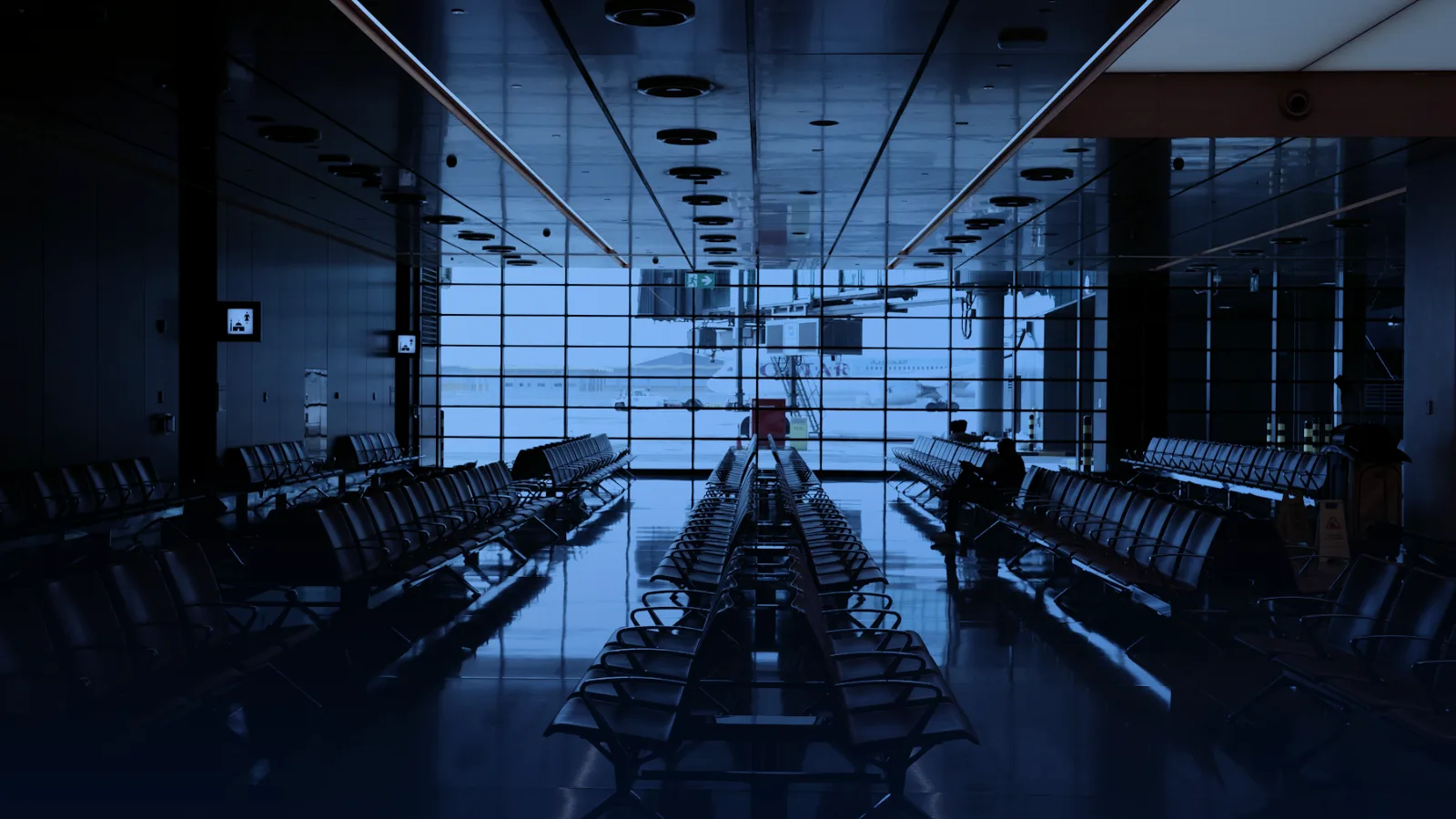
They are checked in the overnight window of least traffic, lounge by lounge and bridge by bridge, with accredited staff and an operator escort inside the sterile area. Before the first night the permits, the equipment list and the map of which unit serves each lounge are settled. Each night one complete section is worked, the lounge is operational before the first flight and the operator receives a report per lounge.
Sterile area: permits and escorts
Boarding lounges sit on the inside of the security checkpoint, in what the airport calls the sterile area. Entering with cameras, vacuums, ladders and brushes requires the same as for any contractor: accreditation of each person with the identification the operator requires, a detailed list of the equipment, screening of that equipment at the checkpoint and an escort from the operator or the security company throughout the shift. None of that is improvised the same night. It is processed with the lead time the operator sets, and the list of people is not changed at the last minute because every change restarts the process.
- Named list of the work crew with the identification the operator requires.
- Inventory of tools and equipment, with quantities, for the entry and exit check.
- Escort assigned per shift and an agreed meeting point.
- Entry and removal route for equipment without crossing the passenger flow.
- List of areas not entered even if the duct passes through them, noted as not reviewed.
The overnight window of least traffic
In a continuously operating terminal, the work window is not “night” in general but the gap between the last departure and the first arrival of each gate sector. The operator knows that gap gate by gate, and it can vary from one end of the pier to the other. The plan is built with that table in front: each night a group of gates whose gaps coincide is assigned, and how much fits is calculated with margin to leave the lounge operational before the first airline staff arrive.
That window has a known enemy: the delayed flight. That is why overnight work at an airport is organized in closed sections that can be finished and packed up in less time than planned, with the access doors closed again and the floor clean. A half done section is never left, even if the night must be cut short.
To coordinate a visit related to airports, Climatiza answers inquiries and confirms availability according to the schedule of the place.
Boarding lounges and jet bridges
Boarding lounges receive hundreds of seated people for an hour and then empty all at once. Their ducts work with marked occupancy peaks and with bridge doors that open to the outside at every boarding, letting in hot, humid air with a smell of fuel. Jet bridges usually have their own small units, which in Panama’s climate work at their limit every time they connect to an aircraft.
| Space | What complicates the work | What is checked |
|---|---|---|
| Boarding lounge | Occupancy peaks and bridge door open at every flight | Returns next to the boarding door and diffusers over the seating zone |
| Jet bridge | Small unit exposed to the outside and the apron | Filter, coil and interior grille, with attention to moisture and soot |
| Gate corridor | Continuous traffic, no real gap | Only main duct access doors reachable from plant rooms |
| Transfer waiting areas | Overnight occupancy by transit passengers | Checked in the lowest daytime gap, agreed with the operator |
Coordination with airport operations
Operations says which gates can be taken each night, and security says who gets in. Both areas must receive the same plan, with the same dates, because a mismatch between them ends with the crew waiting at the checkpoint at two in the morning. The EPA guide Building Air Quality, written for building managers, recommends that any work on the air system in an occupied building be planned with the operations lead and documented, and an airport is the extreme case of an occupied building.
- Map of units per lounge. With the airport’s maintenance team it is identified which air handler serves each gate group and where its access doors are.
- Gap table per gate. Operations provides the flight free band for each sector, and the plan assigns one sector per night.
- Accreditation process. Security receives the named list and the equipment inventory with the lead time it requires.
- Trial night. The first night a small sector is taken to measure how much really fits in the gap.
- Execution by sector. Each night one complete sector, with the camera in the duct before deciding what gets cleaned and access doors closed before the first flight.
Report for the terminal operator
The operator does not want a report per duct, it wants one per lounge and per night: which gates were worked, what the camera showed, what was cleaned, what stayed under observation and which areas were not touched because of restrictions. It should carry the entry and exit time of each night and the escort’s name, because that detail closes the loop with security. The criteria used to decide whether a section is cleaned are explained on a separate page, and the way to process permits and floors in a building open to the public is similar, although here the control is much stricter.
The rhythm of a terminal resembles that of a hotel that checks floors without stopping room sales, only with boarding gates instead of rooms and with an access control that allows no shortcuts. Other high traffic venues with hours that never close follow a similar logic of sectors and windows.
For a first conversation about the system, the contact details are on the Climatiza site and the method is described on its duct cleaning service page.
Sources
On this site
- Public buildings and ministriesHow the work is organized in this sector
- Hotels and hostelsA neighboring sector
- Camera inspectionThe real condition before deciding
Climatiza and Radar Panamá
Frequently asked questions
Can a boarding lounge be checked with passengers inside?
It is not advisable. Work happens in the flight free gap of that gate group, with the lounge empty and the access doors open only during that time. If a flight is delayed and the lounge is needed, the section is closed and packed up before passengers arrive.
What permits are needed to enter the sterile area with equipment?
Those set by the airport operator: accreditation of each person, an equipment inventory screened at the checkpoint and an escort during the shift. No single list applicable to all airports was found, so the process is requested in writing from the operator before anything is planned.
Are jet bridges checked the same way as the lounges?
No. They usually have their own small units, exposed to the apron, and filter, coil and interior grille are checked for moisture and soot. They are done in the same overnight gap as their gate, with the bridge retracted and no aircraft connected.
What does the operator receive at the end of each night?
A report per lounge and per night: gates worked, camera images, what was cleaned, what stayed under observation, areas not touched because of restrictions, entry and exit time and the escort’s name. With that, operations and security close the shift record.
Keep reading

Request an inspection
Do you want to know the condition of your system?
A camera inspection lets you see the inside of the ducts before deciding what to do. Message us and we will confirm availability.
- +507 6388-2083
- info@climatizapanama.com
- Calle Gervasio García, 8, Panama City