
Bars
Residual odor in the bar: what stays in the ducts after each night
The closing crew leaves the room spotless, and the next morning the bar smells of last night. The cleaning did not fail: the smell was somewhere else.
 By
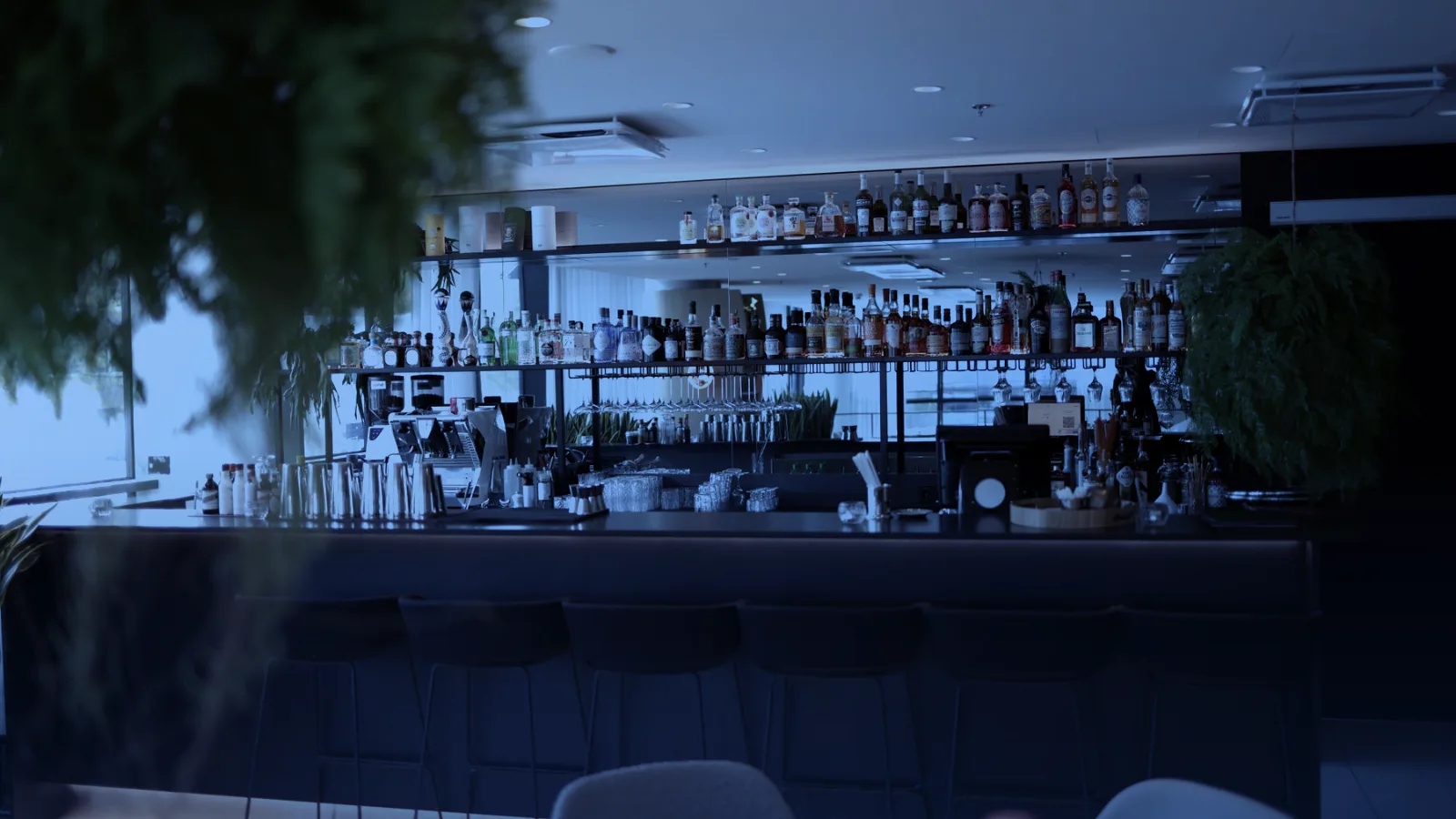
A bar wakes up smelling because during the night the return pulls in smoke, evaporated alcohol, steam and moisture from hundreds of people, and part of it is deposited inside the ducts. Cleaning the room removes what is on the surfaces, not what stayed in the duct. When the air is switched on in the morning, that deposit comes back into the room. It is confirmed with a camera in the return above the bar.
Everyone who has run a bar knows this morning. The floor shines, the tables are dry, the glasses put away and the windows open since early. And yet, when the air conditioning is switched on, the room fills with a smell that mixes stale alcohol, damp and something like cold ash. After ten minutes it fades, but it is there, and the first customer of the afternoon notices it before anyone.
The usual reaction is to reinforce the cleaning of the room or to put an air freshener on the grille. Neither touches the source. The morning smell does not come from the floor or the tables, it comes from the duct, and understanding how it got there is what makes solving it possible.
What builds up in the duct during a night at a bar?
A night at a bar loads the air with four different things. Smoke, whether from a neighboring terrace or from cocktail flambés. Alcohol evaporated from glasses, spills and the customers’ own breath. Moisture and skin particles from a full room. And cleaning aerosols and perfumes used during the night. All of it enters through the air conditioning return, which in most bars sits above the bar counter or the dance floor.
Climatiza is the technical service behind this guide and works with camera inspection, an illustrated report and cleaning only when the condition justifies it, including in the case of bars.
The filter holds back part of the particles, but gases and vapors pass through. On cooling in the coil and in the first duct section, a fraction condenses and sticks to the wall together with the dust, forming a thin, dark layer with a smell of its own. A 2022 study on air quality in hospitality premises concluded that pollution sources depend on the area and that in occupied spaces those produced by the people themselves predominate, which explains why a full room loads the duct more than an empty one.
Why does cleaning the room not remove the morning smell?
Because the closing cleanup treats surfaces and the smell lives in the duct. When the crew finishes, the air conditioning is usually switched off and the duct stays closed, warm and damp for six or eight hours. Panama’s annual mean humidity is 75.7% according to ETESA, so that layer does not dry out. The next morning, the first breath of air carries the duct’s smell toward the freshly cleaned room.
| What is cleaned | How it is solved | What is usually missing |
|---|---|---|
| Surfaces: bar counter, tables, floor | Closing cleanup | Ventilating in the morning |
| Upholstery, curtains, carpet | Periodic washing | Fresheners do not replace washing |
| Unit filter | Replacement or washing | Blowing it out is not enough |
| Inside of the duct and coil | Mechanical cleaning after camera inspection | The row that is almost always missing |
The last row is the one that is usually missing from the closing routine. Fresheners on the grille only add one more aroma to the mix and, over time, also deposit in the duct.
Why does it matter if the bar opens just the same every night?
It matters because the smell is part of the customer experience, and a bar that smells of last night at six in the afternoon starts the shift at a disadvantage. It matters for the equipment, because the layer on the coil forces the unit to work harder in a room that already warms up with the crowd. It matters for the staff’s working environment, who breathe that air before opening. And it matters for the peace of mind of the administration or the premises owner, who prefer an explanation with photos to an argument about a smell.
It is worth being clear on scope. The EPA states that it has never been shown that cleaning ducts prevents health problems, and in a bar nobody hires it for that. It is hired for the smell, and that is why the result is measured by smell and by photos, not by promises.
How is a bar inspected without stopping operations?
The return grille above the bar counter receives the worst of the night: the alcohol that evaporates from glasses, the steam of the glass washers and, if there is flame cocktail work, the smoke of the flambés. It is the first grille to darken and the first to smell when wiped with a cloth, and that is why it is the entry point of the camera inspection: what that section shows decides whether the rest needs to be surveyed. A dry white cloth run over the slats says a lot. If it comes out gray and smelling of stale alcohol, the residue is already inside.
The visit takes advantage of the rest day. Most bars close one day during the week, and on that morning the cleaning crew has already worked and the duct is at its worst, which is the moment worth photographing. The camera takes a few hours and does not leave the premises out of service. With the report in hand it is decided whether the cleaning is done that same week, split by sections between two closings, or whether it waits. An adjustment made by the air conditioning technician, leaving the fan running for a while after closing with the room empty, dries the duct and reduces what remains for the morning.
An illustrative case, not a real client: a bar with a long counter and a single return above it. The camera shows a dark, damp layer in the first section and the rest of the duct with little deposit. The return and the coil are cleaned during one closing, the filter is changed and the morning smell is compared for a week. If the layer returns within thirty days, the cause is still active and the shutdown routine and the location of the return are reviewed.
Which mistakes repeat and what is worth comparing?
The most common mistake is attacking the smell with perfume. Next comes measuring success by the owner’s impression and not by a point of comparison. Three references are worth keeping: the photo of the inside of the return before and after, from the same point, the time at which the morning smell disappears during the week before and the week after, and the white cloth on the grille a month after cleaning.
How the work is split in high capacity nightlife venues is explained in how the work is done in nightclubs and night venues, the full picture in the sectors served and the criteria for deciding in when to clean and when to wait. When the bar has a kitchen, grease aerosol is added, and the work in a restaurant gives the context for that case.
More about the inspection and cleaning service that applies these criteria is on the Climatiza duct cleaning page and on the Climatiza home page.
Sources
On this site
- Nightclubs and casinosHow the work is organized in this sector
- Restaurants and coffee shopsA neighboring sector
- Camera inspectionThe real condition before deciding
Climatiza and Radar Panamá
Why does inspecting and cleaning ducts matter?
These are the technical reasons, with their source, why the condition of the ducts is checked before deciding. Duct cleaning has not been shown to prevent health problems according to the EPA and the CDC, and it is proposed only when the observed condition justifies it.
| Advantage | Data with source | What it means in practice |
|---|---|---|
| Follow a technical inspection reference | The ANSI/ASHRAE/ACCA 180 standard is the standard practice for inspection and maintenance of commercial HVAC systems. | It is an industry reference, not a legal requirement in Panama, and helps organize the review plan. |
| Require method and a report from the provider | NADCA published in 2025 the current edition of its ACR standard on assessment, cleaning and restoration of air systems. | It is an industry reference and not a seal: it helps ask for method, photographs and scope in writing. |
| Anticipate the tropical humidity | According to ETESA (Tocumen station, 1977 to 2010), mean annual relative humidity in Panama is 75.7 % and rises to between 78.2 and 82.4 % in the rainy months. | The condensate pan, the drain and the coil are checked first, because that is where moisture builds up. |
| A local figure that changes the decision | In Panama, Executive Decree 230 of 2008, which regulates Law 13 of 2008, extends the ban on tobacco use in closed places open to the public to nightclubs and dance venues, bars and taverns, and casinos, bingo halls and other gambling venues. It exempts naturally ventilated spaces. (MINSA, Executive Decree 230 of May 6, 2008 (Official Gazette 26033)). | It is the sector context taken into account when planning the visit. |
Frequently asked questions
Why does the bar smell every morning if everything is cleaned at night?
Because the smell is in the duct, not on the surfaces. Smoke, evaporated alcohol and moisture deposit inside and, when the air is switched on in the morning, the first breath carries them into the freshly cleaned room.
Does an air freshener on the return grille help?
It does not solve the source. It adds one more aroma to the mix and over time also deposits in the duct. What helps is looking with a camera at the return above the bar and cleaning only the section that shows residue.
Does the bar have to close for several days to clean the ducts?
No. The inspection is done on the rest day and the cleaning can be split by sections between two closings, so the bar opens on time those nights. It is inspected first and decided with the report.
How can a bar owner tell whether the smell comes from the ducts or the furniture?
A simple test is to turn the air off, ventilate the room well and switch it on again. If the smell returns when the unit starts, the deposit sits in the return or the air handler and not in the sofas or carpets. A camera inspection of the return over the bar confirms the source.
What happens to the smell if the bar only cleans grilles and filters but never checks the return?
The smell fades for a few days and then comes back, because the grille and filter are the visible part while the main deposit sits a few meters further into the first stretch of the return. Cleaning what shows helps, but without looking inside with a camera nobody knows how much remains.
Keep reading the guide

Request an inspection
Do you want to know the condition of your system?
A camera inspection lets you see the inside of the ducts before deciding what to do. Message us and we will confirm availability.
- +507 6388-2083
- info@climatizapanama.com
- Calle Gervasio García, 8, Panama City