
Production kitchens and catering
Production kitchen: where ducts fit in the food safety plan
The food safety auditor checks fridge temperatures, pest control and the day’s trays. He seldom asks about the air, until dust falls on a portioning table.
Looking for the service for production kitchens and catering?
- The camera inspection comes first and the quote follows, with the photos in view.
- Work is done by sections and at an agreed time, so operations are not slowed down.
- At the end you receive a report with before and after photos.
 By
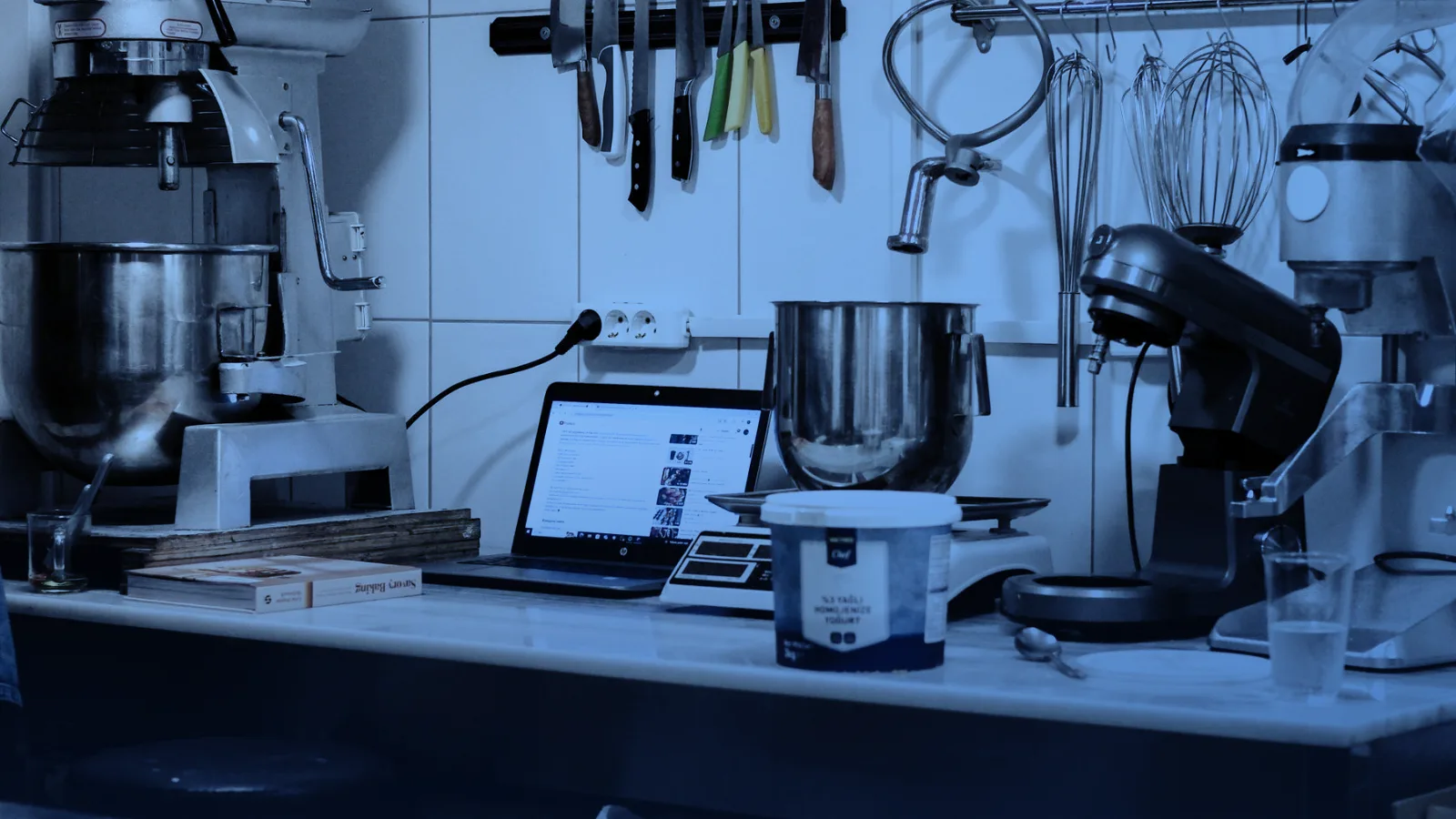
Four things are worth recording about air conditioning ducts: a plan with the grilles that face product areas, the date and result of each camera inspection, filter changes with their date and the resulting actions with their owner. The FDA Food Code asks that intake and exhaust ducts be cleaned and filters changed so they do not contaminate with dust.
In the central kitchen of a catering company the day starts before dawn: supplies arrive, portioning, assembly, packing and dispatch follow. The quality manager keeps a food safety plan with hazards, controls and records, and when the audit arrives the file looks orderly. Until the auditor looks up, points to a grille above the assembly table and asks who checks inside that duct and where it is recorded.
The question is not looking for a figure. It is looking for evidence that someone looks at the air passing over the product and acts on what is seen. What is almost always missing is not the cleaning, but the proof. This article explains where ducts fit in the plan, which records are enough and how to arrange them without creating new bureaucracy.
Why does air enter the food safety plan?
It enters because the dust falling from a grille above a portioning table is a physical hazard that is simple to describe and easy to forget, since nobody sees it fall. The FDA Food Code, the most cited reference in the sector, names it in two sections. Section 6-202.12 asks that intake and exhaust of the air conditioning system do not contaminate food or contact surfaces, and 6-501.14 requires that intake and exhaust ducts be cleaned and filters changed so they are not a source of contamination by dust and dirt.
When the system allows it, the review of production kitchens and catering is done by camera through the existing access points, the way the Climatiza technical service performs it.
In Panama the plan usually follows HACCP principles with prerequisite programs, and ducts fit in the facilities maintenance program, not as a critical control point. That placement matters. The auditor does not expect critical limits for air, he expects evidence that the system is checked and that someone acts. A 2024 review on microbial air quality in the food industry further stresses that numeric guidelines are lacking and that the link between airborne microorganisms and product contamination is not well established, another reason to document what was done and what was seen instead of promising results.
Why does it matter to have it on record?
It matters because without a record, a clean duct and a forgotten duct look the same to the auditor. It matters for continuity, since the quality manager changes and the file is the only thing that stays. It matters for the end customer, be it an airline, a school or a company contracting the service, who usually asks for evidence of facilities maintenance. And it matters for the equipment, which performs better with up to date filters and a pan that drains, especially in washing areas where steam dampens the return.
It is worth being clear on scope. The EPA and the CDC note that cleaning ducts has not been shown to prevent health problems, and no technical reference sets a cleaning frequency for kitchens. That is why the record does not claim effects on health: it describes what was inspected, what was found and what was done.
What records does the auditor ask for?
- A system plan with each grille numbered, marked as supply or return, and the product area it faces.
- Date, scope and result of each internal camera review, with photos filed by grille number.
- Filter sheet: type, change date, who did it and, if there is a gauge, the pressure drop.
- Resulting actions: section cleaned, grille repaired, pan cleared, with a closing date.
- Proof that the hood extraction duct is a separate system with its own contract.
- Provider name and method used, with no claims about health effects.
Which central kitchen areas take priority?
Not all grilles weigh the same. The priority is set by what is underneath and how long the product stays exposed, and a decision table avoids splitting the effort equally between the office and the assembly line.
| Area | Why it weighs | What is looked at first |
|---|---|---|
| Cold assembly and portioning | Open product under the diffuser for minutes | Inside of the final section and diffuser edges |
| Packing and labeling | Open trays and containers ready to close | Nearby returns and the unit filter |
| Pot washing | Constant steam that dampens the return | Condensate pan and insulation |
| Loading and dispatch | Open gate and street dust | Return grille closest to the gate |
| Office and staff dining | No exposed product | Only in the general calendar |
Annual mean humidity in Panama and San Miguelito is 75.7% according to the ETESA Tocumen station, and it rises in the rainy months, when pans and returns in the washing area work harder. That figure helps decide when to look with more attention, though no serious document sets a single frequency. The inspection is tied to production volume and seasonal humidity, and the findings of each visit adjust the next. The inspection planner serves as a guide for that decision.
What does the visit look like and how is the report filed?
The visit is coordinated with production to enter in a window without exposed product. A quality area escort opens the zones, the technician runs the camera through the branches facing assembly and packing and photographs each grille by its number. At the end a report is delivered with images per zone, the sections without access and the recommended actions. An illustrative case, not a real client: a central kitchen with one assembly line and one packing line. The camera shows the final section above assembly with light dust and the pan in the washing area with standing water. The filter is changed, the section is cleaned and the drain is corrected, and everything is dated in the action sheet.
The report is useful if it can be found during the audit. It is worth keeping it in the same folder as the pest and calibration records, with the zone name and date in the file, and with a summary page stating what was reviewed, what was cleaned and what remains pending. When the central kitchen also supplies a plant or a distribution center, the same format serves for the industrial side of the business, so that the quality manager reads a single type of document.
Which mistakes repeat and what to avoid?
The most frequent mistake is filing only the invoice. The invoice proves it was paid, not what was found. Another is mixing in one report the extraction hood and the air conditioning: the United States Fire Administration reminds that the kitchen duct is a separate system, governed by NFPA 96, and the auditor expects to see them apart. The habit of cleaning everything equally instead of prioritizing the areas with exposed product is also repeated, as is not closing each finding with a dated action.
The way of separating what belongs to the dining room from what falls to production resembles that of a restaurant or an operating kitchen, and the overview of places served is in the sectors. The criteria for writing the summary page without promising results are explained in when cleaning makes sense and with what method.
Those who want to go from this reading to a real review can start at the Climatiza service page or write through the main Climatiza site.
Sources
On this site
- Restaurants and coffee shopsHow the work is organized in this sector
- Industry and logistics parksA neighboring sector
- Camera inspectionThe real condition before deciding
Climatiza and Radar Panamá
Why does inspecting and cleaning ducts matter?
These are the technical reasons, with their source, why the condition of the ducts is checked before deciding. Duct cleaning has not been shown to prevent health problems according to the EPA and the CDC, and it is proposed only when the observed condition justifies it.
| Advantage | Data with source | What it means in practice |
|---|---|---|
| Keep humidity under control | The EPA recommends in its guide to mold and moisture keeping indoor relative humidity below 60 % and drain pans clean and draining freely. | A humidity reading and a clean pan limit the conditions in which mold grows. |
| Follow a technical inspection reference | The ANSI/ASHRAE/ACCA 180 standard is the standard practice for inspection and maintenance of commercial HVAC systems. | It is an industry reference, not a legal requirement in Panama, and helps organize the review plan. |
| Know whether cleaning is needed before deciding | The EPA states in its duct cleaning guide that cleaning is justified for visible mold, pests or a notable buildup of dust and debris. | A camera inspection documents the condition and allows a decision based on evidence, without unnecessary work. |
| A local figure that changes the decision | INEC’s Business and Establishment Directory (reference year 2022) records 13,586 establishments in the "Hotels and restaurants" category, the second largest sector by establishments after commerce (39,937), out of 96,397. The category groups lodging and food service, so it is not restaurants alone. (INEC, Business and Establishment Directory 2022). | It is the sector context taken into account when planning the visit. |
How to hire the service for production kitchens and catering
- Message us on WhatsApp with the type of place and the area.
- The camera inspection is arranged at a time that does not affect your operation.
- The quote is prepared from what was observed, never blind.
- If cleaning is justified, it is done by sections and the final report is delivered. If it is not, we tell you.
Frequently asked questions
Are air conditioning ducts a critical control point?
They usually are not. They fit in the facilities maintenance program of the food safety plan, and the auditor expects evidence that the system is checked and that someone acts on what is seen, not a critical limit.
What best proves the ducts were checked?
A report with dated photos by grille number, the sections without access and the closed actions. The invoice proves it was paid, but not what was found, and on its own it does not answer the auditor.
Are the hood and the air conditioning combined in one record?
No. Hood extraction is another system, governed by NFPA 96, with its own contract and its own record. The food safety auditor expects to see the dining air and the extraction in separate documents.
What does the FDA Food Code say about kitchen ducts?
Section 6-501.14 of the FDA Food Code states that intake and exhaust ducts must be cleaned and filters changed so they are not a source of contamination by dust or dirt. It is a model code each jurisdiction adopts, not a Panamanian regulation.
Which other food safety plan records should the duct report be filed with?
It makes sense to file it with pest control, equipment cleaning and filter changes, all dated and with a named person. An auditor then sees in one place how possible product contamination sources are watched and can trace each corrective action.
Keep reading the guide

Request an inspection
Do you want to know the condition of your system?
A camera inspection lets you see the inside of the ducts before deciding what to do. Message us and we will confirm availability.
- +507 6388-2083
- info@climatizapanama.com
- Calle Gervasio García, 8, Panama City