
Dialysis centers
Dialysis center: treatment room ducts and how to work around shifts
A dialysis center does not close for a day to review the air. The review fits the rhythm of the shifts, and that is possible when it is planned well.
 By
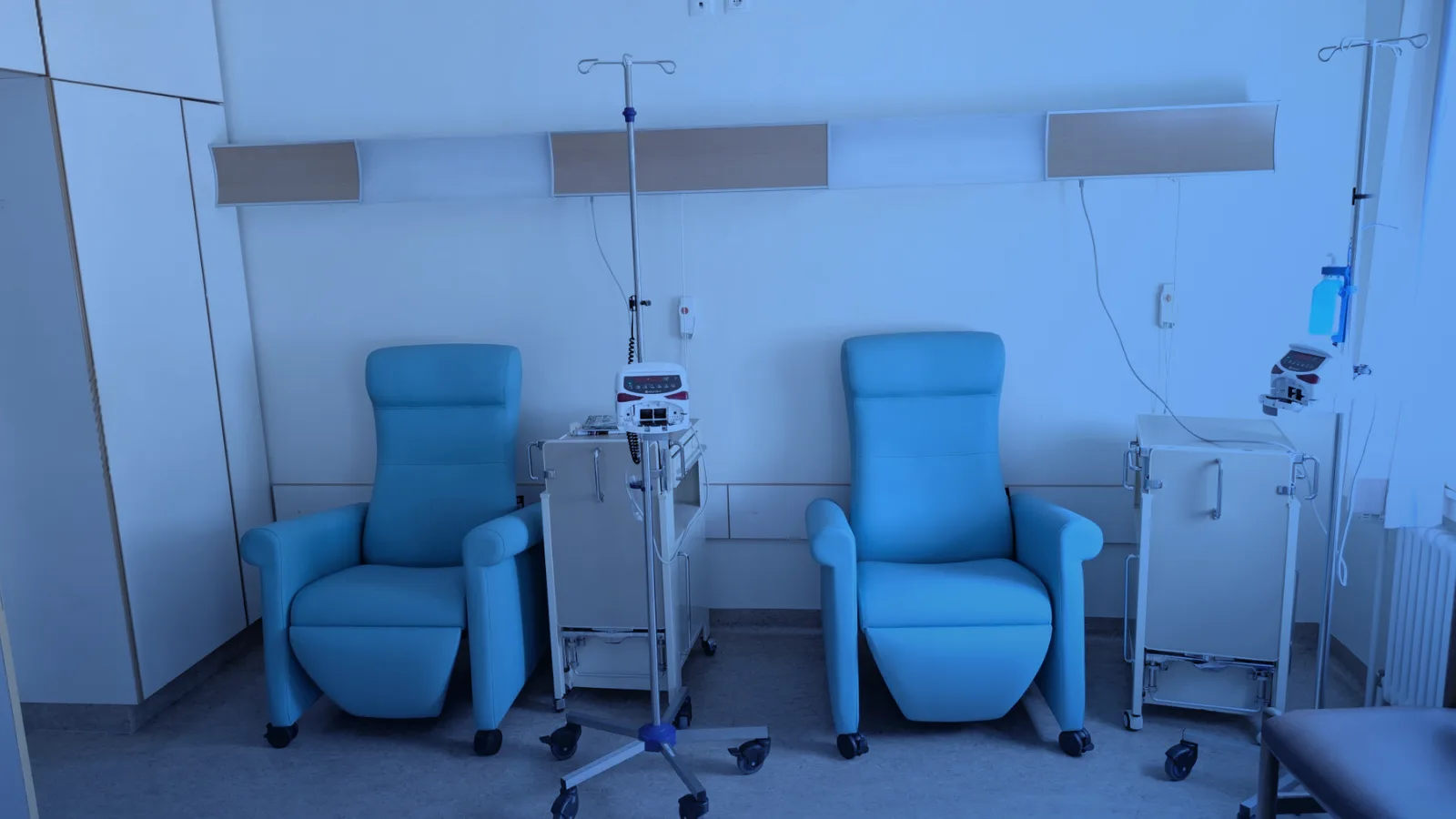
The ducts of a dialysis center are reviewed between shifts and by zones, starting with the treatment room, where patients spend the most hours, and then the water area. A camera inspection does not force the room to close and is coordinated with the medical director. Any cleaning is scheduled in the longest pause the center defines.
For a dialysis center, shifts are not a preference but a commitment. Patients arrive at fixed hours, several times a week, and spend several hours connected to their machine. A treatment room that gets too cold, that smells odd or that has a diffuser dripping over a patient is a real discomfort for someone who cannot get up and move. So the management’s question is not whether to inspect the ducts but how to do it without touching a single shift.
The answer lies in separating looking from intervening. Looking with a camera fits in short pauses, and cleaning, if needed, is scheduled separately. With that separation, the center can know the state of its system without disturbing its operation.
Why can't the center close for a day for this?
Because each shift is a treatment that someone else is waiting for, and treatments are not stacked up or postponed without consequences for the person receiving them. A hotel can block a floor and a restaurant can close on a Monday. A dialysis center works on a calendar dictated by the medical director, and any maintenance job fits around that calendar, not the other way round.
Anyone who needs to see the real condition of the ducts in the case of dialysis centers can request a camera inspection from the team at Climatiza, a technical duct cleaning service in Panama, which documents every section with images.
That makes planning the real work. The pause between two shifts, the day of least activity or the close of the last shift is identified, and it is decided which task fits in each. A camera inspection is the lightest task, and that is why it usually fits in the short pause.
Why is the treatment room the place of longest stay?
Because each patient there spends several hours in a row, seated or reclined, with no chance to change place. In a room like that, a badly distributed diffuser that over-cools the person in the next chair, or a return grille with settled dust that makes noise, becomes a daily problem. The CDC note in their guide for health care facilities that well designed HVAC systems require routine maintenance and monitoring, and that accumulated dust and moisture in them raise risk.
That does not turn duct cleaning into a health measure, and the CDC guide itself recalls that it has not been shown to prevent health problems. What it supports is the idea of looking regularly: if the branch above the chairs is clean, it is left alone, and if it is not, the decision is made with the image in hand.
What about the water treatment area?
The water treatment room is the other point that calls for attention. It concentrates piping, equipment and sometimes small leaks, and the room’s humidity adds to that of the climate. With an annual mean humidity of 75.7% according to ETESA, a closed room with damp equipment tends to condense on cold surfaces, so its ventilation or air conditioning duct should be checked for traces of condensation, darkened insulation and loose joints.
The visit here is more restricted. The technician touches neither the treatment equipment nor its connections, and works accompanied by whoever operates them. What is above and around is looked at, not what is in the water.
How is work done in the windows between shifts?
- Agree with the medical director. It is defined which pauses can be used, which chairs are vacated and who escorts the technician.
- Camera in the pause. With the room empty, the technician opens the planned grilles and runs the camera through returns and branches, producing no dust or noise.
- Record and tidy room. Access points are closed, each grille is checked back in place and the next shift is notified.
- Cleaning outside shifts if needed. If the camera flags a section, cleaning is scheduled in the longest pause the center defines.
An illustrative case, not a real client: a center with three shifts a day and twelve chairs. The camera is run through the room in the pause between the second and third shifts and shows settled dust in the first section of the return and a diffuser with condensation. The center first fixes the drain, changes the filters and schedules cleaning of the return for the day of least activity. No shift was interrupted.
What report does the medical director ask for?
A short report is best, with dated photos of the treatment room and the water area, the list of what was reviewed and what was left out because of protocol, and a recommendation stating whether intervention is needed and when. The most repeated mistakes are trying to clean during shift hours, opening access panels above an occupied chair and not telling the nursing staff. How work is shared out in other health services with restricted areas is explained in how a review is organized in clinics and hospitals, the criteria for deciding whether cleaning is due are in when cleaning makes sense and when to wait, and the camera route is detailed in how a camera inspection is carried out. The other places served are in the guide to sectors.
Scheduling a review starts with a message to Climatiza, and the service page summarizes the process.
Sources
On this site
- Hospitals and clinicsHow the work is organized in this sector
- Pharmacies and laboratoriesA neighboring sector
- Camera inspectionThe real condition before deciding
Climatiza and Radar Panamá
Why does inspecting and cleaning ducts matter?
These are the technical reasons, with their source, why the condition of the ducts is checked before deciding. Duct cleaning has not been shown to prevent health problems according to the EPA and the CDC, and it is proposed only when the observed condition justifies it.
| Advantage | Data with source | What it means in practice |
|---|---|---|
| Keep humidity under control | The EPA recommends in its guide to mold and moisture keeping indoor relative humidity below 60 % and drain pans clean and draining freely. | A humidity reading and a clean pan limit the conditions in which mold grows. |
| Follow a technical inspection reference | The ANSI/ASHRAE/ACCA 180 standard is the standard practice for inspection and maintenance of commercial HVAC systems. | It is an industry reference, not a legal requirement in Panama, and helps organize the review plan. |
| Know whether cleaning is needed before deciding | The EPA states in its duct cleaning guide that cleaning is justified for visible mold, pests or a notable buildup of dust and debris. | A camera inspection documents the condition and allows a decision based on evidence, without unnecessary work. |
| A local figure that changes the decision | INEC reports that in 2025 there were 777 health facilities in Panama, 8.0% of them hospitals. Hospital facilities had 8,575 beds, or 1.9 beds per 1,000 inhabitants. The 777 include sub-centers and health posts. (INEC, Health Services 2025). | It is the sector context taken into account when planning the visit. |
Frequently asked questions
Can the dialysis room be inspected with patients present?
It is not recommended. The inspection is done in the pause between shifts, with the room empty, so as not to make noise or open panels above an occupied chair. The camera needs no more than an open grille and a short stretch of duct.
What is checked first, the room or the water room?
The treatment room, because it is where patients stay the most hours. The water room is attended to afterward, with more restrictions, and without touching the treatment equipment or its connections.
When is cleaning done, if the camera flags a section?
Outside shifts, in the longest pause the center defines, and only in the flagged section. The cause is corrected first, such as a blocked drain or a saturated filter, so the residue does not come back.
What does nursing staff need to know before a duct inspection?
Staff need to know which zones will be covered, in what window, who the technical team contact is and that the camera does not touch medical equipment or chairs. With that information the shift organizes patients and keeps ceiling access panels clear without interrupting care.
How is the treatment chair room protected during a section-by-section cleaning?
Chairs and equipment are covered with plastic, the stretch being worked is isolated and suction equipment with filtration is used. One sector is cleaned at a time and the plastic comes off when finished. Before and after photos stay in the report.
Keep reading the guide

Request an inspection
Do you want to know the condition of your system?
A camera inspection lets you see the inside of the ducts before deciding what to do. Message us and we will confirm availability.
- +507 6388-2083
- info@climatizapanama.com
- Calle Gervasio García, 8, Panama City