
Vía Argentina
Vía Argentina: terrace and open doors, do they affect the ducts?
A full terrace draws customers, and an open door lets the street’s climate reach the dining room grilles.
 By
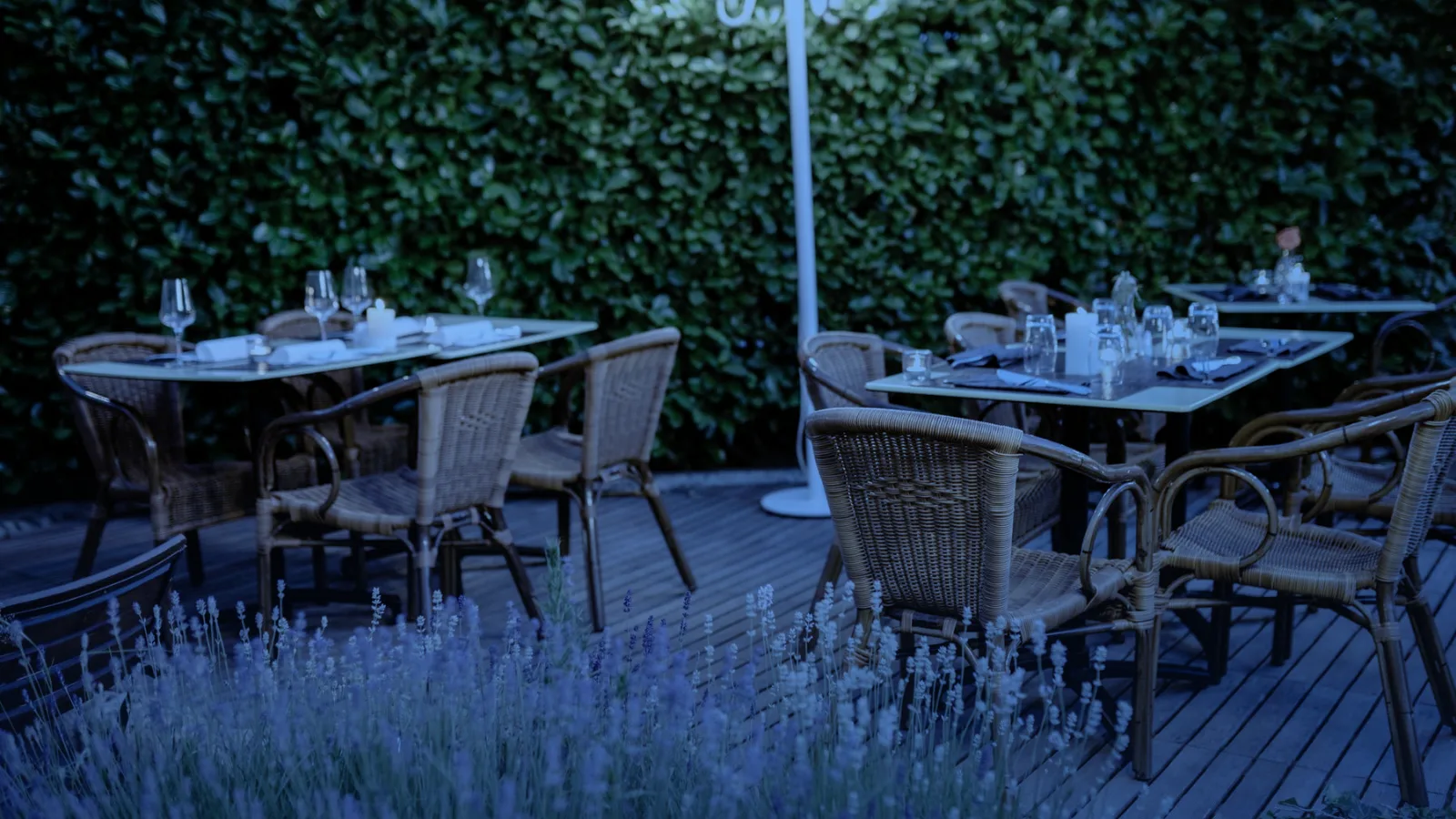
The terrace and open doors affect the dining room ducts mostly through humidity: outside air comes in, the air conditioning cools it and water condenses on diffusers, grilles and coil. The signs are drops on diffusers, dark marks around them and a damp smell. A weekly routine by the manager and a camera inspection after the rainy season are enough to tell whether there is a problem.
Whoever manages a restaurant on Vía Argentina knows the tension between the terrace and the dining room. Customers want a table outside, the waiter goes in and out with trays, the door never quite closes and the dining room air conditioning competes against the street’s climate. By late afternoon, the manager notices that the ceiling diffusers have drops, that a dark stain surrounds a grille and that near the door the room smells of damp.
None of that is unusual, and it almost always has a simple explanation. What is worth understanding is what happens inside the system when the premises work with the doors open, and what can be done so it does not become a problem.
What happens with humidity when the door is open?
What happens is that outside air comes in loaded with water and the system has to take it out. With an annual mean humidity of 75.7% according to ETESA, and higher values in the rainy months, the air crossing the door is already close to condensing. On meeting a cold diffuser or grille, vapor turns to drops. The coil condenses more, the pan receives more water and the drain works harder. If any of the three fails, water shows up where it should not.
The fieldwork is carried out by the Climatiza team, who check branches, grilles and air handlers and record the result in an illustrated report, also in the case of Vía Argentina.
A study on indoor environments in humid regions notes that keeping indoor humidity under control in the tropics requires the air conditioning to work almost continuously. A dining room with open doors makes this harder still, because the humidity taken out comes back in. That is why the first thing to check is not dust but water: pan, drain and insulation of the branches near the door.
And does street dust enter the dining room?
It does, though less than humidity. An avenue with traffic brings fine particles that stick where there is moisture, so street dust adheres more easily to a damp grille. The result is a dark film around the diffusers closest to the door, easily mistaken for mold although it is often just wet dust.
That confusion matters, because the answer is different. Wet dust is cleaned from the surface, while visible mold in an internal section calls for another decision. The EPA guide for homes says visible and substantial mold in hard surface ducts is one of the situations where cleaning makes sense, and that is why the camera tells a stain from a section with growth.
Why does it matter if the restaurant keeps selling?
It matters for the comfort of the table, which is what the customer remembers. A diffuser dripping on a table, or a stained grille beside the entrance, costs a review before it costs a repair. It also matters for the equipment, which performs worse if the pan or drain is at its limit, and for order, because a manager who knows which signs to look for does not depend on a customer complaining first.
It must be said plainly that duct cleaning has not been shown to prevent health problems according to the EPA and the CDC. Here it is framed as upkeep of the system and humidity control, not as a sanitary measure.
What does the visit look like and what is usually found?
The visit is scheduled with the manager outside service hours. The technician starts in the dining room, near the door, opens the grilles closest to the entrance and runs the camera along the branch. Then the technician goes down to the air handler and looks at the filter, coil, pan and drain. What turns up most is a pan with sediment, a drain with too little slope, darkened insulation by the door and damp filters. All of it is photographed in order and with the time.
An illustrative case, not a real client: a restaurant with a terrace and a double door that stays open during service. In the rainy season, three diffusers next to the door drip. The camera shows the branch dry and clean, and the pan with the drain partly blocked. The sensible decision is to clear the drain, insulate a stretch of duct and ask the manager to close the terrace door between services. No duct was cleaned.
What routine suits the manager, and how often to look?
- Look at the diffusers near the door before opening, checking for drops, stains and damp smell.
- Check the filter of the grille closest to the entrance more often than the rest.
- Note each drop or stain with a date, and compare it with rainy days.
- Close the terrace door between services, if the operation allows it.
- Ask for a camera inspection at the end of the rainy season or after any repeated dripping.
Frequency is not a fixed calendar but a consequence of what is seen. The criteria for deciding when cleaning is due are in when cleaning makes sense and when not, the camera route is explained in how a camera inspection is carried out, the context of the avenue is in the Vía Argentina page and the other areas served are gathered in the map of service areas.
To ask about availability or request a camera inspection, the Climatiza website lists the ways to contact the team and the duct cleaning service page explains how the work is organized.
Sources
On this site
- Restaurants and coffee shopsHow the work is organized in this sector
- Vía ArgentinaThe area and its building types
- Camera inspectionThe real condition before deciding
Climatiza and Radar Panamá
Why does inspecting and cleaning ducts matter?
These are the technical reasons, with their source, why the condition of the ducts is checked before deciding. Duct cleaning has not been shown to prevent health problems according to the EPA and the CDC, and it is proposed only when the observed condition justifies it.
| Advantage | Data with source | What it means in practice |
|---|---|---|
| Follow a technical inspection reference | The ANSI/ASHRAE/ACCA 180 standard is the standard practice for inspection and maintenance of commercial HVAC systems. | It is an industry reference, not a legal requirement in Panama, and helps organize the review plan. |
| Require method and a report from the provider | NADCA published in 2025 the current edition of its ACR standard on assessment, cleaning and restoration of air systems. | It is an industry reference and not a seal: it helps ask for method, photographs and scope in writing. |
| Anticipate the tropical humidity | According to ETESA (Tocumen station, 1977 to 2010), mean annual relative humidity in Panama is 75.7 % and rises to between 78.2 and 82.4 % in the rainy months. | The condensate pan, the drain and the coil are checked first, because that is where moisture builds up. |
| Keep construction dust out of the system | The EPA and NIOSH Building Air Quality guide asks to block return grilles while construction work takes place in occupied buildings. | Before accepting a new or remodeled system it is worth checking whether construction dust got in. |
Frequently asked questions
Do open doors damage the dining room ducts?
They do not damage them directly, but they make the air conditioning condense more water. If the pan, drain or insulation are at their limit, drips and stains appear on diffusers. Checking those three points is usually enough.
How can mold be told from wet dust on a diffuser?
It cannot always be told by eye. Wet dust forms a dark film that comes off with a cloth, and mold tends to leave stains that reappear. The camera and the technician’s eye confirm whether there is growth in an internal section.
How often is it worth checking a dining room with a terrace?
There is no fixed interval. It is worth checking at the end of the rainy season and after any repeated dripping. If the report comes back clean, the next look waits until something changes, such as works, an equipment change or complaints.
What can a restaurant do to reduce condensation when the terrace is open?
It can keep doors between dining room and terrace shut when nobody is passing, adjust the unit to the real load and check duct insulation and joints. If the door must stay open, an air curtain helps. The camera confirms whether the duct already shows moisture.
What does condensation look like inside a restaurant duct?
It appears as droplets on the walls, dark or shiny stains, water at the bottom of the duct and, in advanced cases, a mold film on the lining. The camera records it with dated photos. If there is only light moisture, the source is corrected before cleaning is considered.
Keep reading the guide

Request an inspection
Do you want to know the condition of your system?
A camera inspection lets you see the inside of the ducts before deciding what to do. Message us and we will confirm availability.
- +507 6388-2083
- info@climatizapanama.com
- Calle Gervasio García, 8, Panama City