
Vía España
Vía España: shop in a plaza, who is responsible for the ducts
In a plaza, the shop and the administration share one air supply. The question of who owns each section is best settled before there is a leak.
 By
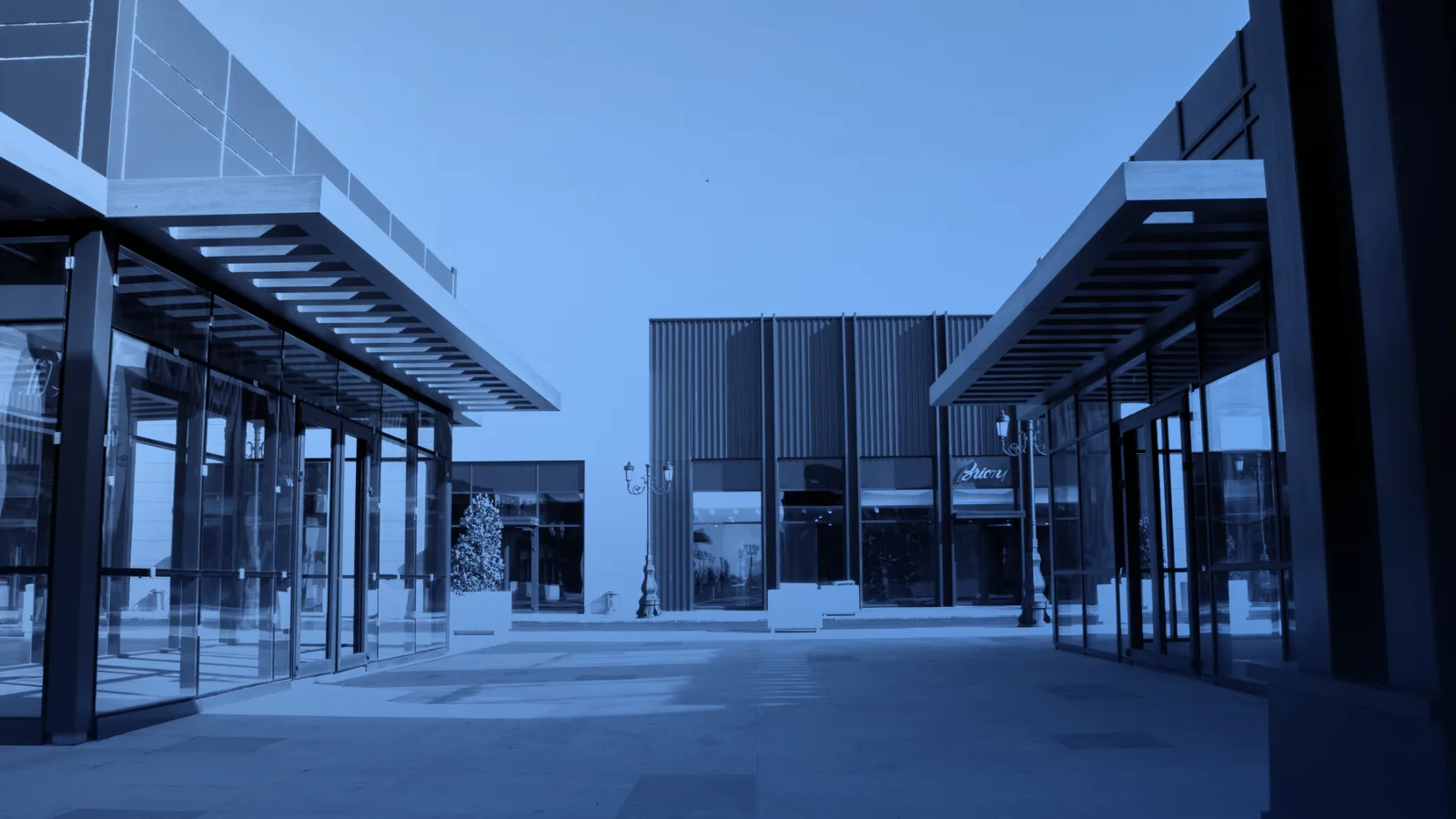
In a Vía España plaza, the branch and grilles inside the shop usually belong to the tenant, and the main duct, the air handler and the central filters to the administration. The lease and the plaza rules are what decide. A camera inspection documents where each part ends and avoids arguing from memory.
Whoever rents a shop in a plaza on Vía España usually discovers the question after something has already happened. A leak over the merchandise, a smell coming from the corridor, a technician who says the problem is “in the duct above” and an administration that answers that the shop’s duct belongs to the tenant. Nobody is lying, but each party understands its share of the system differently, and while it gets sorted out, customers keep walking into a shop that smells odd or does not cool.
Vía España concentrates commercial plazas with shops of every size under one roof, and that is why the question comes up so often. The answer is not universal, but there is an orderly way of finding it and putting it in writing.
What belongs to the shop and what belongs to the plaza?
The practical rule is that what serves only the shop usually belongs to the shop, and what serves several usually belongs to the plaza. That leaves the grilles, diffusers and the branch entering its space on the tenant’s side, and the main duct, the air handler and the central filters on the administration’s side. In plazas with individual units, the shop’s unit and its duct belong to the tenant almost by definition. But the lease governs, and some leases say otherwise.
Behind this guide is Climatiza, an inspection and duct cleaning service, which always starts from the real condition of the system before proposing any work in Vía España.
| Section | Usually belongs to | What to confirm |
|---|---|---|
| Grilles and branch inside the shop | The shop | That the lease says so and who pays for its upkeep |
| Damper or joint with the common duct | Border between both | Who authorizes opening it and who holds the access key |
| Main duct, air handler and central filters | The plaza | Date of the last check and maintenance record |
| Condensate drain | Depends on the layout | Where it drains and who unblocks it |
How can anyone tell where the shop's system ends?
It can be told by following the air from the grille backward to the point where the branch leaves the common duct. That point almost always has a damper, a taped joint or a change of section, and it usually sits above the corridor or in a shared ceiling. A drawing of the installation shows it in a minute, but one rarely exists, and then the camera does the job: it runs along the branch from the shop’s grille, photographs the joint and records how far it got.
That image has both contractual and practical value. With it, the tenant knows which section it can maintain on its own, and the administration knows which section it must attend to when a problem shows up in the corridor.
Why does it matter to clarify it before a problem appears?
It matters because a dispute over responsibility gets resolved worse once merchandise is wet or customers are complaining. With the border clarified, the tenant avoids paying to clean a section that is not its own, and the administration avoids a single complaint becoming a matter for the whole plaza. It also matters for the equipment, because a trunk with saturated filters makes every branch work harder, and a blocked drain in one shop can wet the neighbor’s ceiling.
A study from the EPA database of 97 office buildings found that less frequent cleaning of coils and drain pans was associated with more headache and eye symptoms among occupants. It is an association and not a proven cause, and it does not change what the EPA and the CDC say: duct cleaning has not been shown to prevent health problems. What it does show is that upkeep of the central equipment, which belongs to the plaza, is part of the comfort of every shop.
What does the visit look like in a plaza shop?
It is scheduled with the administration’s permission, which notifies security and sets the hour, normally outside business hours. The technician enters with a shop employee, opens the grilles, runs the camera along the branch and photographs the joint without opening anything that belongs to the plaza. If the trunk needs to be looked at, that is requested and authorized separately. What turns up most is settled dust in the first part of the branch, a return grille blocked by merchandise or decoration and, at times, a drain with too little slope.
An illustrative case, not a real client: a shop in a plaza with an intermittent drip in a corner of the ceiling. The administrator says the duct belongs to the shop, and the tenant says it belongs to the plaza. The camera shows the branch is clean and the drip comes from a trunk joint with peeling tape, right before the damper. The report, with photo and date, goes to the administration, which repairs it. The shop does not pay for a cleaning it did not need.
What should be asked of the administration, and what kept in the lease?
It is worth asking in writing for the list of sections the plaza considers its own, the maintenance record of the central equipment, the name of whoever authorizes opening access panels and the procedure for admitting contractors. In the lease it is worth keeping the clause that describes the air system and who is responsible for its upkeep, along with any drawings attached. If the lease is silent, that silence is also information: it means a written clarification is worth requesting.
The criteria for deciding whether a branch needs cleaning, and when not, are in when cleaning is due and when it is not. The camera route is explained in how a camera inspection is carried out, the context of the avenue is in the Vía España page and the other areas served are gathered in the map of service areas.
For a first conversation about the system, the contact details are on the Climatiza site and the method is described on its duct cleaning service page.
Sources
On this site
- Shopping centers and mallsHow the work is organized in this sector
- Vía EspañaThe area and its building types
- Camera inspectionThe real condition before deciding
Climatiza and Radar Panamá
Why does inspecting and cleaning ducts matter?
These are the technical reasons, with their source, why the condition of the ducts is checked before deciding. Duct cleaning has not been shown to prevent health problems according to the EPA and the CDC, and it is proposed only when the observed condition justifies it.
| Advantage | Data with source | What it means in practice |
|---|---|---|
| Protect equipment performance | In a laboratory test with dust equivalent to one year of use, coil pressure drop rose between 6 and 30 % and efficiency (EER) fell between 1 and 9 % (Yang, Braun and Groll, ARTI, 2004). | It is a laboratory result and not a promise of savings: it points to the components worth checking. |
| Keep humidity under control | The EPA recommends in its guide to mold and moisture keeping indoor relative humidity below 60 % and drain pans clean and draining freely. | A humidity reading and a clean pan limit the conditions in which mold grows. |
| Require method and a report from the provider | NADCA published in 2025 the current edition of its ACR standard on assessment, cleaning and restoration of air systems. | It is an industry reference and not a seal: it helps ask for method, photographs and scope in writing. |
Frequently asked questions
Who pays for cleaning the duct of a shop in a plaza?
The lease and the plaza rules define it. As a practical rule, the branch that serves only the shop usually belongs to the tenant, and the main duct and central filters to the administration. If the lease does not say, it is worth asking for a clarification in writing.
Can the tenant open the common duct to look?
Not without permission. The common duct belongs to the plaza and its access is authorized by the administration. What the shop can do is inspect its own branch from the grille and photograph the joint, which already serves as evidence to request a check of the trunk.
What signs point to a problem in the common system?
Odors or drips that appear in several shops at once, saturated trunk filters, residue right at the joint of the branch with the common duct and a clean branch of its own. With those signs, the complaint goes to the administration.
What is the difference between a shop with its own unit and one tied to the plaza's central air?
With its own unit, the shop looks after the filter, coil and ducts serving it. With central air, the plaza answers for the system and the shop is limited to grilles and diffusers within its space. The lease should make this clear, and the camera inspection leaves the boundary documented.
What should the tenant ask the administration for before hiring the inspection?
The tenant should ask for written authorization to inspect the stretch serving the shop, the plan of the common ducts and the access rules for the ceiling and roof. That avoids the visit being interrupted and makes clear which part belongs to the shop and which to the plaza.
Keep reading the guide

Request an inspection
Do you want to know the condition of your system?
A camera inspection lets you see the inside of the ducts before deciding what to do. Message us and we will confirm availability.
- +507 6388-2083
- info@climatizapanama.com
- Calle Gervasio García, 8, Panama City