
Pharmaceutical laboratories
Pharmaceutical laboratory: ducts and audit documentation
When the auditor arrives, the duct is rarely looked at. What is looked at is the paper that shows what was done to it, when and with what result.
 By
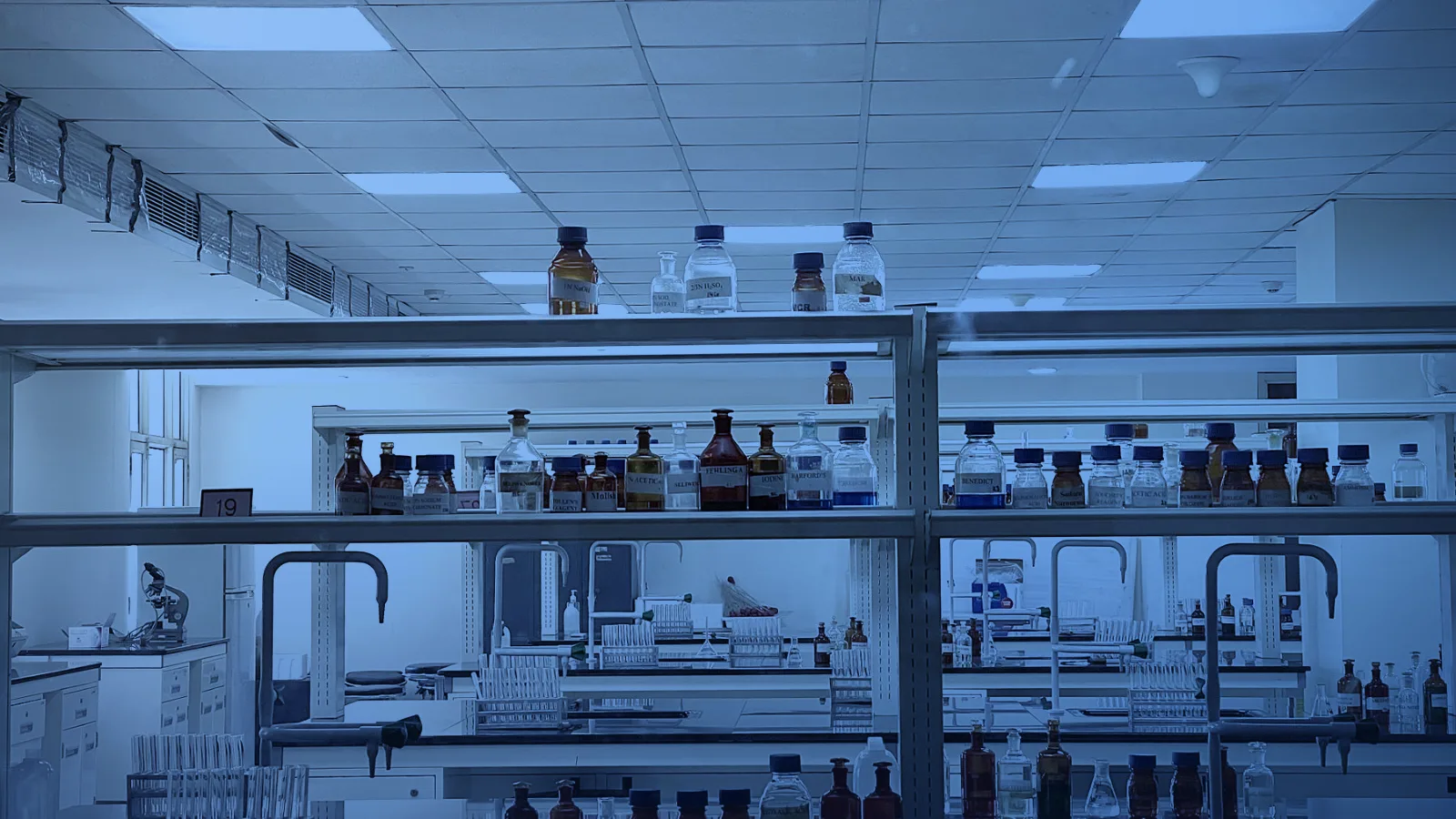
In a good manufacturing practice audit the auditor asks three things about the ducts: where they are, what was done to them and how it is known that the system kept complying. The answer is a plan with codes, records of every intervention with before and after camera photos, and later quality verifications. All of it in one file per intervention.
For the quality head of a pharmaceutical plant, the week before an audit feels like moving house. Folders are hunted down, signatures confirmed, the cleanroom logbook checked to be up to date. And then someone asks about the ducts: when they were last looked at, who did it, where the evidence is. If the answer is a person who remembers having seen something, the problem already exists, even if the ducts are in perfect shape.
What does the auditor ask the air system?
The WHO guidelines on air systems for pharmaceutical products (technical report 1010, annex 8) ask that the performance of the system be monitored and recorded, that diagrams showing supply, return, pressure differentials and flow direction be kept current, and that a preventive maintenance program exist, proportional to the criticality of each component. United States regulation, in 21 CFR 211.46, adds that if air is recirculated to production, measures must be taken against the recirculation of process dust.
With that in hand, the auditor asks three questions about the ducts. Where they are, and the answer is a plan. What was done to them, and the answer is records. How it is known that the system kept complying afterward, and the answer is the plant monitoring. Duct cleaning is not a special act. It is one more intervention inside the system, and it is documented like a filter change or a calibration.
When the system allows it, the review of pharmaceutical laboratories is done by camera through the existing access points, the way the Climatiza technical service performs it.
Why does the paper matter so much if the duct is clean?
Because in a regulated plant what is not written did not happen. A study of eight pharmaceutical manufacturers in Ethiopia (Gabriel et al., 2024) found that they met 67.1 % of the good practice requirements for their air systems, with 70.67 % in design and maintenance practices, and pointed to a shortage of trained staff and poor calibration as obstacles. It is another country and another scale, but it shows where the gaps tend to appear: in maintenance and record keeping more than in the equipment.
It also matters for internal order. A clear file spares the plant engineer from reconstructing from memory what was done two years ago, and keeps a change of shift or of management from leaving the history up in the air. And it is worth saying frankly: duct cleaning has not been shown to prevent health problems according to the EPA and the CDC, and in a pharmaceutical plant it does not replace any quality control either. What it contributes is evidence of the state of the system and traceable maintenance.
What does a duct visit designed for an audit look like?
It starts with the plan. If the ducts are identified with codes, the report uses the same codes. If not, the first job is to agree a nomenclature with engineering and draw it, because the WHO guide asks that ducts and components be marked with their location and flow direction. Then the window is agreed: the intervention is scheduled outside production hours and with the area released by quality. A duct worked on with exposed product in the room is not maintenance, it is a deviation.
The camera runs through each section with the code visible in the image and leaves a reference shot that can later be repeated at the same point. In the camera inspection this becomes photos with embedded date, before and after. What turns up most often in plants with process areas is fine dust in returns and first sections, a section with damaged insulation and, now and then, grilles that do not match the current plan. That last one is, incidentally, a documentation finding, not a cleaning one, and so it is logged as a note or deviation and not quietly fixed.
An illustrative case, not a real client: a solid dosage plant with three air handlers, one for weighing and granulation, another for packaging and another for offices and storage. The camera shows bonded dust in the weighing return and the other sections with nothing to report. The report separates the three systems, cleans only the weighing return with the area released and leaves the other air handlers with a monitoring note. On closing, quality verifies pressure differentials and counts, and that verification is filed apart from the duct report.
Which mistakes come up most in the file?
The first is handing in photos without codes, so nobody knows which section they belong to. The second is merging, in a single document, the cleaning and the later verification of parameters, when they are two different things with two owners: the duct provider hands over evidence of what was done, and the plant quality system confirms that pressures, temperature, humidity and counts return to range. The third is forgetting what could not be checked. A section without access that is missing from the report is taken as clean, and that assumption is the one an attentive auditor will not forgive.
The frequency is not set by the provider either. It comes out of the plant risk analysis and its preventive maintenance program, and the provider contributes what was observed to support it. The same logic of record keeping works, on another scale, for a pharmacy that stores product on shelves.
What is worth asking the provider for, and how is it filed?
- Code of each section per the current plan, with the originating air handler and the area served.
- Date, start and end times and the name of the staff who worked.
- Method and tools used, with no products that quality has not approved.
- A camera photo of every section, before and after, with the code visible.
- Filters removed and installed, with reference and date.
- Sections not checked, with the reason, as a note or deviation.
- Signature of the plant manager who verified the closing of records and the restoration of access points.
Each intervention is filed in a folder with the report, the photos, the filter record and the signature sheet, and a copy goes into the history of the air handler along with filter changes and calibrations. If the plan changed, the file says which version was used. That is how the auditor’s three questions are answered without hunting anyone down. The technical guide explains how the report is built by components, and industrial plants with process areas follow a similar order, except that here a missing record has consequences for the audit outcome. The cleaning and inspection service adapts to the nomenclature the plant already uses.
For a first conversation about the system, the contact details are on the Climatiza site and the method is described on its duct cleaning service page.
Sources
- Gabriel et al., 2024, Advances in Pharmacological and Pharmaceutical Sciences: GMP compliance of HVAC systems (DOI 10.1155/adpp/6109415)
- WHO: guidelines on heating, ventilation and air conditioning systems for pharmaceutical products, TRS 1010, Annex 8
- 21 CFR 211.46: ventilation, air filtration, air heating and cooling (govinfo)
On this site
- Industry and logistics parksHow the work is organized in this sector
- Pharmacies and laboratoriesA neighboring sector
- Camera inspectionThe real condition before deciding
Climatiza and Radar Panamá
Why does inspecting and cleaning ducts matter?
These are the technical reasons, with their source, why the condition of the ducts is checked before deciding. Duct cleaning has not been shown to prevent health problems according to the EPA and the CDC, and it is proposed only when the observed condition justifies it.
| Advantage | Data with source | What it means in practice |
|---|---|---|
| Keep humidity under control | The EPA recommends in its guide to mold and moisture keeping indoor relative humidity below 60 % and drain pans clean and draining freely. | A humidity reading and a clean pan limit the conditions in which mold grows. |
| Follow a technical inspection reference | The ANSI/ASHRAE/ACCA 180 standard is the standard practice for inspection and maintenance of commercial HVAC systems. | It is an industry reference, not a legal requirement in Panama, and helps organize the review plan. |
| Know whether cleaning is needed before deciding | The EPA states in its duct cleaning guide that cleaning is justified for visible mold, pests or a notable buildup of dust and debris. | A camera inspection documents the condition and allows a decision based on evidence, without unnecessary work. |
| A local figure that changes the decision | According to INEC, in 2024 Colón Free Zone imports totaled B/.12,646.5 million, 35.9% below 2023, and re-exports B/.12,208.2 million, 8.6% below. 74.6% of imported value arrived by sea. The figures give the scale of the goods that pass through warehouses and sheds. (INEC, Foreign Trade Yearbook, Colón Free Zone 2024). | It is the sector context taken into account when planning the visit. |
Frequently asked questions
What must the record of a duct cleaning contain for an audit?
It must contain the section code per the plan, date and staff, method used, before and after camera photos, filters changed, sections not checked with the reason and the plant manager signature. All in one file per intervention.
Who decides how often ducts are checked in a pharmaceutical plant?
The plant decides, based on its risk analysis and its preventive maintenance program. The duct provider contributes the evidence of what the camera observed, but does not set the calendar or replace the verification by the quality system.
Does duct cleaning replace the verification of pressures and counts?
No. Cleaning is an intervention, and the verification of pressure differentials, temperature, humidity and particle counts is done by the plant quality system afterward. Both documents are best filed separately and cross referenced.
What does the WHO ask for regarding maintenance of a pharmaceutical plant's air system?
WHO guidelines (TRS 1010, Annex 8) ask that system performance be monitored and recorded, that diagrams showing supply, return, pressure differentials, and airflow direction be kept up to date, and that a preventive maintenance program be in place, proportional to the criticality of each component.
Who sets how often the ducts of a pharmaceutical plant are cleaned?
The plant’s risk analysis and its preventive maintenance program, not the cleaning contractor. The contractor supplies the evidence of each intervention, and the quality system then verifies that pressures, temperature, and humidity return to range. They are two different documents and are best kept separate.
Keep reading the guide
Request an inspection
Do you want to know the condition of your system?
A camera inspection lets you see the inside of the ducts before deciding what to do. Message us and we will confirm availability.
- +507 6388-2083
- info@climatizapanama.com
- Calle Gervasio García, 8, Panama City