
Amador
Amador: seafront restaurant, does the salty breeze damage the ducts?
A restaurant with a terrace open to the water sells views and breeze, but that breeze also enters through the unit air intake. The question is what it does to the metal, and the answer is visible with a camera.
 By
The salty breeze in Amador can corrode grilles, air intakes, coils and the first meters of a restaurant's duct, and it is checked from outside in: white crust and rust at the outdoor intake, damaged fins, lifted zinc and open joints. A rusted part is repaired or replaced, not cleaned. Cleaning is done only where the camera shows dirt.
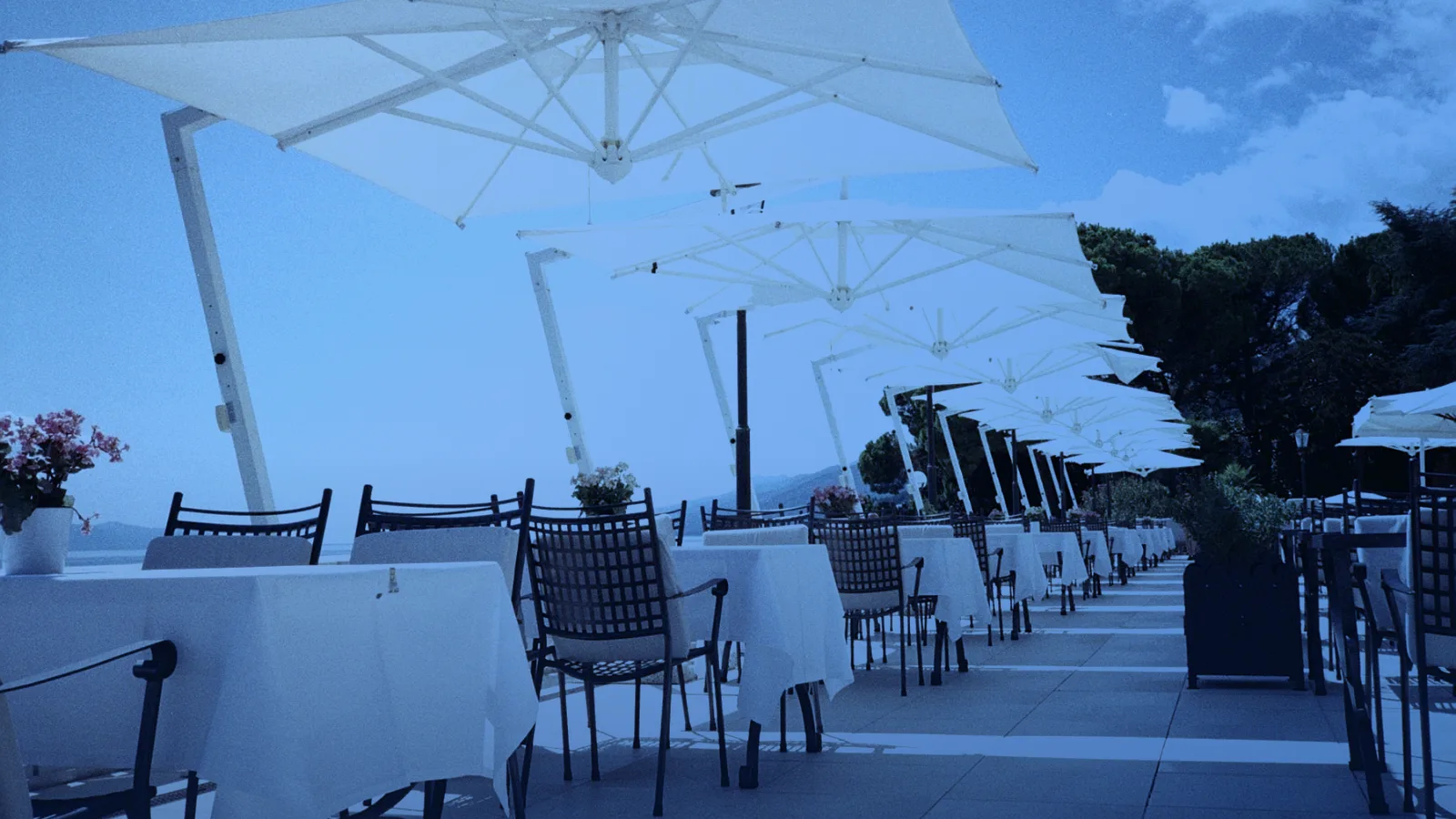
The manager of a restaurant on the Amador causeway knows how hard the breeze works. The terrace fills with salt on the tables, umbrellas rust within a season and the blacksmith who replaces the door hinges already knows the way. What is not always on the list is what happens on the roof or in the machine room, where the air unit draws in that same breeze through its outdoor intake and circulates it through the coil and the first sections of duct.
What does the salt do to the air system of a seafront restaurant?
Sea air carries suspended salt, and salt settles on damp surfaces and makes them more aggressive. With the average relative humidity in Panama at 75.7 % according to ETESA and IMHPA, there is plenty of moisture for that to happen all year. That is why the work in an Amador restaurant is not measured by how much dust there is in the duct, but by the condition of the metal and the seals at each point of contact with the outdoors.
A 2025 study in Environmental Progress and Sustainable Energy exposed aluminum fins from coastal air conditioners to cyclic salt spray for 42 cycles. Fins mounted vertically lost 12.1 % of their mass, about three times more than horizontal ones, which lost 4.0 %, and fins with tight spacing accumulated more corrosion products. It is a laboratory test on coils, not on ducts, which is why in the visit the camera looks first at the coil and the air intake before moving on to the rest of the system.
Anyone who needs to see the real condition of the ducts in the case of Amador can request a camera inspection from the team at Climatiza, a technical duct cleaning service in Panama, which documents every section with images.
Why does it matter if the restaurant keeps opening every day?
Because corrosion advances quietly. An air intake with a pitted grille lets leaves and splashes through, a duct joint that opened because of rust draws untreated air from the ceiling void, and a coil with damaged fins cools less on the same consumption. It shows in the comfort of the air conditioned enclosed terrace, in bills that rise without explanation and, on the worst day, in a unit that stops on a full Saturday.
It also matters for order and for decisions. Telling routine maintenance from corrosion repair makes it possible to budget properly, and the ASHRAE 180 standard on inspection and maintenance of commercial systems serves as a framework for setting a frequency at the exposed points. And it must be said plainly that duct cleaning has not been shown to prevent health problems according to the EPA and the CDC, so in Amador it is not proposed as protection but as part of looking after a unit that lives in a harsh environment.
What does the visit look like, from the outside in?
The visit starts outside the dining room, on the roof or in the machine room, with photos of the condition of grilles, fasteners and the outdoor air intake. Then it goes in through the dining room access points and the camera follows the duct toward that intake, comparing the condition of the exposed sections with the internal ones to see whether the damage comes from outside. Every point is dated, so that next year’s check can be repeated in the same order and compared.
What turns up most is a white salt crust at the intake, a pitted grille and red rust on screws, lifted zinc in the first meters of duct and, inside the dining room, branches in good shape because the salt stays close to the outside. A serious dirt problem is rare. An illustrative case, not a real client: a restaurant with a terrace over the water whose report flags the outdoor intake for a grille replacement, two joints in the first section for resealing, the coil for cleaning because of salt deposits and the interior branches for annual follow up without cleaning.
When is it cleaned, when is it repaired and when is it only monitored?
The rule is simple. If the camera shows bonded dirt, that section is cleaned. If it shows damaged metal or an open joint, it is repaired or replaced, because cleaning a rusted part does not fix it. And if it shows a duct in good condition, it is recorded and monitored. The kitchen exhaust duct is a different circuit, with its own standard and its own company, and the report logs it as out of scope.
Among the most repeated mistakes are covering a corroded grille with paint, which hides the problem without stopping it, replacing only the grille when the frame is compromised too, or cleaning the inside of the dining room when the real problem is on the roof. Another is waiting for the part to fail instead of setting a frequency for the exposed points, which is usually shorter than that of the rest of the system.
- Photos of the air intake, grilles and exposed fasteners, with date.
- Condition of the coil and the pan, with what was cleaned and what needs repair.
- Comparison between exposed sections and interior sections.
- What is cleaned, what is repaired and what is only monitored, point by point.
- Proposed frequency for repeating the check of the exposed points.
Coordination asks for access to the roof with the permission of the building owner, a schedule without customers and a record of previous repairs if one exists. The particulars of the area, with its access and schedules, are on the Amador page, and the other zones of the service show how the routine changes with the setting. To understand how the camera tour is done, the inspection detail can be seen, and the criteria for deciding when to clean help to set the frequency.
Those who want to go from this reading to a real review can start at the Climatiza service page or write through the main Climatiza site.
Sources
On this site
- Restaurants and coffee shopsHow the work is organized in this sector
- AmadorThe area and its building types
- Camera inspectionThe real condition before deciding
Climatiza and Radar Panamá
Why does inspecting and cleaning ducts matter?
These are the technical reasons, with their source, why the condition of the ducts is checked before deciding. Duct cleaning has not been shown to prevent health problems according to the EPA and the CDC, and it is proposed only when the observed condition justifies it.
| Advantage | Data with source | What it means in practice |
|---|---|---|
| Know whether cleaning is needed before deciding | The EPA states in its duct cleaning guide that cleaning is justified for visible mold, pests or a notable buildup of dust and debris. | A camera inspection documents the condition and allows a decision based on evidence, without unnecessary work. |
| Anticipate the tropical humidity | According to ETESA (Tocumen station, 1977 to 2010), mean annual relative humidity in Panama is 75.7 % and rises to between 78.2 and 82.4 % in the rainy months. | The condensate pan, the drain and the coil are checked first, because that is where moisture builds up. |
| Keep humidity under control | The EPA recommends in its guide to mold and moisture keeping indoor relative humidity below 60 % and drain pans clean and draining freely. | A humidity reading and a clean pan limit the conditions in which mold grows. |
Frequently asked questions
Does the sea breeze corrode a restaurant's ducts in Amador?
It can corrode grilles, air intakes, coils and the first meters of exposed duct, especially where there is moisture. Interior branches are usually in better shape. It is checked with a review from outside in and dated photos of each point.
Is a corroded duct cleaned?
No. A rusted part or an open joint is repaired or replaced, because cleaning does not correct the damage. Cleaning is reserved for the sections where the camera shows bonded dirt, and the rest is recorded and monitored.
How often is it worth checking the exposed points of a coastal restaurant?
There is no universal calendar. A frequency of its own is set for the air intake, the coil and the first sections, based on what the camera shows, and the check is repeated in the same order to compare from one year to the next.
Which part of a coastal premises' air system suffers most from salt air?
What stays exposed to outdoor air: air intake, coil fins, grilles, and the first meters of duct. Lin and colleagues (2025) exposed aluminum fins to salt fog and the vertically mounted ones lost about three times more mass than the horizontal ones. The inside of a sealed duct suffers far less.
Is a rusted duct part in a restaurant cleaned or repaired?
It is repaired or replaced, because cleaning rust does not stop it. The camera inspection determines which sections need repair, which need cleaning, and which only need annual monitoring, following the periodic inspection approach of ASHRAE 180. The kitchen exhaust duct is a separate circuit and is left out.
Keep reading the guide

Request an inspection
Do you want to know the condition of your system?
A camera inspection lets you see the inside of the ducts before deciding what to do. Message us and we will confirm availability.
- +507 6388-2083
- info@climatizapanama.com
- Calle Gervasio García, 8, Panama City