
Las Mañanitas
Las Mañanitas: health center, what to check in waiting room ducts
A full waiting room at mid morning tests air conditioning like few others. The review starts with what suffers most: the filter and the return.
 By
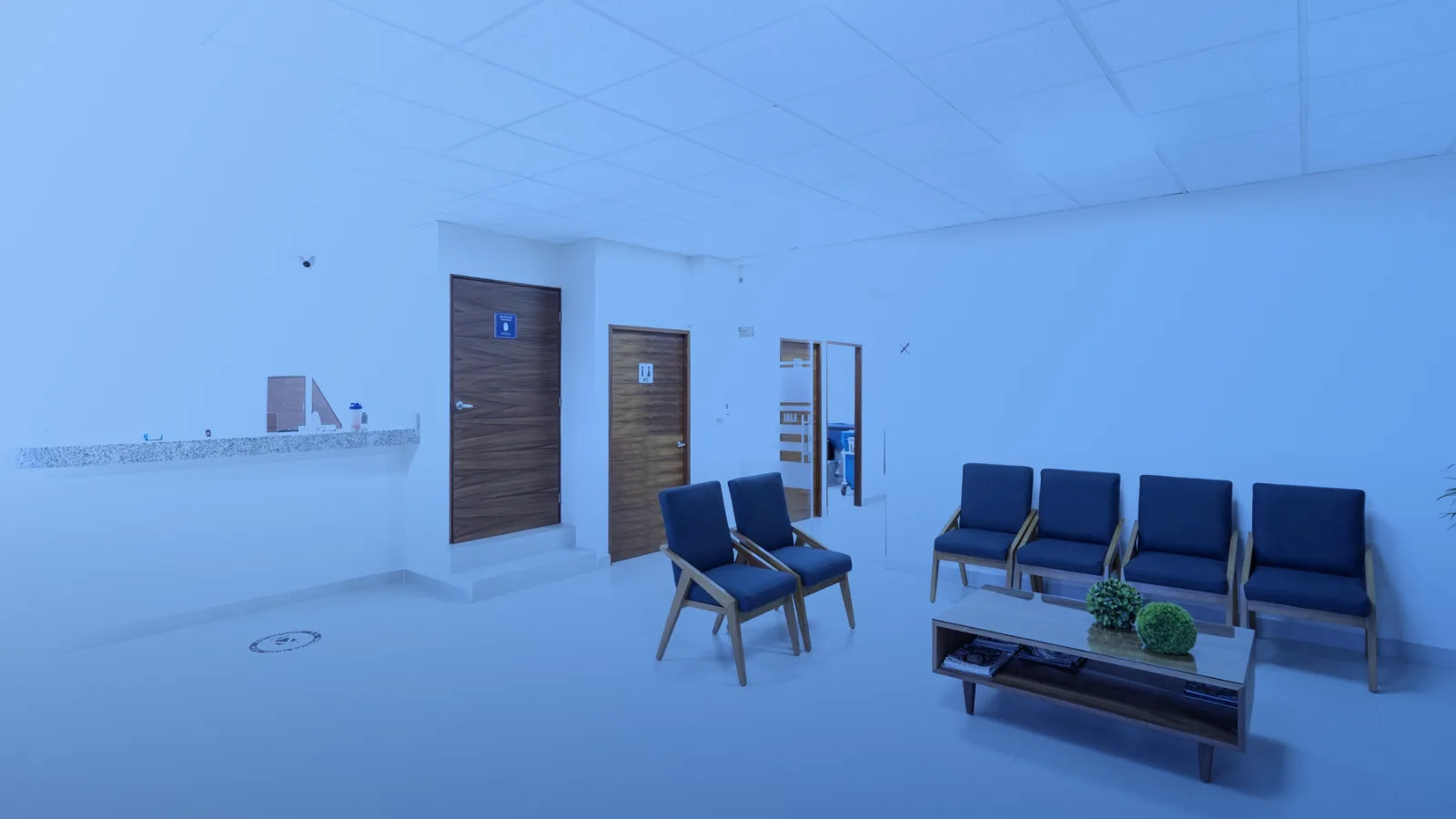
In the ducts of a heavy traffic health center waiting room, the filter and the return are checked first, because they take the greatest load of people and open doors. The camera route then continues to the air handler and the supply branches, always through existing access panels and without taking down the ceiling over the seats.
At nine in the morning the waiting room of a health center is already full. There are mothers with children, older adults with their folders, people standing at the window. The entrance door opens and closes nonstop, and the air conditioning, which may have been comfortable at seven, does not keep up by noon. The staff feel it and the director hears about it every shift: the room gets heavy.
In Las Mañanitas, a corregimiento where the health center serves many communities, that scene repeats daily. A room like this concentrates more people per square meter than almost any other space in the neighborhood. Checking its ducts well calls for order more than equipment.
What is checked first in the ducts of a waiting room with heavy traffic?
What suffers most at that pace is checked, which is the filter and the return. With many people coming in, street dust and clothing fibers reach the return grille and saturate the filter sooner than expected. A loaded filter slows the airflow, the unit works harder and the room loses freshness without the thermostat showing it. That is why the first gesture is to open the air handler, look at the filter and photograph it with a date.
Behind this guide is Climatiza, an inspection and duct cleaning service, which always starts from the real condition of the system before proposing any work in Las Mañanitas.
Then the camera enters through the access panels that already exist and surveys the return, the run to the air handler and the supply branches toward each grille. There is no need to take down the ceiling over the seats, and that matters in a room that cannot close. The coil and condensate pan are looked at last, because with an annual mean humidity of 75.7% according to ETESA, water that does not drain is the most repeated cause of odor.
Why does the way the ducts are accessed matter in a health center?
It matters because the way of working changes what remains in the air. A peer reviewed study compared two ways of cleaning ducts in a hospital ward for immunocompromised patients. When access was from inside the room there was a particle peak and a moderate rise in Aspergillus spores that took about an hour to return to normal. When access was from outside, the air in the room was barely disturbed. The study is from a hospital and not a health center, but it shows why access is planned.
That logic translates in the health center into a simple rule: work that raises dust is done outside service hours, with access from corridors or technical rooms, and the waiting room is handed back closed and clean before the first patient arrives. What is done with the room open is limited to looking, photographing and changing filters.
What can and cannot an inspection say about the room’s air?
The camera shows the condition of the duct, but it does not measure how much fresh air comes in. There is an indirect way for that: measuring CO2 and counting people. Another peer reviewed study applied a calculation method with CO2 and occupant counts to estimate ventilation in a room of a clinic with changing occupancy. If the center wants to know its airflow, that measurement is requested apart from the inspection, and the report mentions it as pending.
The CDC guide to environmental infection control states that air systems in health care facilities need routine maintenance and monitoring, with filters checked and replaced according to the manufacturer. The same guide makes clear that cleaning ducts has not been shown to prevent health problems. In a waiting room, then, the work is justified by the documented condition of the system and not by a promise about patients.
How is it coordinated with management and what does the report deliver?
For a public health center the coordination goes through the management and, depending on the case, the health region. The list of restricted areas is requested, along with the hours when the technical team can work and who escorts. Treatment, procedure or vaccination areas are recorded as not reviewed, and remain for a visit under the center’s own protocol. The report is ordered by component: filter, return, branches, coil and pan, each with an image and a short recommendation.
- Dated photograph of the filter and the condition of its frame and seat.
- Image of the first section of the return and of the branches toward each grille.
- Condition of the coil and the condensate pan, with the drain checked.
- List of areas not reviewed due to restriction, with the reason.
An illustrative case, not a real client: a waiting room with eight rows of seats and a single unit. The filter appears saturated and the first section of the return has settled dust, but the supply branches are almost clean. The sensible decision is to change the filter, check its condition every two weeks for a month and clean only the first section of the return outside hours. Working on the branches would have taken over the room without changing anything.
Which mistakes repeat and what is worth asking for?
The mistake of intervening with the room open repeats, as does changing the filter for a finer one without checking that the unit can handle it, and forgetting the doors, which move more air than any grille. It is worth asking for a report with the date, an image of each component, the list of areas not reviewed and a note on CO2 if it was measured. The particulars of the neighborhood are in the Las Mañanitas page, the rest of the areas are gathered in the map of areas served, the technique is explained in how a camera inspection is carried out and the decision criteria in when cleaning makes sense and when it does not.
Questions about a specific building can be sent to Climatiza, and the service description shows what a visit includes.
Sources
On this site
- Hospitals and clinicsHow the work is organized in this sector
- Las MañanitasThe area and its building types
- Camera inspectionThe real condition before deciding
Climatiza and Radar Panamá
Why does inspecting and cleaning ducts matter?
These are the technical reasons, with their source, why the condition of the ducts is checked before deciding. Duct cleaning has not been shown to prevent health problems according to the EPA and the CDC, and it is proposed only when the observed condition justifies it.
| Advantage | Data with source | What it means in practice |
|---|---|---|
| Require method and a report from the provider | NADCA published in 2025 the current edition of its ACR standard on assessment, cleaning and restoration of air systems. | It is an industry reference and not a seal: it helps ask for method, photographs and scope in writing. |
| Know whether cleaning is needed before deciding | The EPA states in its duct cleaning guide that cleaning is justified for visible mold, pests or a notable buildup of dust and debris. | A camera inspection documents the condition and allows a decision based on evidence, without unnecessary work. |
| Protect equipment performance | In a laboratory test with dust equivalent to one year of use, coil pressure drop rose between 6 and 30 % and efficiency (EER) fell between 1 and 9 % (Yang, Braun and Groll, ARTI, 2004). | It is a laboratory result and not a promise of savings: it points to the components worth checking. |
| Check classroom and hall ventilation | A peer reviewed study of 104 classrooms (Chan et al., 2020) found problems in 51 % of them. | The camera and readings show whether air reaches where it should before each school term. |
Frequently asked questions
Does the waiting room have to close for its ducts to be checked?
Not for looking, photographing and changing filters. Anything that raises dust is done outside service hours with access from corridors or technical rooms. The room is handed back closed and clean before the first patient.
Why is the filter checked first in a room with many people?
Because it receives street dust and clothing fibers from everyone who comes in, and saturates sooner than in other spaces. A loaded filter reduces airflow and makes the unit work harder.
Does the camera measure the room’s ventilation?
No. It shows the condition of the duct. To estimate ventilation, CO2 is measured and people are counted, and that measurement is requested separately. The report mentions it as pending if it was not done.
Does a camera inspection measure how much air enters a health center's waiting room?
No, the camera shows the condition of the duct but not the airflow. CO2 can be used to estimate it: Deol and colleagues (2021, PLoS ONE) applied a method with CO2 measurements and head counts in a primary care room with changing occupancy. That measurement is requested separately and the report lists it as pending.
Which parts of a waiting room system are checked without opening anything that scatters dust?
The filter and air handler are viewed from the technical room, the drain pan and drain outside service hours, the return over the room with a camera through the access panel without blowing air, and the diffusers with a flashlight, without removing them. That way no dust is raised with patients present.
Keep reading the guide

Request an inspection
Do you want to know the condition of your system?
A camera inspection lets you see the inside of the ducts before deciding what to do. Message us and we will confirm availability.
- +507 6388-2083
- info@climatizapanama.com
- Calle Gervasio García, 8, Panama City