
Administradoras de propiedad horizontal
Air conditioning maintenance for horizontal property (PH) administrators in Panama
An owners board decides better with an inventory and a clear report than with a loose quote. Order begins with knowing what is there.
Looking for the service for administradoras de propiedad horizontal?
- The camera inspection comes first and the quote follows, with the photos in view.
- Work is done by sections and at an agreed time, so operations are not slowed down.
- At the end you receive a report with before and after photos.
 By
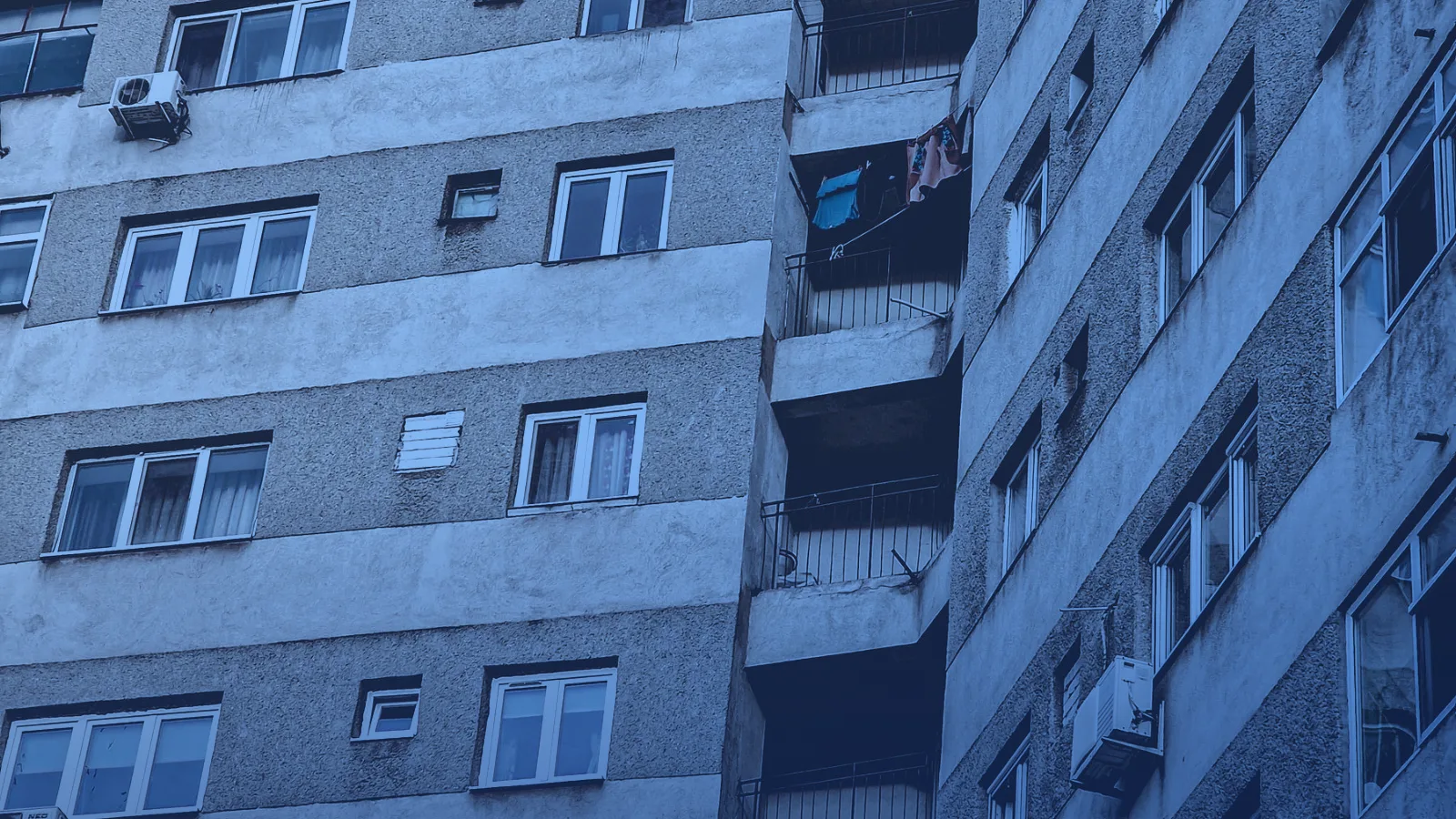
A PH administrator organizes air conditioning maintenance with three pieces: an inventory of equipment and ducts in the common areas, an inspection by component (filters, coil, pan, ducts) and a photographed report the board can approve. That sets priorities for what is urgent and documents what does not need to be touched.
The administrator of an apartment building receives three complaints in the same week. The lobby smells of damp, the event room does not cool and an owner on the twelfth floor asks who last checked the equipment in the technical room. Nobody can find a paper that says so. That lack of a record is the first problem, ahead of any piece of equipment.
In horizontal property the air conditioning that matters to the administration is that of the common areas: lobby, social room, gym, administration office, corridors with central units. The unit in each apartment belongs to its owner. Understanding that boundary prevents arguments and defines the scope of what the board approves.
Where does a PH administrator start?
It starts with an inventory and not with a cleaning. A list of what equipment exists, where it sits, how old it is, who services it and when it was last checked. It seems small, but it is what allows proposals from providers to be compared on the same basis and prevents repeated work.
When the system allows it, the review of administradoras de propiedad horizontal is done by camera through the existing access points, the way the Climatiza technical service performs it.
The second step is an inspection by component. The central units in a PH usually fail through the same four pieces: saturated filters, a dirty coil, a condensate pan with standing water and ducts with moisture at the joints. Looking at each separately helps decide whether the problem calls for a filter change or a larger intervention.
| Component | What is checked | What it usually indicates |
|---|---|---|
| Filters | Color, weight and fit in the frame | A change is due or air is bypassing |
| Coil | Film, bonded dust and dripping | Lower performance and odor on start up |
| Pan and drain | Standing water, sludge and a clear outlet | Moisture and odor in the served area |
| Ducts | Residue, wet insulation and joints | Whether to clean, fix or leave |
Why does it matter to organize this before there is a complaint?
Because a board approves better what it understands. A report with photographs of a stagnant pan convinces more than the phrase “maintenance is needed”. And because in Panama, with average humidity of 75.7 percent according to ETESA, equipment in common areas works almost all year and condensate water is a constant, not an exception.
It also matters for continuity. Administrations change, providers change and boards rotate. A file with inventories, reports and photographs by year allows whoever arrives later to understand what was done and why, and gives backing to rules and bylaws when they require documenting maintenance of common areas.
Owners deserve clarity. The EPA and the CDC note that duct cleaning has not been shown to prevent health problems, so cleaning is not proposed as protection. It is proposed, instead, when a camera inspection shows residue or moisture that affects the equipment or the smell of a common area.
What does a review visit look like in a PH building?
The administrator coordinates with the doorman or technical staff the access to the machine room, the roof and the ceilings. The technician first checks the air handlers of the most used areas, opens the planned access points and runs the camera through the branches that serve the lobby and the social room. The work is scheduled to avoid events and busy hours.
An illustrative case, not a real client: a twenty floor building has had a smell in the lobby for months. The camera shows a clean duct, but the air handler pan has its drain blocked with sludge and the return filter hangs loose in its frame. The drainage is fixed, the filter is replaced and a second review is scheduled. The board receives a three page report with the photographs and does not need to approve a duct cleaning.
Which mistakes repeat and what should the administrator ask for?
The most common mistake is asking for quotes without an inventory, so each provider proposes a different scope and the board compares things that are not comparable. Next come approving work without a photographed report, mixing maintenance of common areas with complaints from private apartments and not keeping the documents. Avoiding them takes three requests: a signed inventory, a report by component with dated photographs and a written recommendation stating what to do, what to watch and what not to touch.
One practical question remains that every administrator asks: who pays for what. The answer depends on the PH bylaws and on what the board has approved, but the report helps separate ordinary maintenance from a major correction. With the list by component in view, the discussion moves from “whether to do it” to “in what order”, and that difference saves entire meetings.
One last matter of order. Reports are best kept in a shared administration folder, named by area and year, and not only in one person’s email. When the doorman, the administrator or the provider changes, the history will still be at hand, and each new review can be compared with the previous one at the same photographs and the same points.
The role of the doorman or resident technician is worth remembering. He or she is the person who passes by the machine room most often and the first to notice a drip, a different noise or a fallen filter. If the administration gives that person a round sheet with four simple questions, that daily observation becomes the best early warning the building has. The outside provider then arrives to confirm with a camera what the round had already suggested, and not to discover it from scratch.
A simple recommendation closes the circle: present to the board, each year, a one page summary with the state of the equipment, what was done and what remains to be watched. Owners do not read long technical reports, but they do read a clear sheet with photographs, and that habit sustains trust in the administration even when board members change.
Anyone administering can see how work is coordinated with boards and doormen in the page on horizontal property, what each image shows in the camera inspection and what the full work includes in the duct cleaning service. To decide when to act there is the guide on when to clean and how, and if the building shares floors with offices, work in corporate offices describes how it is ordered by floor. The remaining places served appear in the list of sectors.
More about the inspection and cleaning service that applies these criteria is on the Climatiza duct cleaning page and on the Climatiza home page.
Sources
On this site
- Residential towers and PH buildingsHow the work is organized in this sector
- Offices and corporate towersA neighboring sector
- Camera inspectionThe real condition before deciding
Climatiza and Radar Panamá
Why does inspecting and cleaning ducts matter?
These are the technical reasons, with their source, why the condition of the ducts is checked before deciding. Duct cleaning has not been shown to prevent health problems according to the EPA and the CDC, and it is proposed only when the observed condition justifies it.
| Advantage | Data with source | What it means in practice |
|---|---|---|
| Protect equipment performance | In a laboratory test with dust equivalent to one year of use, coil pressure drop rose between 6 and 30 % and efficiency (EER) fell between 1 and 9 % (Yang, Braun and Groll, ARTI, 2004). | It is a laboratory result and not a promise of savings: it points to the components worth checking. |
| Keep humidity under control | The EPA recommends in its guide to mold and moisture keeping indoor relative humidity below 60 % and drain pans clean and draining freely. | A humidity reading and a clean pan limit the conditions in which mold grows. |
| Require method and a report from the provider | NADCA published in 2025 the current edition of its ACR standard on assessment, cleaning and restoration of air systems. | It is an industry reference and not a seal: it helps ask for method, photographs and scope in writing. |
| Keep construction dust out of the system | The EPA and NIOSH Building Air Quality guide asks to block return grilles while construction work takes place in occupied buildings. | Before accepting a new or remodeled system it is worth checking whether construction dust got in. |
| A local figure that changes the decision | Law 284 of 2022 on horizontal property sets as a principle ensuring the maintenance, salubrity, safety and conservation of private and common property. The administrator carries out ordinary administration and conservation work with the budget approved by the Assembly. The law does not expressly mention ducts or air conditioning and its regulation is still pending. (Official Gazette 29476-C, Law 284 of 2022). | It is the sector context taken into account when planning the visit. |
How to hire the service for administradoras de propiedad horizontal
- Message us on WhatsApp with the type of place and the area.
- The camera inspection is arranged at a time that does not affect your operation.
- The quote is prepared from what was observed, never blind.
- If cleaning is justified, it is done by sections and the final report is delivered. If it is not, we tell you.
Frequently asked questions
Which part of the air conditioning is the PH administration responsible for?
The equipment and ducts in the common areas: lobby, social room, gym, administration office and corridors with central units. Each apartment’s air belongs to its owner. The PH bylaws define the details of that boundary.
What should a PH air conditioning inventory include?
A list of equipment with location, year, type, service provider and date of the last check. It also helps to note which ducts serve each common area and where the access panels are.
Do the building's ducts need cleaning every year?
There is no fixed calendar. Ducts are reviewed with a camera and cleaned when there is bonded residue, moisture or construction debris. If the duct is dry and filters are changed, the sensible choice is to document it and not intervene.
What should the board receive after an inspection?
A short report with dated photographs by component, a list of areas reviewed and not reviewed, and a clear recommendation with priorities. It should be readable without technical knowledge and filed for the next administration.
Keep reading the guide
Request an inspection
Do you want to know the condition of your system?
A camera inspection lets you see the inside of the ducts before deciding what to do. Message us and we will confirm availability.
- +507 6388-2083
- info@climatizapanama.com
- Calle Gervasio García, 8, Panama City