
Clínicas y consultorios
Air conditioning maintenance in clinics and medical offices in Panama: humidity, filters and construction work
In a small medical office, nobody watches the air conditioning day to day. A short written routine does that job.
Looking for the service for clínicas y consultorios?
- The camera inspection comes first and the quote follows, with the photos in view.
- Work is done by sections and at an agreed time, so operations are not slowed down.
- At the end you receive a report with before and after photos.
 By
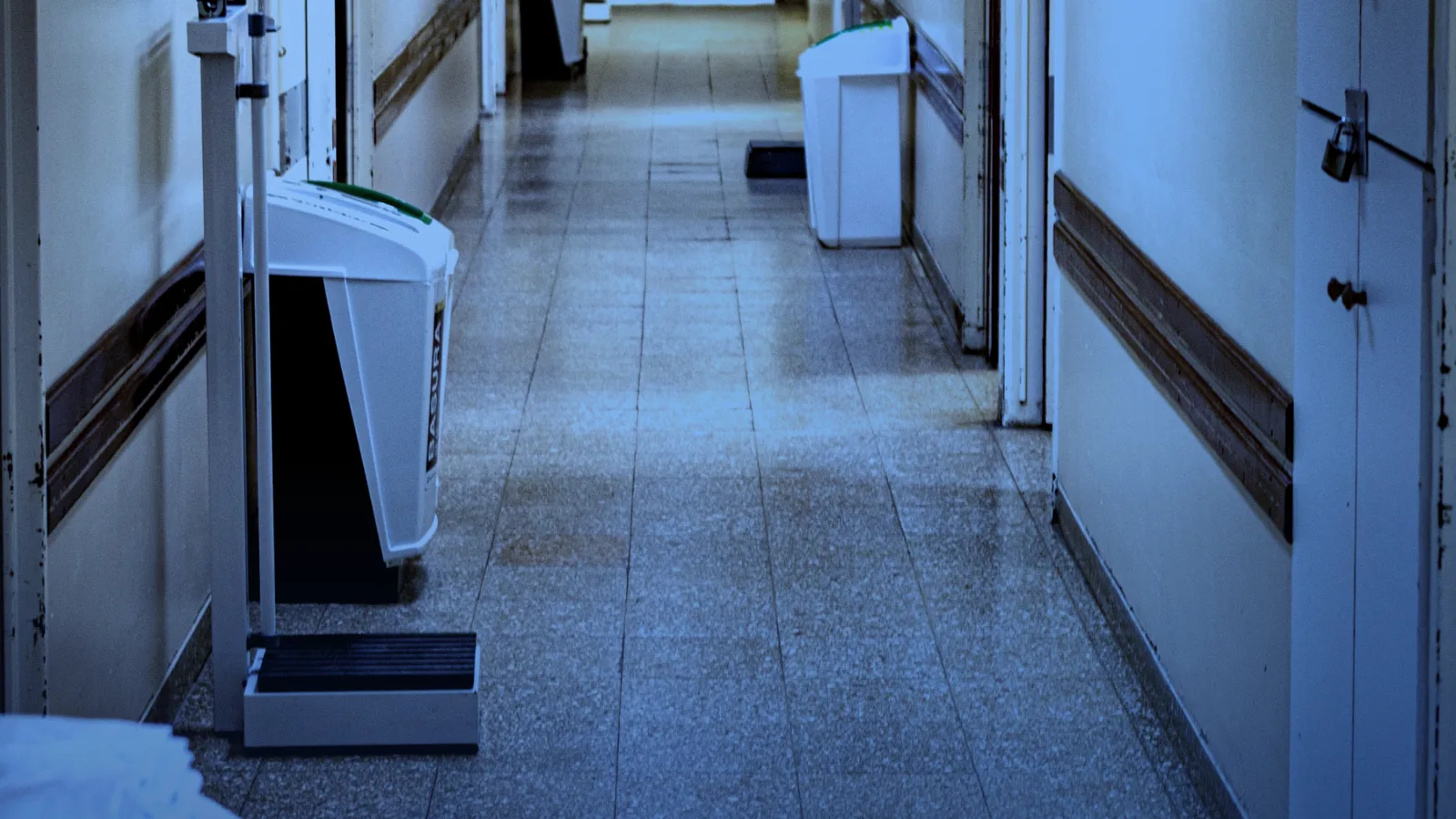
In a clinic or medical office three things deserve care in the air conditioning: humidity (pan, drain and condensation), filters (changed on time and seated in the frame) and nearby construction (so it leaves no dust inside the ducts). It is reviewed with a camera when there is odor, moisture or remodeling, and documented for the person in charge of the center.
The doctor who sees patients in a three room office knows air conditioning matters, but has neither the time nor the staff to watch it. One Monday she arrives and the waiting room smells damp. The usual technician changes the filter and the odor returns shortly after. Nobody has looked at the pan or the duct, and nobody has a record of what came before.
A small clinic does not need a complex program. It needs to know what to look at, how often is reasonable and what to write down. The rest is discipline, and it can be summed up in three fronts: humidity, filters and construction.
Why is humidity the first problem for a clinic in Panama?
Because the climate brings it as standard. Panama’s average relative humidity sits around 75.7 percent according to ETESA, and air conditioning condenses it on the coil and sends it out through the pan drain. If the drain clogs, the water stagnates and from there come the odor, the stain on the ceiling and the dripping over the exam table. In a clinic, that smell is quickly read as lack of hygiene.
Behind this guide is Climatiza, an inspection and duct cleaning service, which always starts from the real condition of the system before proposing any work in clínicas y consultorios.
One study illustrates this well. Pisaniello and colleagues, publishing in the Journal of Hospital Infection in 2026, measured fungi in the air of a subtropical coastal health center and saw counts rise after the air passed through the unit, up to 387 at a supply register. After a duct was replaced and surfaces cleaned, the count fell to 171. It is a single case and the filter was not the only variable, but it shows that the state of the duct downstream of the filter matters in humid climates.
Said honestly: the EPA and the CDC note that duct cleaning has not been shown to prevent health problems, and that study does not change it. What it supports is the idea of looking at the real condition of the system before deciding.
What routine for filters and pans is worth following?
The routine is short and fits on a sheet taped up in the machine room. The filter is checked regularly and changed when it is dark or heavy, not only when the date says so. It is verified that the filter seats well in its frame, because a loose filter lets unfiltered air through. And the pan is looked at with a flashlight to see whether there is standing water or sludge at the drain.
Every review is noted with a date, who did it and what was seen. Nothing more sophisticated than a notebook or a spreadsheet is needed. With a few months of notes it becomes clear whether the filter gets dirty quickly in one particular room, or whether the drain always clogs in the same season, and decisions can then be made with data.
What about construction and remodeling nearby?
Construction inside or next to the office is the moment of greatest risk for the system. Cement and plaster dust enters through open grilles and settles inside the branches, then shows up later as dirt on the diffusers. The prudent approach is to seal the grilles during the work, switch off the unit serving the affected area if possible and look with a camera when finished.
An illustrative case, not a real client: a medical office extends a room and, soon after, the air in the adjoining room smells of dust. The camera shows a thin layer of plaster in the branch and on the diffuser fins. The report recommends cleaning that branch and changing the filter, and confirms the rest of the system needs no work. The clinic files the report with the construction plans.
Which mistakes repeat and what should the clinic ask for?
The most common mistakes are changing the filter without checking the drain, leaving grilles open during construction, writing nothing down and hiring a general cleaning without a prior inspection. To avoid them, the clinic can ask the provider for a short, concrete list:
- A camera inspection before deciding on a cleaning, with dated photographs.
- The state of filter, coil, pan and drain for each unit reviewed.
- A list of areas without access and the reason for each.
- A written recommendation on what to fix, what to clean and what to leave as it is.
- A clear document that can be filed for the person in charge of the clinic.
There is a point that changes the picture in clinics with procedures: some rooms require their own ventilation and pressure conditions that a routine for a medical office does not settle. If the center performs invasive procedures, the reference is the CDC guidance for health care facilities and the judgment of the technical lead. This article covers small clinics and medical offices, and when a room has special requirements the provider should ask about them before opening anything.
Finally, it is worth deciding who the internal person in charge is. In a medical office it is usually the doctor herself or the administration staff, and it is enough for them to hold the review sheet, the provider’s contact and the file of reports. When that role exists, air conditioning stops being something attended to only when it fails and becomes a short routine that takes a few minutes.
One last observation about small units. Many medical offices use split type units, without long ducts, and in those what weighs most is cleaning the evaporator, the filter and the drain. When the system is ducted, as in full floor clinics, the camera makes sense. A serious provider distinguishes between both cases and does not propose a duct cleaning where there are no ducts, but the review that fits the equipment actually there.
If any of this raises doubts, the best question to the provider is a simple one: what type of equipment is there, what will be looked at and what will be delivered. A clear answer to those three things, in writing, is a sign that the work will be done with judgment and that the office will have a useful record for next time.
A small clinic can see how this work is coordinated with health centers in the page on clinics and hospitals, what each image shows in the camera inspection, what the full work includes in the duct cleaning service and when to act in the guide on when to clean and how. If the office shares a space with a pharmacy, work in pharmacies describes its particulars, and the remaining places served appear in the list of sectors.
For a first conversation about the system, the contact details are on the Climatiza site and the method is described on its duct cleaning service page.
Sources
On this site
- Hospitals and clinicsHow the work is organized in this sector
- Pharmacies and laboratoriesA neighboring sector
- Camera inspectionThe real condition before deciding
Climatiza and Radar Panamá
Why does inspecting and cleaning ducts matter?
These are the technical reasons, with their source, why the condition of the ducts is checked before deciding. Duct cleaning has not been shown to prevent health problems according to the EPA and the CDC, and it is proposed only when the observed condition justifies it.
| Advantage | Data with source | What it means in practice |
|---|---|---|
| Follow a technical inspection reference | The ANSI/ASHRAE/ACCA 180 standard is the standard practice for inspection and maintenance of commercial HVAC systems. | It is an industry reference, not a legal requirement in Panama, and helps organize the review plan. |
| Require method and a report from the provider | NADCA published in 2025 the current edition of its ACR standard on assessment, cleaning and restoration of air systems. | It is an industry reference and not a seal: it helps ask for method, photographs and scope in writing. |
| Anticipate the tropical humidity | According to ETESA (Tocumen station, 1977 to 2010), mean annual relative humidity in Panama is 75.7 % and rises to between 78.2 and 82.4 % in the rainy months. | The condensate pan, the drain and the coil are checked first, because that is where moisture builds up. |
| A local figure that changes the decision | INEC reports that in 2025 there were 777 health facilities in Panama, 8.0% of them hospitals. Hospital facilities had 8,575 beds, or 1.9 beds per 1,000 inhabitants. The 777 include sub-centers and health posts. (INEC, Health Services 2025). | It is the sector context taken into account when planning the visit. |
How to hire the service for clínicas y consultorios
- Message us on WhatsApp with the type of place and the area.
- The camera inspection is arranged at a time that does not affect your operation.
- The quote is prepared from what was observed, never blind.
- If cleaning is justified, it is done by sections and the final report is delivered. If it is not, we tell you.
Frequently asked questions
How often is a medical office's air conditioning reviewed?
Filters are checked regularly and changed when they look dark or heavy. The pan and drain are looked at on every technician visit. The camera is used when there is odor, moisture, construction or a complaint that repeats.
Why does a clinic's air conditioning smell damp?
The most frequent cause is standing water in the pan or a blocked drain, followed by wet insulation in a branch. It is confirmed by checking the pan and, if needed, with a camera in the nearby duct.
What should be done with the air conditioning during construction?
The grilles in the area are sealed, the unit serving it is switched off if possible and the return is protected. When finished the filter is changed and a camera is used to see whether dust entered the branches.
Does duct cleaning protect patients' health?
This has not been shown. The EPA and the CDC state there is no solid evidence that cleaning ducts prevents health problems. It is proposed for the condition of the equipment and odor, always after an inspection that justifies it.
Keep reading the guide
Request an inspection
Do you want to know the condition of your system?
A camera inspection lets you see the inside of the ducts before deciding what to do. Message us and we will confirm availability.
- +507 6388-2083
- info@climatizapanama.com
- Calle Gervasio García, 8, Panama City