
Oficinas (olor a humedad)
Why does my office air conditioning smell damp?
The smell shows up on Monday morning, when the unit starts after the weekend, and by mid-morning nobody notices it anymore. That is why almost nobody reports it and why it is almost always still there.
Looking for the service for oficinas?
- The camera inspection comes first and the quote follows, with the photos in view.
- Work is done by sections and at an agreed time, so operations are not slowed down.
- At the end you receive a report with before and after photos.
 By
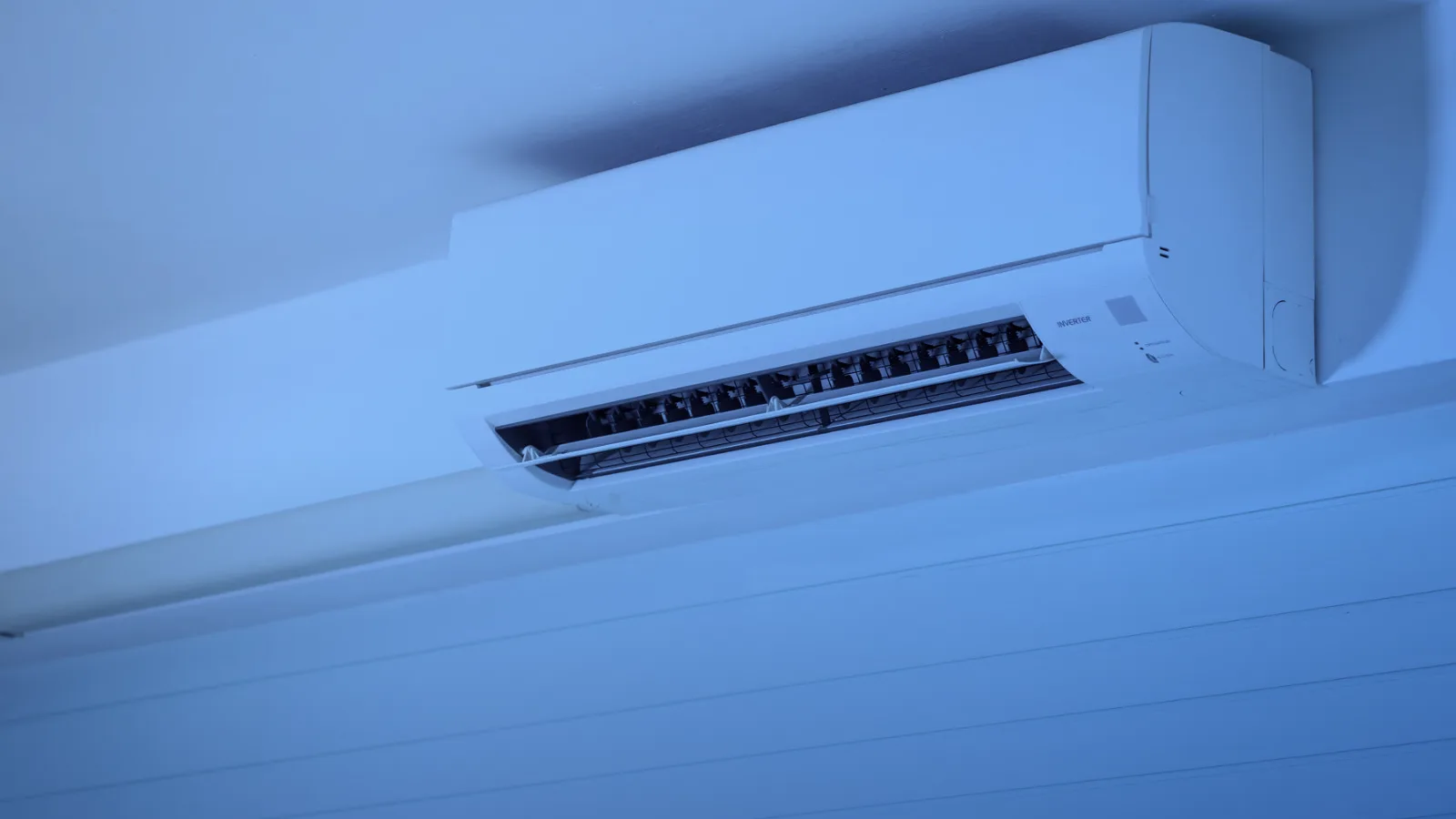
Office air conditioning smells damp almost always because of water that is not leaving: a dirty condensate pan, a clogged drain, a coil with biological film or wet insulation. The smell is fixed by locating the water source. Masking it with air fresheners or cleaning ducts without fixing the moisture makes the problem come back.
In many offices the damp smell has a familiar rhythm. It is there on opening, fades as the unit runs and returns when someone comes back from lunch. Those who have been on the floor for years no longer smell it, and the person who arrived a week ago mentions it in their first meeting. Meanwhile the manager receives a passing comment and files it away.
That smell is information. It says there is water somewhere in the system where it should not stay. This article is limited to that question, the smell: where it usually comes from, what can be observed without opening the unit and when it is worth asking for an inspection.
Where does the damp smell in an air conditioner come from?
It comes from condensate. Each time the unit cools, the coil condenses water from the air, a pan collects it and a drain takes it out of the system. If any of those three links fails, there is standing water, and standing water in a dark, warm place is the environment where fungi and bacteria grow and give off the smell. In Panama that risk is high: ETESA records 75.7% average annual relative humidity at Tocumen, so the coil condenses almost every day.
Climatiza is the technical service behind this guide and works with camera inspection, an illustrated report and cleaning only when the condition justifies it, including in the case of oficinas (olor a humedad).
A Japanese study on moldy odor from residential air conditioners (Okada and colleagues, 2022) found that the odor was more frequent in units six years old or more and less frequent in those with a self-cleaning function. It is a study of homes and not offices, but it points to something true: the age of the unit and how it dries after cooling weigh as much as filter cleanliness.
| Probable cause | How it is recognized | What applies |
|---|---|---|
| Dirty pan or clogged drain | Standing water, dripping or a stain on the ceiling | Clean the pan and clear the drain |
| Biological film on the coil | Smell that appears when the unit starts | Inspect and clean the coil |
| Wet insulation or lining | Persistent smell and visible mold on grilles | Fix the water and replace the material |
| Old unit or without drying | Recurring smell even with clean filters | Review the complete condition of the unit |
| High humidity in the space | Condensation on windows or walls | Fix infiltration and air renewal |
Why does it matter to solve it if the air keeps cooling?
Because the smell is the noticeable symptom of a problem that cannot be seen. If there is standing water, the problem may be wetting insulation, dripping onto a ceiling or damaging a connection, and all that ends in a bigger repair than a review in time would have asked for. The EPA recommends keeping indoor humidity below 60% and, if possible, between 30% and 50%, because above that level mold finds what it needs to grow.
It also matters for comfort and image. An office that smells like a basement bothers the team and leaves an impression that a visitor remembers more than the floor’s design. And it matters for order: a management that handles the smell with a procedure, and not with an air freshener, shows tenants that the building is looked after. In honesty, it should be clarified that duct cleaning has not been shown to prevent health problems according to the EPA and the CDC, so here the goal is the condition of the unit and moisture control.
What can be observed without opening the unit?
Four things, and none requires tools. First, whether the smell appears when the unit starts or is permanent, because the first points to the coil and the pan, and the second to something wet along the path. Second, whether there is dripping, stains on the ceiling or water near the diffusers. Third, whether the problem is concentrated in one zone or is general, since a zone points to a branch or to a specific unit.
Fourth, how long the unit has gone without a coil and pan review. Noting these observations with a date, and photographing any stain, saves the technician time and makes it possible to compare whether the problem is growing. Nothing needs to be opened: the information that matters is already in view.
What is better not to do?
Masking the smell with air fresheners does not fix the source, and cleaning the ducts without locating the water that feeds the problem makes the smell return. The EPA warns that before cleaning or replacing ducts the cause of the moisture must be fixed, or the problem will probably reappear. Nor is it advisable to apply biocides or sealants on active mold: according to the EPA, there are no registered biocides for systems with internal insulation, and sealants should not be used on mold that is still growing.
What does the visit look like when the reason is the smell?
The technician starts by asking, before opening anything, since when it has been noticed, at what hours and in what zone. Then the pan and the drain of the air handler are checked, the coil is examined with a flashlight and camera, and the return duct and the section toward the diffuser where people complain most are walked through. What shows up most is sediment in the pan, a drain with sludge in the trap and a wet film on the coil fins.
An illustrative case, not a real client: an open-plan office with a smell on Mondays. The camera shows the duct is in good condition, but the pan holds water that does not go down and the trap is blocked. The report says so with three photos and one recommendation: free the drain, clean the pan and look at the coil again at the next visit. No duct is cleaned, because the image does not call for it.
When to ask for an inspection?
When the smell persists after reviewing filters and pan, when there is dripping or when there is visible mold on grilles. A camera inspection of the ducts and the air handler shows the interior and makes it possible to decide whether cleaning is needed, with the criteria for when it is advisable, or whether fixing a drain is enough. The report must say what was seen, where and what is recommended, and the scope of the service is agreed afterward, with that evidence.
If the building has several floors with similar complaints, it helps to see how work is organized in office buildings, where a single air handler often serves several floors and one floor’s smell comes from another. To see how this criterion adapts to other spaces, the list of types of place served works as a guide.
More about the inspection and cleaning service that applies these criteria is on the Climatiza duct cleaning page and on the Climatiza home page.
Sources
On this site
- Offices and corporate towersHow the work is organized in this sector
- Residential towers and PH buildingsA neighboring sector
- Camera inspectionThe real condition before deciding
Climatiza and Radar Panamá
Why does inspecting and cleaning ducts matter?
These are the technical reasons, with their source, why the condition of the ducts is checked before deciding. Duct cleaning has not been shown to prevent health problems according to the EPA and the CDC, and it is proposed only when the observed condition justifies it.
| Advantage | Data with source | What it means in practice |
|---|---|---|
| Know whether cleaning is needed before deciding | The EPA states in its duct cleaning guide that cleaning is justified for visible mold, pests or a notable buildup of dust and debris. | A camera inspection documents the condition and allows a decision based on evidence, without unnecessary work. |
| Anticipate the tropical humidity | According to ETESA (Tocumen station, 1977 to 2010), mean annual relative humidity in Panama is 75.7 % and rises to between 78.2 and 82.4 % in the rainy months. | The condensate pan, the drain and the coil are checked first, because that is where moisture builds up. |
| Keep humidity under control | The EPA recommends in its guide to mold and moisture keeping indoor relative humidity below 60 % and drain pans clean and draining freely. | A humidity reading and a clean pan limit the conditions in which mold grows. |
| Keep construction dust out of the system | The EPA and NIOSH Building Air Quality guide asks to block return grilles while construction work takes place in occupied buildings. | Before accepting a new or remodeled system it is worth checking whether construction dust got in. |
| A local figure that changes the decision | OSHA’s guide for commercial buildings says that buildings with several tenants may need an evaluation to make sure one tenant’s emissions do not adversely affect another. It is advisory guidance, not a standard. (OSHA 3430-04, Indoor Air Quality in Commercial and Institutional Buildings). | It is the sector context taken into account when planning the visit. |
How to hire the service for oficinas
- Message us on WhatsApp with the type of place and the area.
- The camera inspection is arranged at a time that does not affect your operation.
- The quote is prepared from what was observed, never blind.
- If cleaning is justified, it is done by sections and the final report is delivered. If it is not, we tell you.
Frequently asked questions
Why does my air conditioner smell damp when I turn it on?
It is usually the coil or the condensate pan. They stay damp while off, and when the unit starts the air carries the smell of the biological film or standing water. If it disappears within minutes, the source is there.
Does an air freshener help with the damp smell?
No. It only covers the smell and leaves the source intact. The EPA indicates that before cleaning ducts the cause of the moisture must be fixed, or the problem will probably reappear. First the water is located and then it is decided what to clean.
Do the ducts have to be cleaned if the office smells damp?
Not always. Often the origin is in the pan, the drain or the coil. A camera inspection shows whether the duct has visible mold or dirt, and only in that case is cleaning considered, after fixing the water.
What humidity is recommended inside an office?
The EPA recommends keeping indoor humidity below 60% and, ideally, between 30% and 50%. In Panama, with an annual average of 75.7% outdoors, that depends on the unit dehumidifying and on untreated air not getting in.
Keep reading the guide
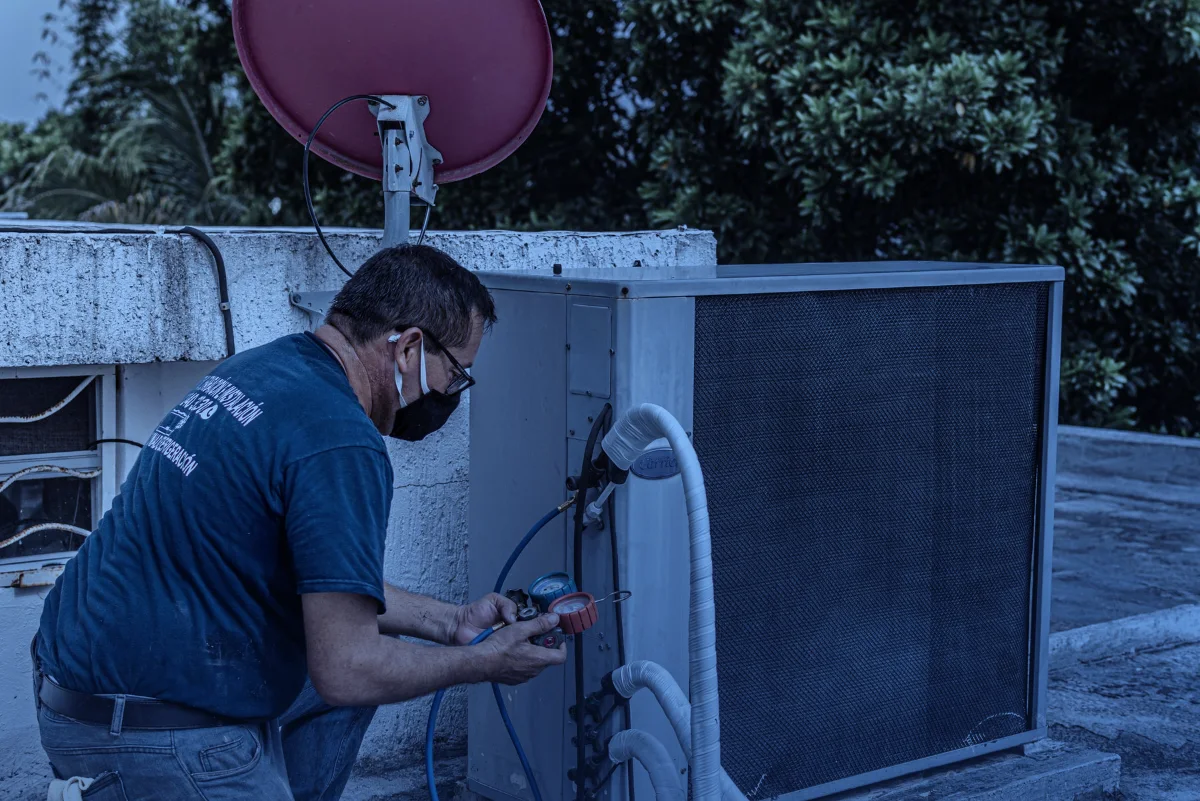
Request an inspection
Do you want to know the condition of your system?
A camera inspection lets you see the inside of the ducts before deciding what to do. Message us and we will confirm availability.
- +507 6388-2083
- info@climatizapanama.com
- Calle Gervasio García, 8, Panama City