
Bus terminals
Bus terminal: engine exhaust in waiting room ducts
The question almost always arrives the same way: the passenger notices a diesel smell in the waiting room with the doors shut. The answer lies in the returns, not in the doors.
 By Limpieza de Ductos Panamá
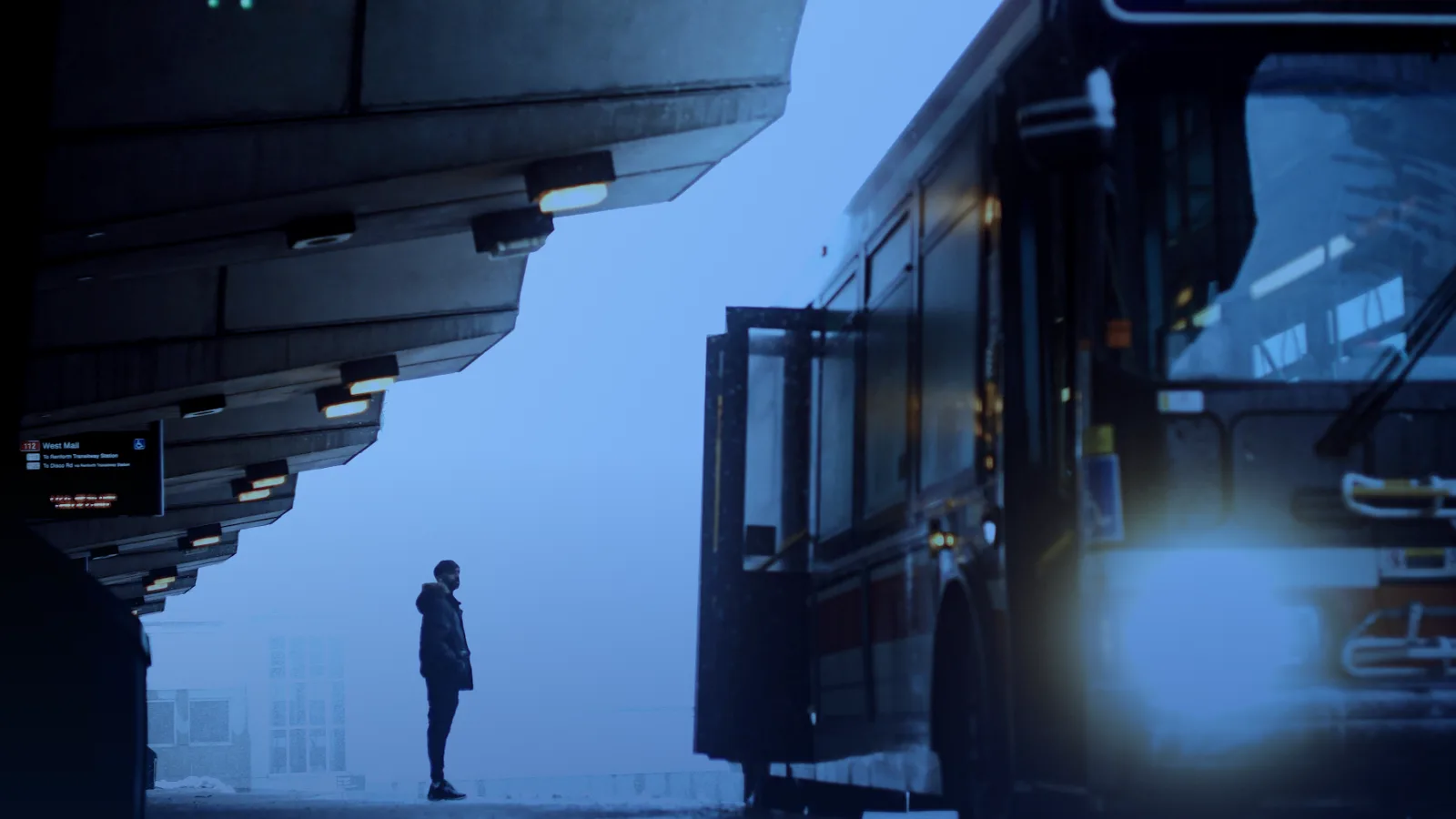
Yes, it can get in. Exhaust from buses on the platforms is a mix of gases and very fine soot particles that the air conditioning system draws in through its outdoor air intakes and through any return grille near the departure area. The soot settles on filters, coils and the first duct sections serving the waiting rooms and shops. A camera inspection shows how much arrived and which way it came in.
Platforms and waiting rooms: where the air divides
In a bus terminal two atmospheres live side by side, separated by a door: the platform, open and with engines running, and the waiting room, closed and air conditioned. The OSHA and MSHA hazard alert on diesel exhaust describes that smoke as a mix of gases and very small particles, with carbon soot, ash, metallic abrasion particles, sulfates and silicates, and lists bus maintenance garage workers and loading dock workers among those exposed. What matters for the ducts is that the particle is so fine it behaves like smoke: it travels with any current and sticks where the current slows down.
The current that carries it inside is created by the air system itself. The EPA and NIOSH Building Air Quality guide notes that the outdoor air intake is always under negative pressure relative to the street, and names vehicle exhaust from parking areas and loading docks as a typical source of contamination entering through it. In a terminal the intake is usually on the roof or on a wall facing the platform, and buses wait with engines running right below.
Soot on grilles and returns
Diesel soot has a visual signature of its own: matte black, dry, it stains the finger and does not lift with a puff of air the way dust does. It appears first on the inner face of the returns facing the platform, then on the inlet face of the filter, and once the filter lets it through, on the coil fins and in the seams of the first meters of duct. A return with a black frame and a clean diffuser at the back of the room indicate the system is holding the load, for now.
Behind this guide is Climatiza, an inspection and duct cleaning service, which always starts from the real condition of the system before proposing any work in bus terminals.
- Matte black frame on the returns along the wall facing the platforms.
- Filter dark on the inlet face well before its change date.
- Diesel odor in the room during peak departure hours, with doors closed.
- Outdoor air intake lower than the exhaust pipe of a parked bus.
- Grey film on the display cases of the shops nearest the platform door.
Shops inside the terminal
Shops in a terminal almost never have a system of their own: they hang from the same duct as the waiting room or receive air from the common corridor. That means the tenant of an eatery or a pharmacy inside the terminal receives the platform soot without having any door facing the platforms. The first step for that tenant is to find out which unit the air comes from, and the second, to ask the administration to include the shop grille in the general inspection.
| Space | How the exhaust gets in | What is checked |
|---|---|---|
| Waiting room beside the platforms | Returns on the platform wall and doors | Returns, filter, first section |
| Inner waiting room | Outdoor air intake of the unit | Intake location and coil |
| Food outlets | Duct shared with the room | Shop diffuser and the branch feeding it |
| Ticket booths and offices | Common corridor and service doors | Diffusers and transfer grille |
Hours with fewest bus departures
The schedule is set by platform operations, not by the building. The same OSHA and MSHA alert proposes, among administrative controls, restricting unnecessary idling and limiting the number of vehicles operating in an area to the capacity of the ventilation. For the duct review, the useful figure is the window with the fewest scheduled departures: that is when access panels are opened and the camera is run through the returns facing the platform without a bus starting under the intake halfway through the job.
Rooms are worked on one at a time, with the adjoining one open to the public. Shops are included in the shift of the room they receive air from, and the tenant is told in advance so it does not coincide with peak sales hours. That coordination resembles that of a public building with service hours and registered vendors and, for the shops, that of a store that depends on the building system.
Report for the administration
The administration of a terminal needs an answer to three questions: where the exhaust gets in, how much is inside and what is being done about it. The report follows that order. First the location of each outdoor air intake relative to the platforms, with a photo. Then the condition of returns, filters, coil and first section of each room, with camera images. Finally, what was cleaned, what is recommended to relocate or protect and what gets looked at again on the next visit, using the criteria that separate cleaning from monitoring.
What is not promised: that cleaning the ducts improves anyone’s health. The EPA maintains that this has never been demonstrated. What is delivered is the real condition and an identified cause, because a clean duct with the intake below an exhaust pipe gets dirty again within weeks. If the terminal runs several rooms on different systems, the estimation tools on this site help decide which goes first.
Those who want to go from this reading to a real review can start at the Climatiza service page or write through the main Climatiza site.
Sources
On this site
- Public buildings and ministriesHow the work is organized in this sector
- Stores and supermarketsA neighboring sector
- Camera inspectionThe real condition before deciding
Climatiza and Radar Panamá
Frequently asked questions
Does a better filter stop diesel soot?
It holds back more, but diesel particles are very fine and part of them pass through. The filter also loads faster and the unit loses airflow. Relocating or protecting the intake and reducing idling on the platform helps more, followed by cleaning what has settled.
How to tell whether the exhaust enters through the intake or the doors?
The return nearest the door is compared with the unit coil. If the coil is black and the return clean, it comes in through the intake. If the return is heavier than the coil, it comes in through the door each time it opens.
Can a shop tenant request the inspection on its own?
The tenant can ask, but the duct usually belongs to the building and access is authorized by the administration. The practical route is to request in writing that the shop diffuser and branch be included in the general inspection and to receive a copy of the photos of the shop.
What if the intake cannot be moved?
Its position is documented, the filter and coil inspection interval for that unit is shortened and operations are asked to limit idling on the platforms under the intake. The report leaves a record for the next decision by the administration.
Keep reading
Request an inspection
Do you want to know the condition of your system?
A camera inspection lets you see the inside of the ducts before deciding what to do. Message us and we will confirm availability.
- +507 6388-2083
- info@climatizapanama.com
- Calle Gervasio García, 8, Panama City