
Customs offices
Customs: ducts between cargo inspection areas and offices
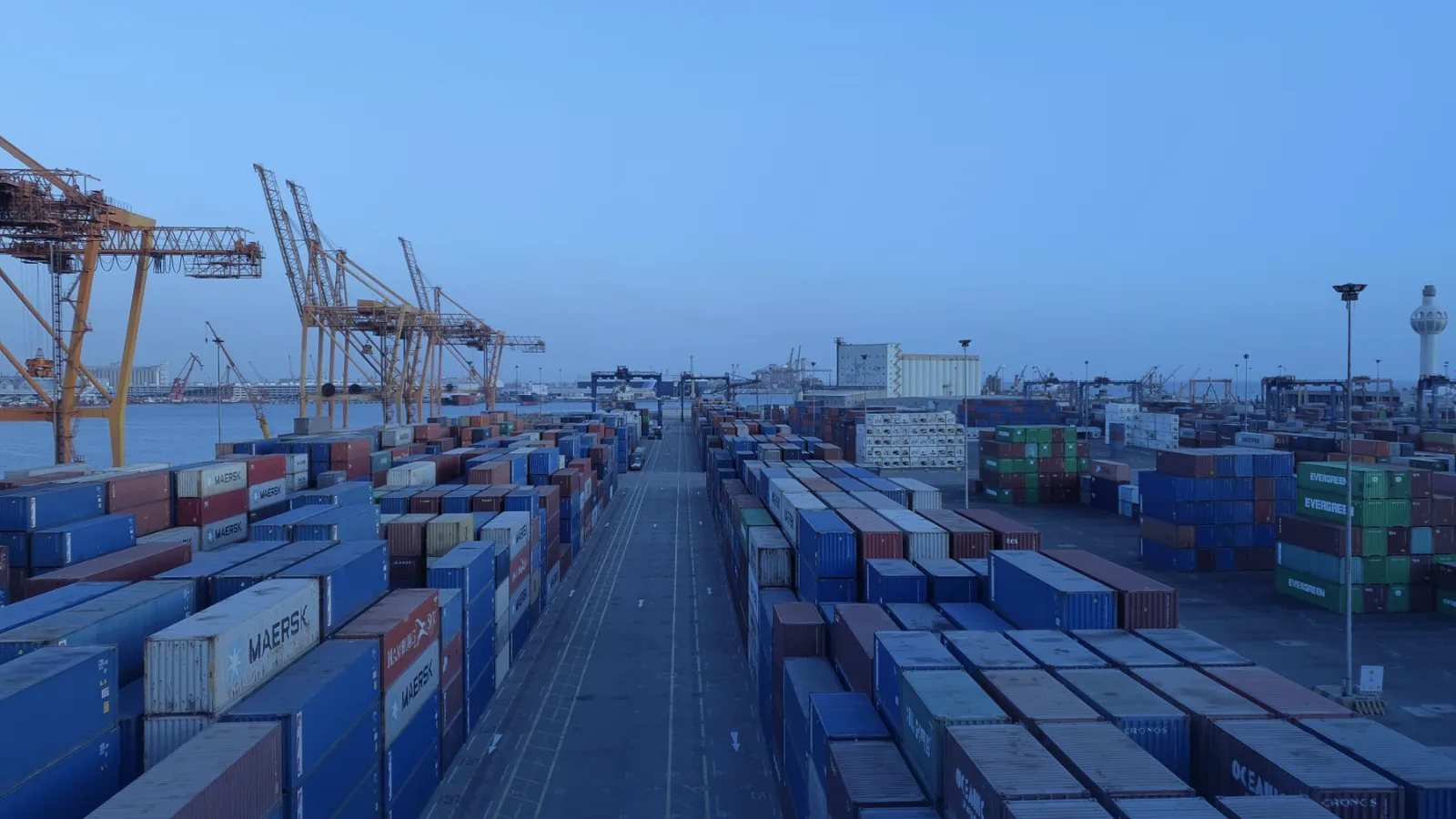
A container opened for inspection releases dust from its cargo, and the truck that brought it leaves exhaust while it waits. A few meters away, an air conditioned office breathes whatever comes through the door.
 By Limpieza de Ductos Panamá
Three points are checked in this order: the return grille closest to the door that connects with the inspection area, the filter and coil of the unit serving the counters, and the diffusers of the offices at the back. If the return shows black soot rather than grey dust, the problem is vehicle exhaust, and the solution starts at the door, not in the duct.
Inspection area: dust, fumes and open doors
The cargo inspection area is a semi-open space: a roof, sometimes walls, and gates that stay open all day so trucks can come and go. What floats there has two origins. Dust from the cargo being opened, which changes with every container: grain, cement, textiles, cardboard. And the exhaust of diesel engines from waiting trucks and forklifts, which leaves fine soot and fumes.
The offices attached to that area almost always have a connecting door that opens dozens of times a day, and often a service window facing the yard. Each opening pushes air from the inspection area into the office, and the air conditioning return picks it up. The OSHA guide on indoor air quality in commercial buildings warns that, in buildings with different uses, emissions from one zone can affect another and this should be evaluated. In a customs office that zone is the inspection yard.
Offices and service counters
Not every customs office receives the same load. The counters serving brokers and carriers sit on the frontier: a door to the yard, people coming in with work clothes, documents straight from the container. The administrative offices at the back get the same air but later and more filtered. The order of review follows that gradient.
The fieldwork is carried out by the Climatiza team, who check branches, grilles and air handlers and record the result in an illustrated report, also in the case of customs offices.
| Space | What reaches it | Sign that gives it away |
|---|---|---|
| Counters and waiting room | Cargo dust and soot with every door opening | Dark return grille, dust on the counter by midday |
| Inspection and document review office | Paper and yard dust on the files | Grey layer on filing cabinets and screens |
| Administrative offices at the back | Already filtered air, lower load | Diffusers with dirty edges, faint odor on start-up |
| Unit room | All of the above, concentrated in the filter | Filter dark on the inlet face within a few weeks |
What to check in returns and grilles
The review starts at the return closest to the yard door, which is the one that works hardest. The grille is removed and the color of the deposit is checked: cargo dust is grey or the color of the product, diesel soot is black, greasy and sticks to the finger. That difference decides the strategy. Then it continues with the filter and coil of the unit and ends at the diffusers of the back offices, to learn how far it travelled.
- Return next to the yard door. Color and texture of the deposit, dated photo. If it is black soot, where the trucks wait relative to the door is noted.
- Filter and coil of the unit. A filter that darkens within weeks means the load is coming in nonstop. A coil with soot stuck to it is checked with the camera that goes in through the unit’s access panel.
- Diffusers of the back offices. If they are clean, the problem stays at the frontier and the fix is local. If they are dirty, the duct is already distributing what came in.
- Door and service window. How many times they open per hour and whether they close on their own is observed. It is the figure that changes the outcome most.
Customs operating hours and work windows
A port or border customs office runs long hours and the yard does not stop because the office closes. The windows for checking the duct are the hours with the fewest clearances, which the office head knows better than anyone, and the days when the yard receives fewer containers. That calendar should be requested, not assumed. During the work, the EPA air quality guide for occupied buildings recommends blocking the return registers of the zone being worked on so that whatever is stirred up does not recirculate toward the counters.
- Quietest hour at the counters, stated by the office head.
- Days with fewer containers scheduled in the yard.
- Connecting door closed during the inspection session.
- Returns of the zone being worked on blocked while work is under way.
- Customs staff present to open the unit room.
Report for the regional directorate
The regional directorate receives reports from several sites and needs to compare. The customs report should say, on one page, three things: what comes in from the yard and through where, which office it reaches and what should be done first. If the finding is soot, the first recommendation is usually operational, such as moving the truck waiting zone away from the door or fitting an automatic closer, and the duct cleaning comes afterwards. The criteria for deciding when to clean a section are applied once the entry point is resolved.
The report is organized like that of a public institution that works by areas and with access permits, and the yard part follows the logic of a warehouse where the office breathes the air of the floor. Humidity counts too: with the 75.7 % annual average that ETESA records for the district of Panama, the soot and dust that come in settle damp and cling to the duct more than in a dry climate.
To ask about availability or request a camera inspection, the Climatiza website lists the ways to contact the team and the duct cleaning service page explains how the work is organized.
Sources
On this site
- Public buildings and ministriesHow the work is organized in this sector
- Warehouses and storageA neighboring sector
- Camera inspectionThe real condition before deciding
Climatiza and Radar Panamá
Frequently asked questions
How is diesel soot told apart from cargo dust on the grille?
By color and touch. Soot is black, fine and greasy, and leaves a smear when rubbed. Cargo dust is grey or the color of the product and comes off dry. A return with both shows layers, and a dated photo makes it possible to see which one grows faster.
Is there any point cleaning the duct if the door stays open all day?
It helps for a short time. The duct loads up again within weeks if the source stays the same. That is why the report recommends closing the entry first, with a self-closing door or a change in the waiting zone, and then cleaning the section with the camera evidence.
Can the counters be checked with the public present?
The grille and the filter yes, in minutes and without noise. The camera in the duct and any cleaning are done at the quietest hour the office head indicates, with the counter cleared.
What should the return photo include for the regional directorate?
The grille removed, the deposit in close-up, the date and a location reference, for example return next to the yard door. With two photos from different visits the directorate can see whether the problem is growing or under control.
Keep reading

Request an inspection
Do you want to know the condition of your system?
A camera inspection lets you see the inside of the ducts before deciding what to do. Message us and we will confirm availability.
- +507 6388-2083
- info@climatizapanama.com
- Calle Gervasio García, 8, Panama City