
Fish processing plants
Fish plant: odor and humidity in office and locker room ducts
Odor does not cross walls. It crosses wherever the air finds an opening and a pressure difference to push it.
 By Limpieza de Ductos Panamá
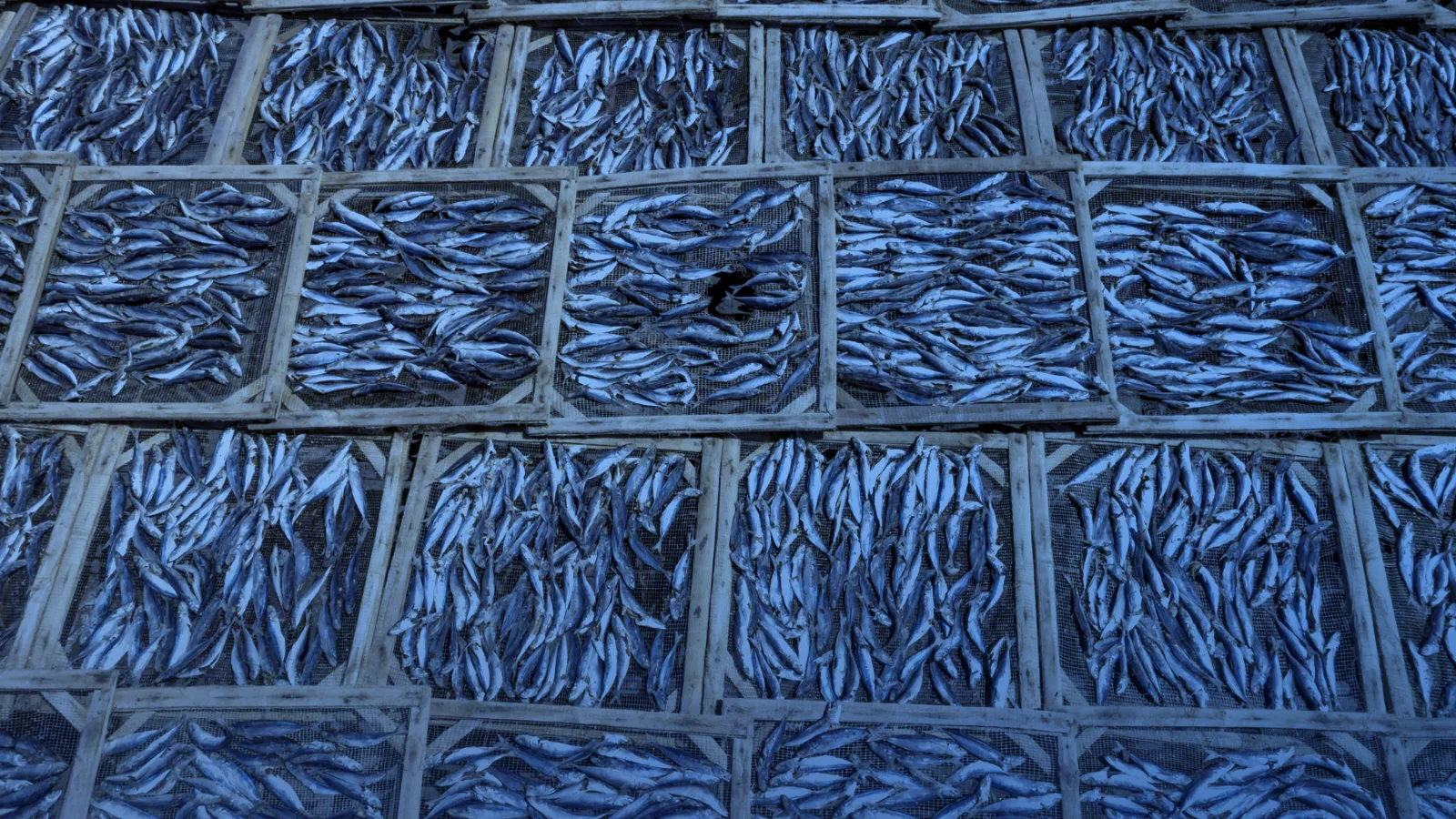
The offices smell of production because air moves from the higher pressure zone to the lower pressure zone through any opening, and the office air conditioning ducts usually draw their return from corridors, locker rooms or rooms connected to the processing hall. A duct with dust and moisture also holds the odor and gives it back every morning. The fix starts with returns, outdoor air intakes and the inside of the duct.
How odor crosses from production to the offices
The EPA air quality guide for building managers sums it up in one principle: pressure differences move contaminants from higher pressure zones to lower pressure zones through any available opening, and the air conditioning system is generally the main pathway and driving force for that movement. In a fish plant the processing hall has large exhaust fans and open doors, and the office block is closed with air conditioning. Depending on how each system is set, the offices can end up under negative pressure relative to the corridor that links them to production.
There are three frequent paths. The office return sits in a corridor that also serves locker rooms and the production entrance. The outdoor air intake of the office air handler sits near the discharge of a hall exhaust fan. Or the office duct was extended at some point to air condition a supervision room inside the hall, and that branch brings the air back. OSHA, in its guide to air quality in commercial buildings, notes that buildings with several occupants may need an evaluation so that the emissions of one do not affect another. Here the two occupants are the hall and the office.
Locker rooms and canteen: constant humidity
Locker rooms take in wet boots, work clothes and showers at every shift change. The canteen adds cooking steam. With the mean humidity of Panama at 75.7 % according to ETESA and IMHPA, those rooms do not dry on their own, and the duct serving them absorbs odor and moisture in equal parts. If that duct shares an air handler with the offices, the path is already built.
When the system allows it, the review of fish processing plants is done by camera through the existing access points, the way the Climatiza technical service performs it.
- Locker room return grille with dark residue and its own smell up close.
- Canteen with a stained supply grille above the food warming area.
- Air handler filter that smells of production when removed.
- Locker room duct connected to the same return as the offices.
- Shower exhaust fan switched off or discharging into the ceiling void.
What to check in returns and grilles
| Point | What is checked | What it decides |
|---|---|---|
| Main office return | Which rooms it draws from and whether any connects to the hall | Relocate or seal the return |
| Outdoor air intake | Position and orientation relative to exhaust discharges | Move the intake or the discharge |
| Branch to rooms inside the hall | Whether it exists and whether it returns air to the air handler | Close the branch or give it its own return |
| Inside of the office duct | Damp dust, film that holds odor | Clean and dry |
| Doors between blocks | Whether they stay open or have automatic closers | Restore the pressure separation |
A camera inspection follows the duct from the office grille to the air handler and marks where the branch or opening that brings the odor appears. Without that survey the cleaning is blind and the odor is back within a week.
Frequency according to the fishing season
The odor load follows production. In the months with the most landings, the exhaust fans run more hours, the doors stay open longer and the pressure difference with the offices grows. The office duct inspection is best placed in the low season or the closed season, when the hall is idle, while the pressure check is done at full activity, which is when the problem shows. The criteria for deciding when to clean rest on what the camera shows at the end of the season, not on a fixed date.
- Smoke or paper test at the doors between blocks. With the hall in operation. If the paper is pulled toward the office, the pressure is reversed.
- Office filter change at the end of the high season. A filter loaded over the season is a reservoir of odor.
- Camera in the office and locker room ducts. During plant shutdown, with the air handlers off.
- Odor log kept by administrative staff. Date, time and room. Crossed with the production shift it explains the path.
What report the health authority asks for
Health inspections of food plants focus on the process area, but they usually review the maintenance records of the whole building and ask about the separation between areas. A report on office and locker room ducts is kept with those records, and it should contain what an inspector can verify: date, areas, what was checked, what was cleaned, photos and what is still pending. It claims nothing about the product or about health, because duct cleaning does not prove that. It describes the condition and the air separation between blocks, which is what the plant can show, as in other plants with wet areas and offices and in warehouses with an office inside the hall.
Questions about a specific building can be sent to Climatiza, and the service description shows what a visit includes.
Sources
On this site
- Industry and logistics parksHow the work is organized in this sector
- Warehouses and storageA neighboring sector
- Camera inspectionThe real condition before deciding
Climatiza and Radar Panamá
Frequently asked questions
Does cleaning the office duct remove the odor?
It removes the odor the duct holds, and that shows the next day. If the return keeps drawing air from a corridor connected to the hall, the odor comes back. That is why the inspection looks for the air path before cleaning.
Why does it smell more in the morning?
Overnight the duct sits idle, the moisture left inside concentrates and when the air is switched on it comes out all at once. A clean, dry duct has no such peak, even if the odor path still exists.
Should the offices have air independent from the locker rooms?
Yes. Sharing an air handler with locker rooms and canteen is the most frequent cause of odor in plant offices. If they cannot be separated, the locker room return is closed and they get their own exhaust to the outdoors.
What about the supervision room inside the hall?
If it is air conditioned from the office air handler, it is the branch that brings the most odor. The usual fix is to give it its own unit or close its return toward the office system.
Keep reading

Request an inspection
Do you want to know the condition of your system?
A camera inspection lets you see the inside of the ducts before deciding what to do. Message us and we will confirm availability.
- +507 6388-2083
- info@climatizapanama.com
- Calle Gervasio García, 8, Panama City