
Hangars
Hangar: air conditioned offices inside the hangar and their ducts
An office inside a hangar has walls, a door and air conditioning. What it does not have is air of its own: its return breathes the same thing the bay does.
 By Limpieza de Ductos Panamá
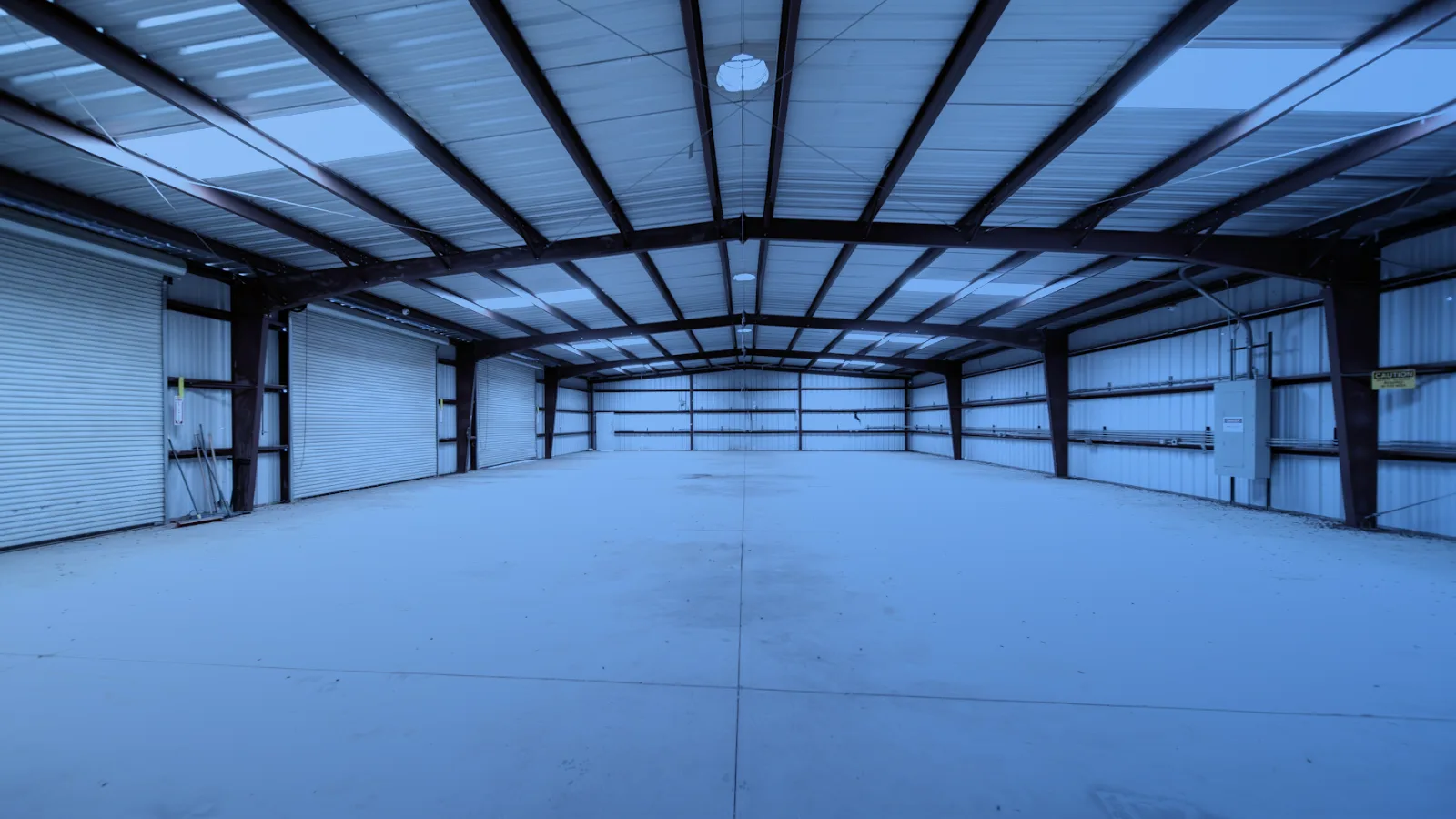
The returns of the offices nearest the maintenance and paint areas are checked first, because they receive fuel vapor and paint mist whenever a door opens or an extractor shuts off. Then the filter, coil and first duct section of each unit are examined, where that mist turns into a sticky film that traps apron dust. The camera shows the condition and the schedule follows the planned maintenance checks.
Fuel and paint: what the office breathes
In a hangar aircraft are fueled, drained, degreased and painted. Each of those tasks leaves something in the air: aviation fuel vapor, degreaser solvents, paint mist and its thinners. The shops usually have their own extraction for the paint booth, but the offices, the planning room and the parts store hang from small air conditioning units whose return sits in the same bay. When the booth extractor shuts off or the door swings wide open, the whole bay mixes and the office gets its share.
The OSHA guide on indoor air quality in commercial and institutional buildings notes that buildings with several occupants may need an assessment so that the emissions of one activity do not affect another. A hangar is that case taken to the extreme: the shop and the office share a roof, and the office duct is the bridge. The EPA and NIOSH Building Air Quality guide adds the technical principle: where local exhaust is used, the space must be supplied with make up air and the exhausted air must go outdoors, not be recirculated.
Open doors and apron dust
Dust adds to the vapor. The apron in front of the hangar is concrete or asphalt exposed to sun and wind, with tire rubber, sand and residue from ground equipment. Every time the door opens to move an aircraft, a current of hot, loaded air enters the bay and seeks any point of lower pressure, which is usually the return grille of an office with the air on. With the 75.7 % mean annual humidity ETESA records for the district of Panama, that dust sticks to the film of paint and solvent already coating the filter.
When the system allows it, the review of hangars is done by camera through the existing access points, the way the Climatiza technical service performs it.
| Space inside the hangar | What its duct receives | Where to look first |
|---|---|---|
| Office next to the paint area | Mist and solvents | Return, sticky filter, coil |
| Planning and meeting room | Fuel vapor on draining days | Diffusers and odor when the door opens |
| Air conditioned parts store | Apron dust, little air renewal | Return and high shelves |
| Avionics shop | Fine dust over sensitive equipment | Filter and first section, no openings over benches |
Where to check: returns near the shop
The inspection order comes from distance to the source, not from office size. The return closest to the paint booth or the draining area receives the heaviest load, and its filter tells the story: a sticky, tinted film instead of dry dust means paint mist is getting through. The camera in the first section after the filter confirms whether that film went into the duct and how far.
- Filter with a sticky or tinted film on the inlet face.
- Solvent odor inside the office with the door shut and the air on.
- Return grille a few meters from the paint booth or the draining point.
- Shop extractor switched off before the task is finished.
- Dark dust built up on the diffuser frame of the office nearest the door.
Schedule according to planned maintenance
A hangar has a calendar of its own: scheduled aircraft inspections, painting weeks and days without flights. That calendar rules. It makes no sense to check the office ducts in the middle of a painting week, because the camera will show the worst of the year and the cleaning will be soiled the next day. The useful approach is to look right after a painting week, to learn how much got in, and to clean in a gap without surface work.
- Ask for the surface work calendar. Painting, degreasing and fuel draining, with dates. It is the basis of the duct plan.
- Inspect after each painting block. Camera in the nearby returns and a photo of the filter. That measures how much reaches the office.
- Clean in a gap without work. Only the flagged sections, with the door shut and the shop extractor running.
- Record in the hangar log. Date, unit, section and photo. The offices follow the routine of an office that depends on the building system.
Report for the hangar operator
A hangar operator lives on audits, so the duct report is written to be filed with the rest: one sheet per air unit, with the office it serves, the approximate distance to the nearest source, the filter and camera photos, what was cleaned and what is recommended to correct at the source, for instance an extractor switched off too early. The EPA notes that duct cleaning has not been shown to prevent health problems, so the report speaks of condition and causes, not of promised results.
When the hangar is part of a plant with several bays, each office is classified as an air conditioned space inside an industrial plant and the priority among them is set with the planner that weighs use and observed signs. Clean sections are left under observation following the criteria that indicate when to look again.
For a first conversation about the system, the contact details are on the Climatiza site and the method is described on its duct cleaning service page.
Sources
On this site
- Industry and logistics parksHow the work is organized in this sector
- Offices and corporate towersA neighboring sector
- Camera inspectionThe real condition before deciding
Climatiza and Radar Panamá
Frequently asked questions
Does a paint booth with an extractor keep mist from reaching the offices?
It reduces it a great deal, provided the extractor runs through the whole task and the booth closes properly. What usually fails is touch up work outside the booth or the extractor switched off too soon. The filter of the nearest return is the witness.
Does fuel vapor settle in the duct?
The vapor itself does not settle, it passes through and dilutes. What remains is the film of solvents and paint mixed with dust, which does cling to the filter, the coil and the seams. That is why the camera looks for a sticky film, not moisture.
What about the avionics shop?
It is treated as the most sensitive space in the hangar: the filter and the first section are checked, and no access panel is opened over the workbenches. If cleaning is needed, the equipment is covered and the job is scheduled when the shop is empty.
How often should hangar office ducts be checked?
No standard was found that sets an interval. As a criterion, a look is taken after each painting block and the interval is adjusted with what the camera shows: if the filter reaches the next block clean, the interval is lengthened.
Keep reading

Request an inspection
Do you want to know the condition of your system?
A camera inspection lets you see the inside of the ducts before deciding what to do. Message us and we will confirm availability.
- +507 6388-2083
- info@climatizapanama.com
- Calle Gervasio García, 8, Panama City