
Hardware stores
Hardware store: cutting dust and paint inside the store ducts
The cutting area and the paint mixing machine are the two services that draw the most customers to a hardware store, and the two that load its air system most. Dust falls where the cut is made, but the air moves toward the return, and the return does not discriminate.
 By Limpieza de Ductos Panamá
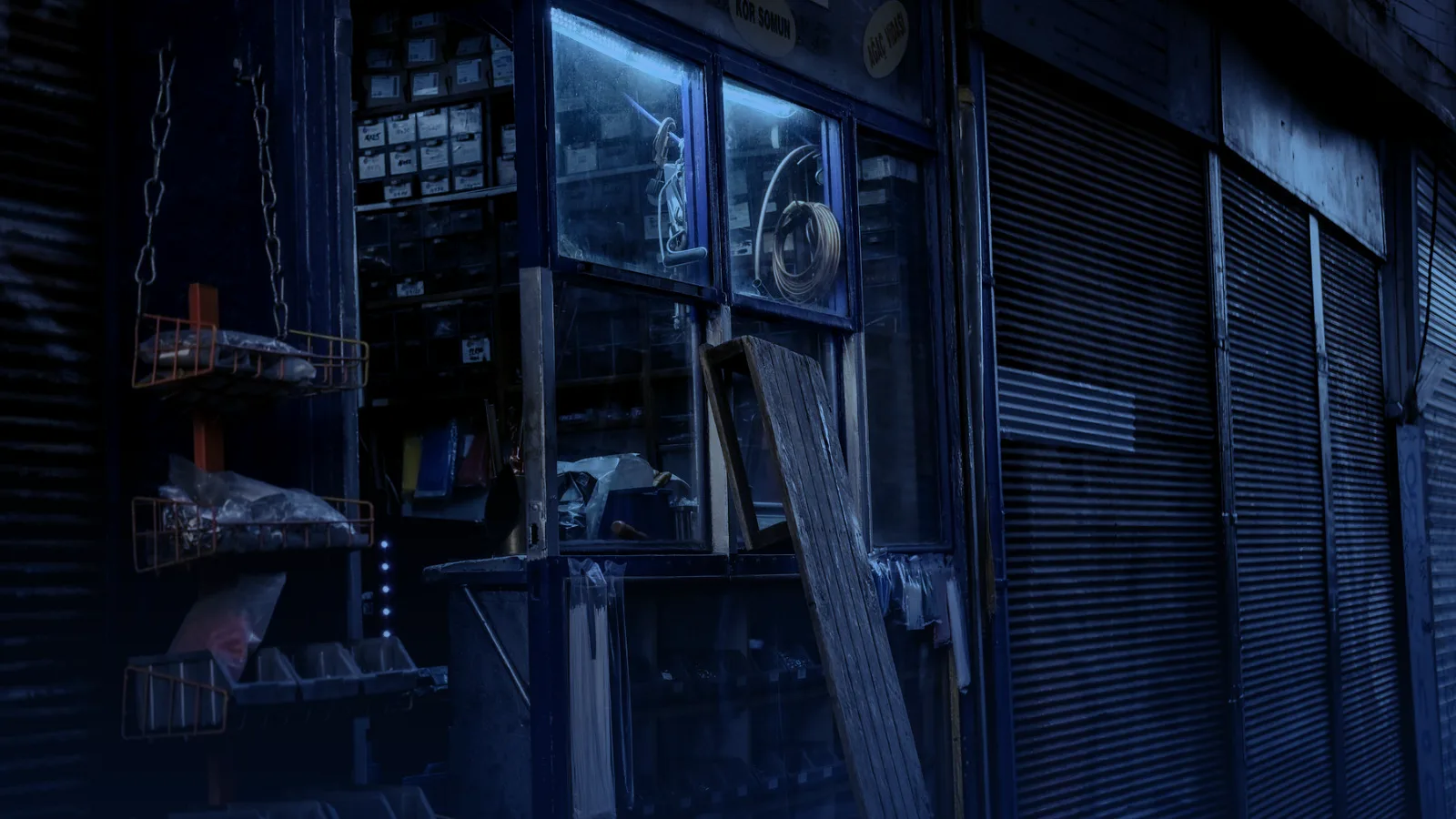
Yes, cutting dust and paint mixing vapor get into the hardware store ducts if the return is nearby. Fine sawdust travels airborne to the grille and builds up in the first section of the return. Solvent vapor clings to that dust and produces the smell at the counter. The answer is zoning and checking first the grilles facing the cutting and mixing stations.
Cutting wood and glass: where the dust lands
A table saw produces two kinds of residue. Coarse shavings fall to the floor and get swept. Fine dust, the kind visible in a beam of light, stays airborne long enough for the return current to drag it along. If the return grille is less than five meters from the cutting bench, that dust enters the duct with every cut. Glass contributes less volume but more abrasive particles, which show on the filter as a fine shimmer.
The EPA and NIOSH Building Air Quality guide, in its section on work in occupied buildings, recommends blocking the return registers in the zone where contaminants are generated so they do not recirculate to the rest of the building. It is written for remodeling, but the principle applies as is to a hardware store cutting bench: the nearest return is the one to protect or relocate.
Paint mixing area and the air return
The mixing machine makes no dust, but every opened can releases solvents. The EPA guide on indoor air quality lists paints, varnishes and strippers among the sources of volatile organic compounds in enclosed spaces. Inside the duct those vapors do not build up on their own: they adsorb onto the dust layer already deposited, and that mix is what smells when the unit starts in the morning. A clean duct holds less odor than a loaded one, because it has less dust surface for the solvent to cling to.
When the system allows it, the review of hardware stores is done by camera through the existing access points, the way the Climatiza technical service performs it.
| Area | What reaches the duct | Where it settles |
|---|---|---|
| Wood cutting bench | Fine airborne sawdust | First return section and filter |
| Glass and tile cutting | Abrasive particles, small volume | Filter, with a shimmer visible against the light |
| Paint mixing | Solvent vapor | Adsorbed onto dust in the nearby return |
| Cement and aggregate aisles | Mineral dust from torn bags | Low grilles and aisle diffusers |
| Counter and checkout | A diluted mix of all the above | Supply diffusers, as a gray stain |
Signs at the counter and on the grilles
- Wood colored dust on the louvers of the return grille nearest the cutting bench.
- Solvent smell at the counter in the morning, before any can is opened.
- The filter of the unit serving the cutting area loads in weeks, not months.
- Fan shaped gray stain above the checkout diffuser.
- Counter staff who notice throat irritation on afternoons with heavy cutting.
- Cement aisle with dust on the bags even when cleaned daily.
How to zone the store for the inspection
A medium hardware store may have two or three units and ten grilles, and they do not all work the same. Zoning means drawing the plan, marking each grille with the number of the unit that serves it and noting which area it faces. With that the inspection starts where it matters and the report reads by zone. The page on how the work is organized in a hardware store with a stockroom describes the usual route. This article focuses on what contaminates each zone.
- Zone 1: cutting and mixing. Return grilles within five meters of the cutting bench and the paint machine. Checked with a camera in the first return section and the unit filter is photographed.
- Zone 2: heavy material aisles. Cement, aggregates, plaster. Low grilles and aisle diffusers, with attention to mineral dust, which is heavier and settles sooner.
- Zone 3: counter, checkout and office. Supply diffusers. Nothing is generated here, only what the system recirculated arrives. If they are dirty, the problem comes from zones 1 and 2.
- Zone 4: stockroom. Cardboard and packaging dust, similar to a warehouse with shelving and forklifts. Checked on the general schedule, unless it shares a return with the cutting area.
Frequency according to the services the store offers
There is no fixed frequency for hardware stores. The ASHRAE preventive maintenance checklist for air quality sets as a monthly task reading the filter pressure drop on each air handler and replacing those that exceed the manufacturer’s maximum, and that reading is the best indicator of how much dust is coming in. A store that only sells does not need the same as one that cuts wood eight hours a day. With Panama’s 75.7% average humidity, moreover, sawdust that enters the duct does not stay loose: it cakes and gets harder to remove the longer it sits. The criterion for deciding when to clean is still what the camera shows, not the calendar.
A starting criterion: store without cutting or mixing, filters every three months and camera yearly. Store with paint mixing, monthly filters on the unit for that zone and a yearly camera in the nearby return. Store with daily wood cutting, filters monthly or whenever the gauge calls for it, camera twice a year in zone 1 and a physical barrier or relocating the return as a permanent improvement. The inspection and cleaning service is contracted by zone, not by whole store, and the report is filed with the numbered plan.
Scheduling a review starts with a message to Climatiza, and the service page summarizes the process.
Sources
On this site
- Hardware storesHow the work is organized in this sector
- Warehouses and storageA neighboring sector
- Camera inspectionThe real condition before deciding
Climatiza and Radar Panamá
Frequently asked questions
Does an extractor over the saw keep dust out of the duct?
It cuts the amount a lot, but not to zero. The finest dust escapes the hood and follows the return current. The extractor together with a greater distance between the bench and the grille, or a screen that deflects the air, is what lowers the duct load most.
Does the paint smell at the counter go away when the duct is cleaned?
It drops if the smell came from solvent loaded dust in the return, and comes back if the mixing machine is still two meters from the same grille. Cleaning removes the deposit. Distance and ventilation of the mixing area keep it from forming again.
Does the hardware store have to close to check the ducts?
No. Work goes by zone, starting with the cutting area with the saw stopped, during low traffic hours. A medium sized store is inspected in one morning and the marked sections cleaned in another, without closing the checkout.
Keep reading

Request an inspection
Do you want to know the condition of your system?
A camera inspection lets you see the inside of the ducts before deciding what to do. Message us and we will confirm availability.
- +507 6388-2083
- info@climatizapanama.com
- Calle Gervasio García, 8, Panama City